Latest Industry News on D2C Product Recommendations 2026
Quick Summary: In 2026, D2C product recommendations are shifting from static suggestions to real-time AI that reacts to search intent and context. Shoppers arrive with higher purchase intent and verify AI suggestions through reviews and details, so brands need to provide proof and transparency. First-party data now fuels personalization, and tools like Kandid help guide complex decisions with live answers. Brands should audit their recommendation points, add detailed product info, and use AI sales agents to boost trust and conversions.
D2C Product Recommendations in 2026 now react to clicks, search intent, and context, not just past orders. Brands upgrading D2C Product Recommendations are already seeing higher cart value, conversion, and return visits. That matters because acquisition costs are up, organic reach is down, and shoppers still doubt weak AI suggestions. This guide covers D2C Product Recommendations, Real-Time AI Sales, and Ecommerce Product Guides with an operator’s view shaped by current 2026 market shifts.
Real-Time AI Recommendations Are Replacing Static Widgets
Static "you may also like" blocks are losing ground. In 2026, operators want recommendation systems that react to live intent, not old basket data. Adobe reported AI traffic to U.S. retail sites grew 393% YoY in Q1 2026, while AI traffic converted 42% better than non-AI traffic in March 2026, a sign that shoppers now arrive with clearer needs and expect faster guidance from the site itself Adobe’s Q1 2026 retail AI data.
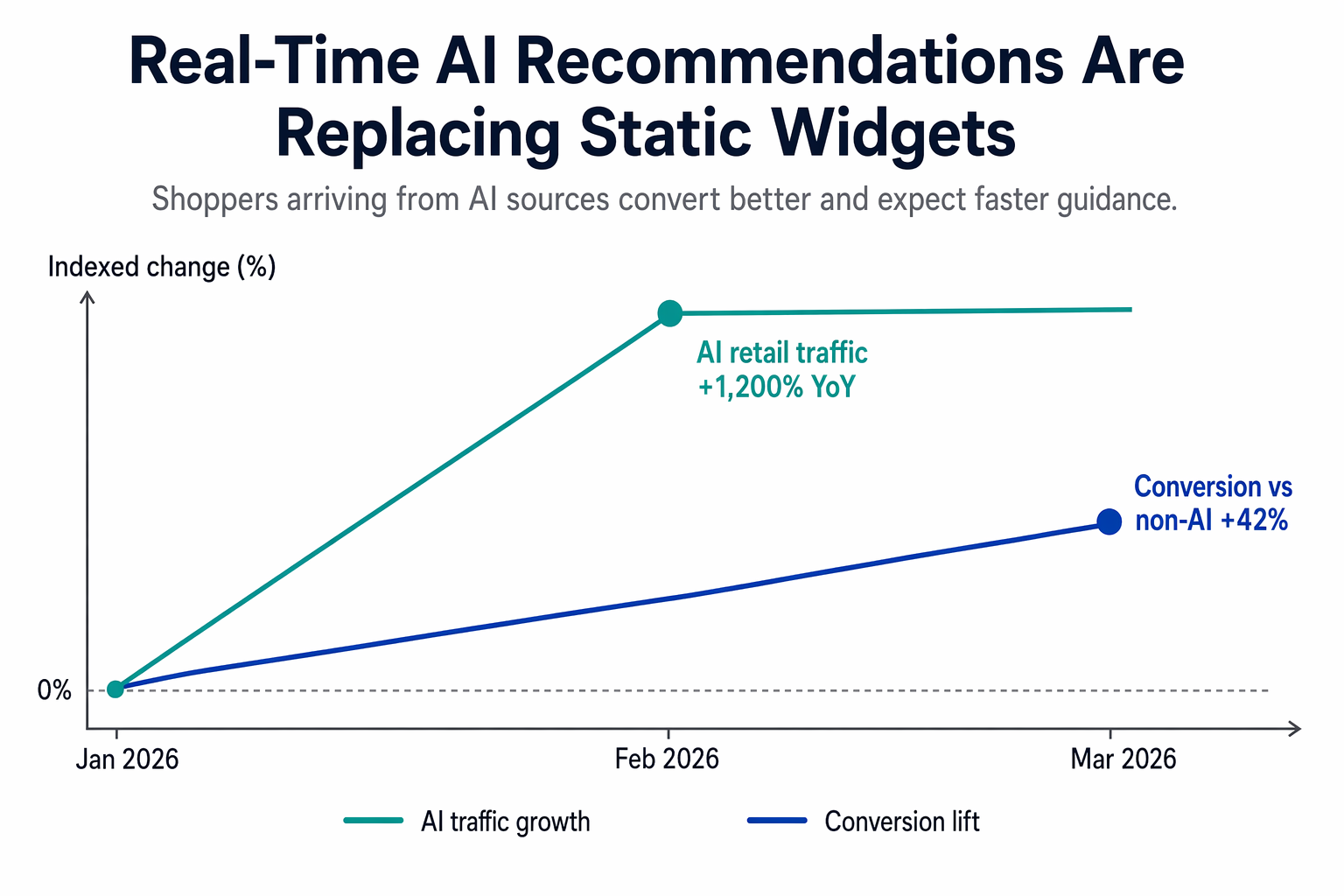
Operators now treat recommendations like a revenue channel because placement, timing, and relevance change margin outcomes. Digital Commerce 360 says AI-referred retail traffic was 138% higher YoY in May 2026, with shoppers spending 53% more time on site Adobe coverage via Digital Commerce 360. For brands with complex catalogs, tools like Kandid fit this shift because they answer live product questions instead of rotating static widgets.
Also Read: Comprehensive Guide to D2C Product Recommendations for 2026
AI Search, Zero-Click Discovery, and Semantic Product Pages Are Changing Where Recommendations Happen
AI-referred shoppers arrive with higher intent. McKinsey says half of consumers now use AI-powered search, and many clicks that still reach brand sites come from shoppers further down the funnel and closer to buying McKinsey’s AI search analysis. That means recommendation logic now starts before the visit, not just on-site.
Why trust and verification still matter. Shoppers do not blindly accept AI picks. According to Product.ai research, 86% of U.S. online shoppers who used AI for product research verified the recommendation through another source before buying. So your PDP needs proof fast - reviews, compatibility details, returns, and clear claims.
If AI sends the click, your product page still has to close the trust gap.
How semantic product pages support AI discovery. Write PDPs for meaning, not just keywords:
- Add plain-language use cases.
- Structure specs and fit details clearly.
- Surface verified reviews and Q&A.
Kandid fits this shift well because it can answer live product questions in context, right when zero-click visitors land cold.
Also Read: Latest Trends in D2C Product Recommendations Worldwide in 2026
First-Party Data Is Now the Fuel Behind Personalization
Shoppers will share data when the trade feels fair. Omnisend’s 2026 study found 88% would share personal info for better suggestions, but 70% reject AI-shaped pricing.
- Best signals to ask for:
- fit or skin concerns
- budget
- use case
- reorder timing
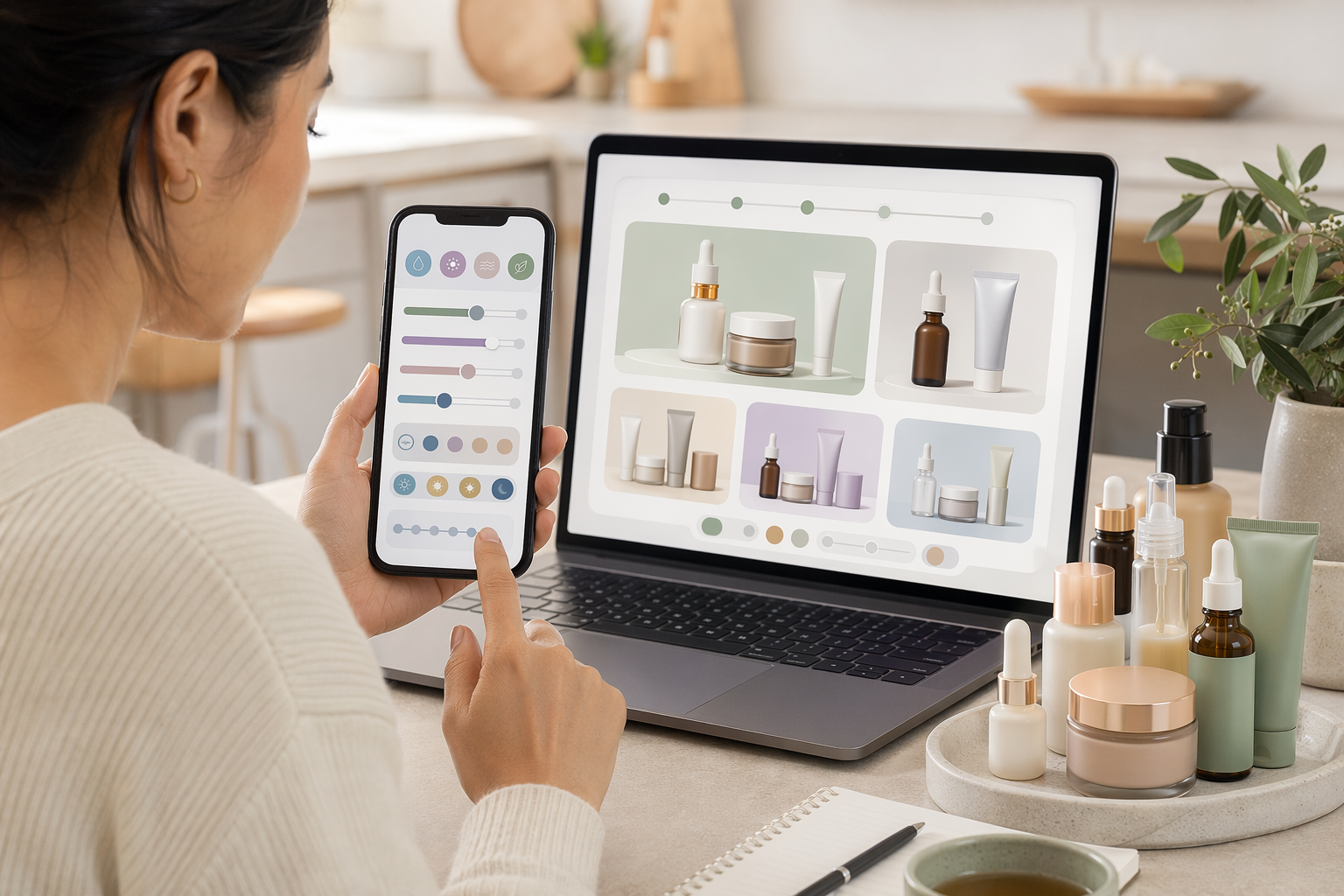
Declared preferences should start the journey, not end it. Layer them with browse depth, comparison clicks, cart adds, and repeat visits. Adobe’s 2026 consumer report says shoppers often need three to five personalized interactions before buying.
Complex products need this most. EV accessories, devices, and personal care routines involve specs, compatibility, and risk. Tools like Kandid work best when first-party answers and live behavior work together, so guidance feels useful, not creepy.
Also Read: Top Trends Reshaping D2C Product Recommendations in 2026
What D2C Brands Should Do Next
- Audit the recommendation surfaces that matter most. Check PDPs, collection pages, cart, email, SMS, and on-site search. Nearly half of shoppers used AI somewhere in their last purchase journey, according to PYMNTS Intelligence. Fix gaps where recommendations are generic, hidden, or hard to trust.
- Use AI sales agents where decisions are complex. For EV, tech, and personal care, buyers need guided comparison, not just “you may also like.” Tools like Kandid fit best when specs, bundles, and compatibility drive conversion.
Pair recommendations with richer product information. Add fit, compatibility, use-case, review context, and clear tradeoffs beside each suggestion. Shoppers still verify AI outputs, and 86% of AI-aided buyers cross-check before purchase, per Product.ai research.
Better advice needs better proof.
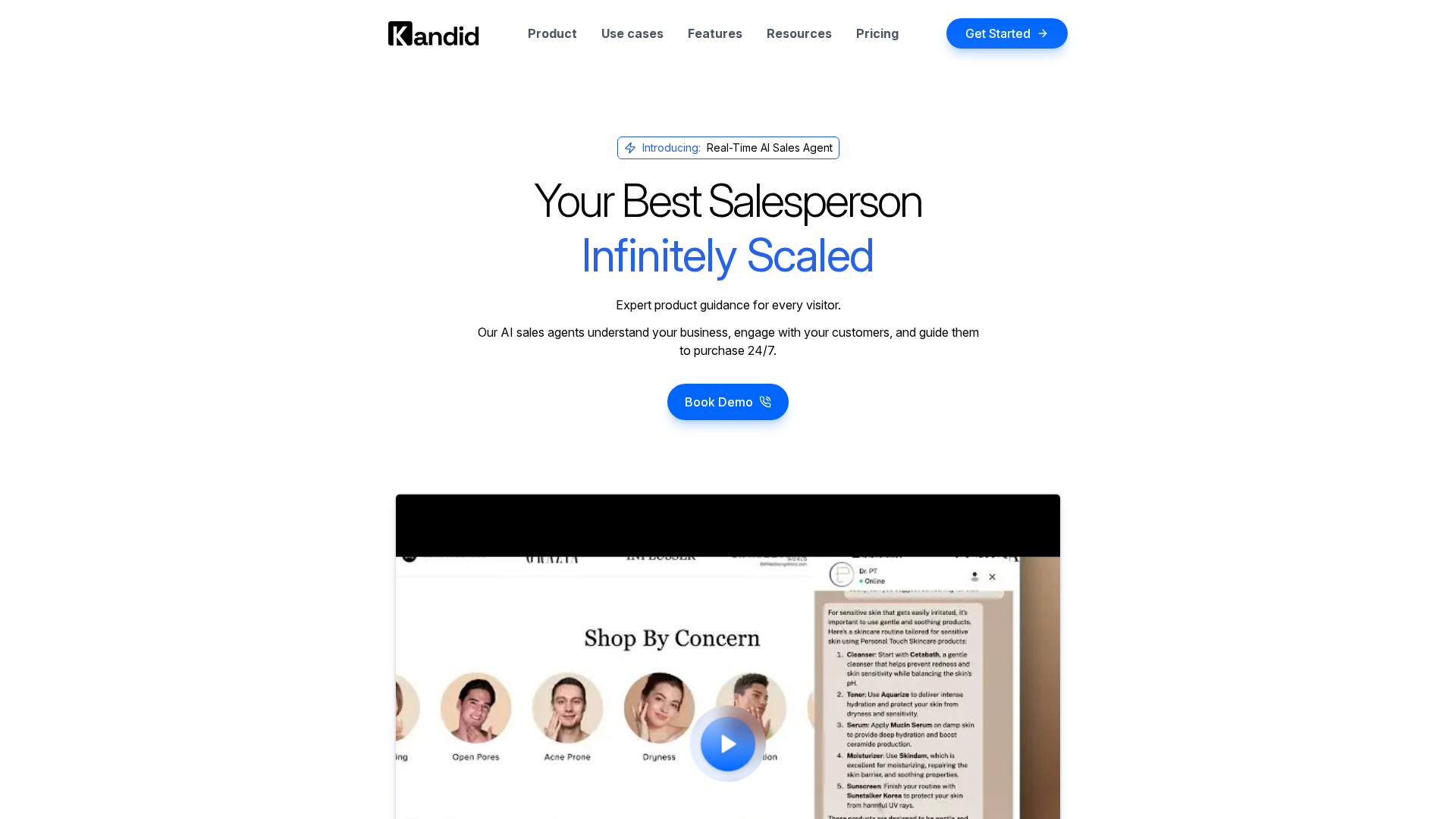
Turn recommendation changes into revenue. Kandid gives D2C brands real-time AI sales agents that answer shopper questions, compare products, and guide faster purchases.
Frequently Asked Questions
Q1: What are the latest trends in D2C product recommendations for 2026?
Brands now rank trust over volume. Top shifts include explainable AI suggestions, fit and compatibility guidance, zero-click answers on site search, and recommendation blocks tied to margin, inventory, and returns risk.
Q2: How is AI transforming product discovery and personalization in D2C brands in 2026?
AI now acts like a sales rep, not just a widget. It reads intent, answers product questions, compares options, and adapts recommendations in real time across PDPs, chat, and email flows.
Q3: What role does first-party data play in D2C marketing strategies for 2026?
First-party data powers better targeting after cookie loss. Brands use quiz answers, browsing behavior, past orders, and support chats to shape recommendations, improve retention, and reduce wasted ad spend.
Conclusion
D2C recommendations now win on trust, proof, and consistency. Shoppers use AI more, yet still verify heavily, as BCG found and Product.ai reported. Brands should align PDPs, reviews, AI visibility, and owned channels.