Real-Time Shopping Review for Ecommerce Conversion Teams
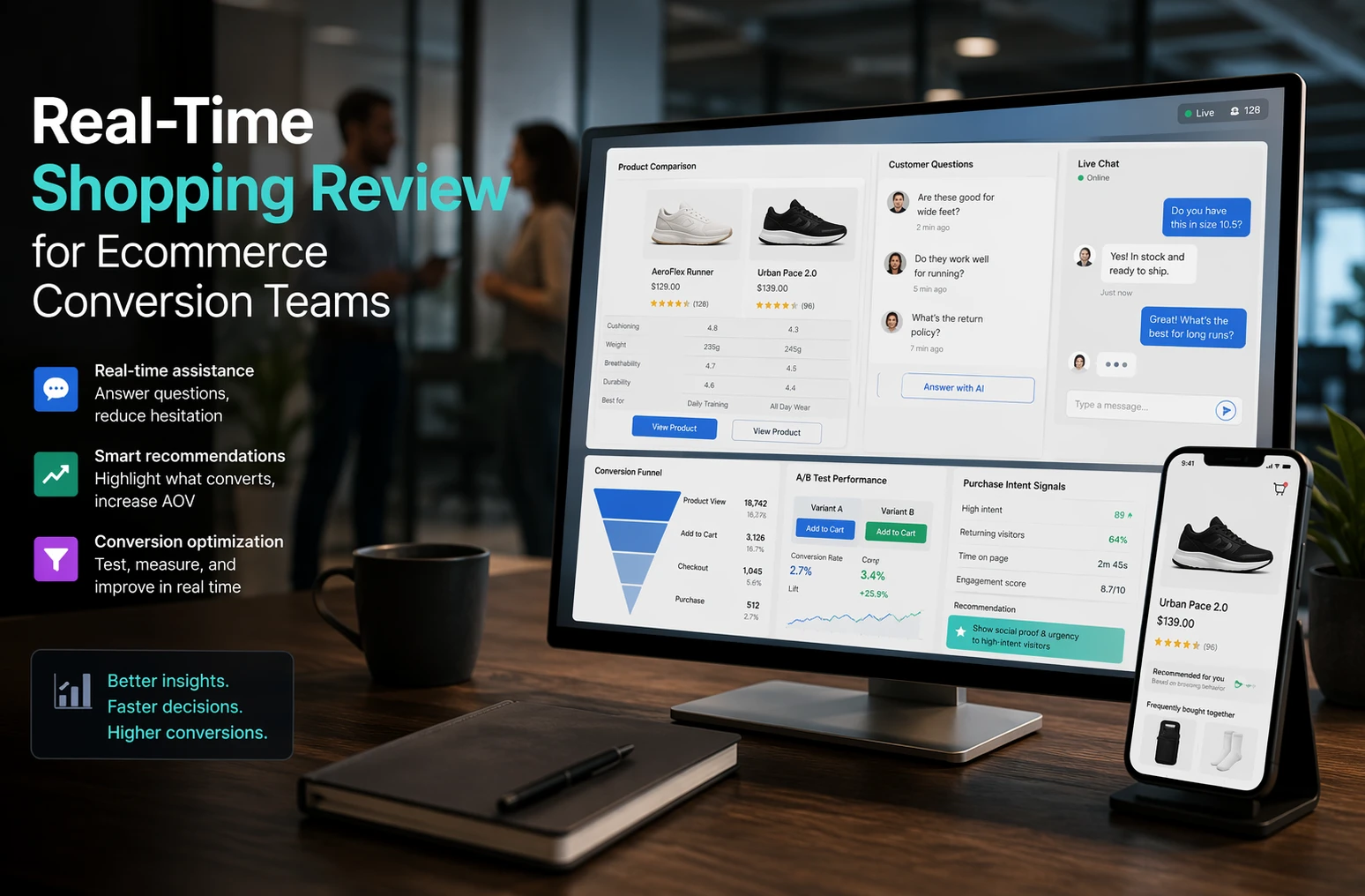
Quick Summary: Real-time shopping reviews boost conversions by providing fresh, visual, and relevant proof early in the purchase process. They should appear above the fold and near the buy button to reduce decision friction. Effective benchmarks include media coverage, recency, and clear summaries, but reviews must be genuine and well-moderated. Brands with high SKUs and traffic can test these setups to see modest but meaningful improvements in trust and sales.
Your PDP reviews can pull traffic and still fail to move add-to-cart. The usual problem is not the star score. Shoppers leave because the review experience does not answer fit, quality, shipping, or use-case doubts fast enough. This review breaks down the benchmarks conversion teams should use to judge real-time shopping review setups, spot weak points, and decide what actually helps revenue. It is built for ecommerce operators who need clear buying signals, not vague social-proof advice.
Which review benchmarks actually move conversion in real time?
Use four benchmarks: media coverage, recency, collection cadence, and summary clarity. These are the review signals shoppers notice fast, and they lower doubt at the moment of purchase.
- Photo and video reviews do more than add credibility
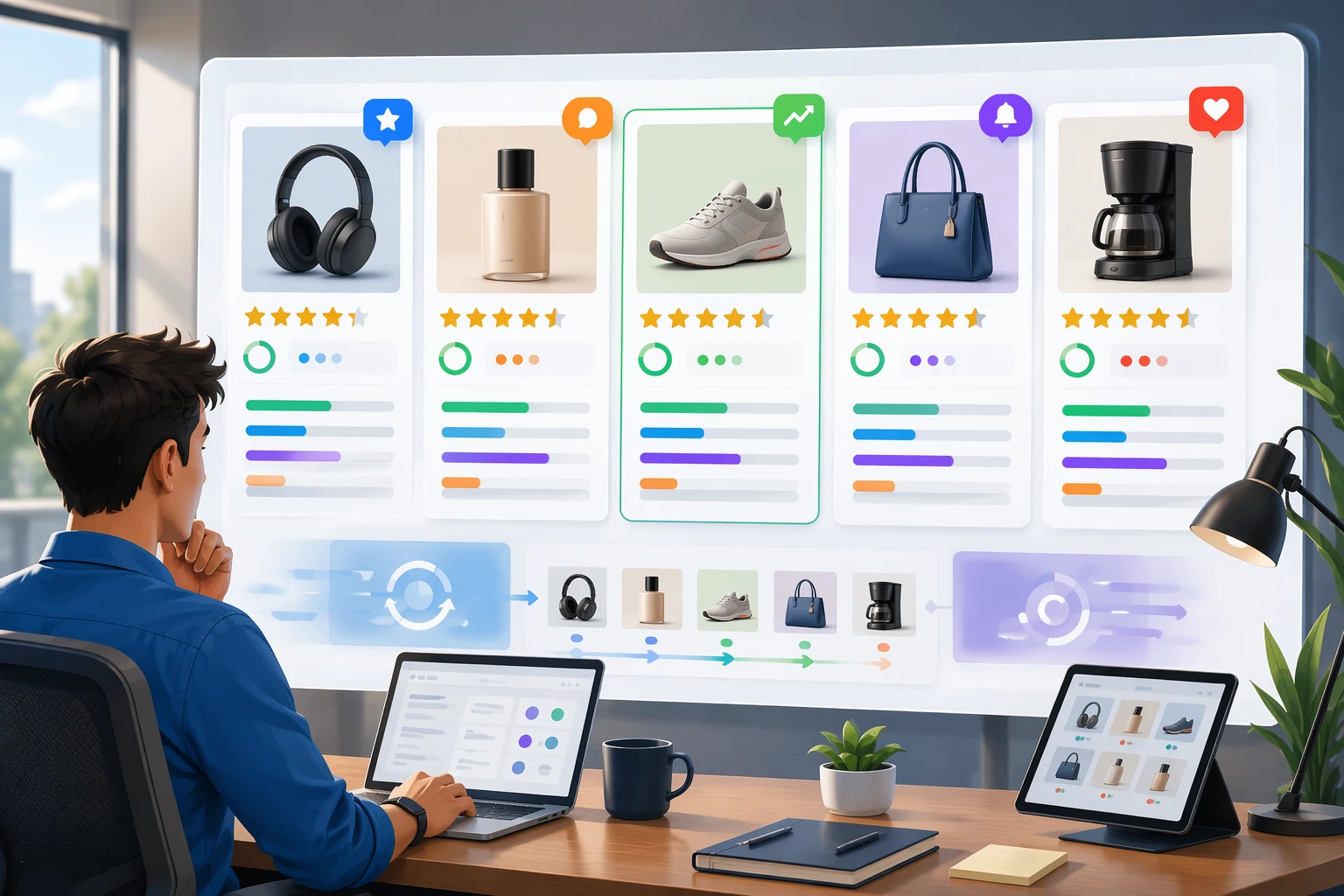
They answer “what does this look like in real life?” faster than text. Visual UGC helps with fit, finish, size, and setup questions. RaveCapture’s 2026 review merchandising guidance also stresses media filters and gallery previews because proof works best where doubt shows up. - Freshness and timing signal active trust
Old five-star reviews still help, but recent reviews close sales. Shoppers read dates as a trust check. Google’s commerce systems also value fresh review data, and the Shopping Graph updates constantly, with more than 2 billion product updates every hour. Benchmark this by SKU, not storewide.
- Reminder-driven review collection improves volume and quality
One ask is rarely enough. Use a timed post-purchase sequence:
- first ask after delivery
- second ask after use
- media prompt in follow-up
Ask for specifics, not “leave a review.” You will get better detail.
- Summary-led review displays reduce decision friction
Show the average rating, review count, top themes, and a few sharp snippets near the buy zone. Then let shoppers go deeper with filters. That skim-first layout removes effort and helps conversion teams spot weak PDPs fast.
Also Read: 15 Real Time Shopping Features Enhancing Customer Engagement
Where should real-time review experiences appear for the strongest lift?
Place them in the decision path, not at the page bottom. NNGroup says product pages should answer questions fast and include reviews where shoppers can use them during purchase decisions, not after scrolling fatigue starts (NNGroup product page guidelines).
![How to Center or Move Loox Reviews Placement on Product Page [2026 Full Guide]](
)
- Above-the-fold summaries capture early intent
Show star rating, review count, and one short proof point near the title or price. Baymard also notes shoppers need a clear ratings summary for fast scanning (Baymard ratings summary). This works best on mobile, where first-screen trust matters most. - Shoppable review widgets reduce scroll-back friction
Add review snippets beside the buy box, variant picker, or spec blocks. Shoppers should not read a great review, then hunt back for the CTA. If Kandid already guides fit or compatibility, pair that with review proof near the recommendation. - Review carousels work when they are optimized, not default
Use carousels only for short, specific, high-intent quotes. Keep them fast, swipeable, and tied to the product claim. A generic rotating widget above the buy box often adds noise, not lift.
Also Read: Real Time Shopping vs Static Browsing for Conversion
Pros and Cons
- What works well
- Real-time shopping reviews cut doubt fast. Shoppers see fresh proof, common objections, and buyer context without leaving the page. That helps high-intent users decide quicker and can lift trust.

- What can go wrong
- Speed can hide weak controls. The FTC’s final rule on fake reviews bans fake or bought reviews, and its platform guide warns against suppressing negative feedback.
Fresh reviews help only if they are real, balanced, and clearly moderated.
- Best fit use cases
- Best for complex catalogs, high-consideration products, and teams that can verify review quality daily. Kandid fits brands that need live guidance plus social proof in one buying flow.
Also Read: Kandid Review: Is This the Best Real Time Shopping AI for Brands?
Is Real-Time Shopping Review Benchmarking Worth It?
Yes, if your team gets enough traffic to test fast. Benchmarking helps you spot whether real-time review prompts lift trust or just add noise. CROBenchmark 2026 says 54.4% of stores still do not show product reviews on product pages.
- Who should adopt it first
- Brands with high SKU count, paid traffic, or complex products
- Teams already tracking CVR, AOV, and revenue per session
- How to start with a pilot
- Test one category or top 20 product pages
- Compare before vs after on mobile first
- Use a 4 to 6 week window
- What success looks like
- Higher CVR, better revenue per visitor, and no drop in speed
- Most winning tests produce modest lifts, not miracles, per Visionary's 4,200-test study

Want stronger real-time shopping performance? See how Kandid turns live shopper questions into guided purchases, higher conversion, and better AOV.
Frequently Asked Questions
Q1: What are the key benchmarks for real-time shopping reviews that boost ecommerce conversions?
Track view-to-cart rate, review interaction rate, time to first helpful proof, mobile visibility, and revenue per session lift. Good benchmarks show proof fast, match product context, and never block checkout or slow page speed.
Q2: How can ecommerce teams leverage real-time AI review scrolls to increase conversion rates globally?
Show reviews by region, language, product use case, and shopper intent. Pair review streams with AI guidance that answers fit, specs, and shipping questions in real time. Kandid fits well here because it turns proof into guided buying, not passive browsing.
Q3: What specific strategies do top D2C brands use for managing live shopping reviews to maximize ROAS?
They tag reviews by SKU, concern, and buyer type, filter weak or old proof, and surface reviews near key drop-off points. Strong teams test placement weekly, sync reviews with paid landing pages, and measure ROAS lift by traffic source.
Conclusion
Judge real-time shopping reviews by speed, trust, and lift. Strong setups reduce doubt, surface useful proof fast, and stay compliant with the FTC review rule. Even a few reviews can raise purchase likelihood, per Northwestern research.