Kandid's Dynamic Storefront Review: Boost E-Commerce Engagement
Paid clicks die fast when shoppers hit dense product pages and stall. Kandid uses AI Sales Agents to guide buyers like an in-store rep, which can lift E-Commerce Engagement before they leave. This review looks at where AI Sales Agents help, where they miss, and how they compare with basic Live Shopping Tools. We review D2C storefronts often, so this take stays practical: can AI Sales Agents turn a static catalog into a live selling experience?
How Kandid turns a static store into a consultative storefront
Most stores wait for shoppers to figure things out alone. Kandid changes that by stepping in when intent is high but confidence drops. That matters because average cart abandonment still sits around 70% according to Baymard’s 2026 benchmark roundup, and shoppers now expect more guided, AI-led buying help, as shown in the 2026 PYMNTS shopping index.

Real-time engagement at the moment of hesitation means the store reacts when a buyer pauses, compares, or worries about fit. Instead of a dead product page, Kandid can answer the question that blocks the sale right then. That is useful for:
- compatibility doubts
- feature confusion
- pricing tradeoff questions
The win is not more chat. It is less friction at the exact moment a shopper might leave.
Product guidance that feels like an in-store associate comes from using the catalog, specs, and brand rules in plain language. A shopper can ask for the best option, compare two models, or check if a product fits their use case. For complex D2C catalogs, that makes the storefront feel less like a shelf and more like a guided sales conversation.
Also Read: Dynamic Storefront: 12 Ways to Lift Visitor Conversions
Features that matter most for conversion and engagement
The best storefront AI does three jobs well: guide the shopper, answer hard questions, and prove it drove revenue. That matters because cart abandonment still sits above 70% globally in 2026, according to Statista.
Product recommendations and guided upsells
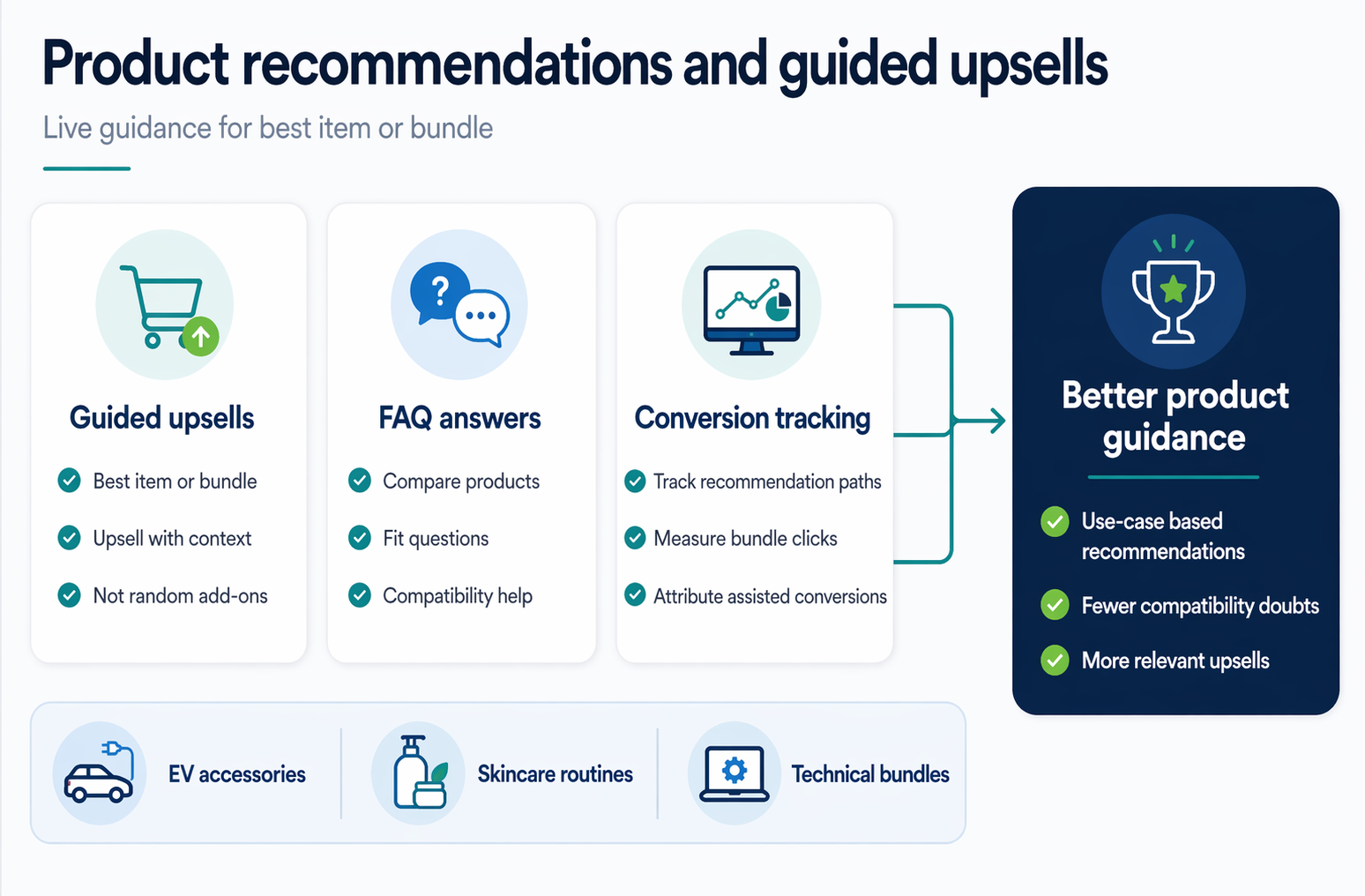
Static widgets rarely help with complex buying decisions. Strong AI agents ask a few smart questions, narrow the catalog, and suggest the next best item or bundle.
- Recommend based on use case, not just browsing history
- Handle compare, fit, and compatibility questions
- Upsell with context, not random add-ons
Kandid stands out when the catalog needs live guidance, like EV accessories, skincare routines, or technical product bundles.
Training on store data, FAQs, and custom content
Good answers depend on good training. If the agent only knows product titles, it will stall fast.
Look for systems trained on:
- Product data and specs
- FAQs, shipping, and return rules
- Brand voice and custom education content
If your shoppers ask detailed pre-purchase questions, broad AI knowledge is not enough. Store-specific knowledge is what converts.
Conversation analytics and conversion tracking
Engagement metrics alone are weak. You need to see which chats led to add-to-cart, checkout, and higher AOV. Adobe reported AI-referred retail traffic converted 54% better and showed 15% higher engagement in May 2026, based on Adobe Analytics coverage of more than 1 trillion visits reported by Digital Commerce 360.
| Feature area | Why it matters | What to verify |
|---|---|---|
| Recommendations | Lifts AOV and reduces choice overload | Product-level attribution |
| Store training | Improves answer quality | Source coverage and refresh speed |
| Analytics | Proves business impact | Chat-to-revenue reporting |
Also Read: Kandid vs. Manifest: Which Dynamic Storefront Is Best for Your Business?
Pros and cons for high-consideration D2C teams
- Pros
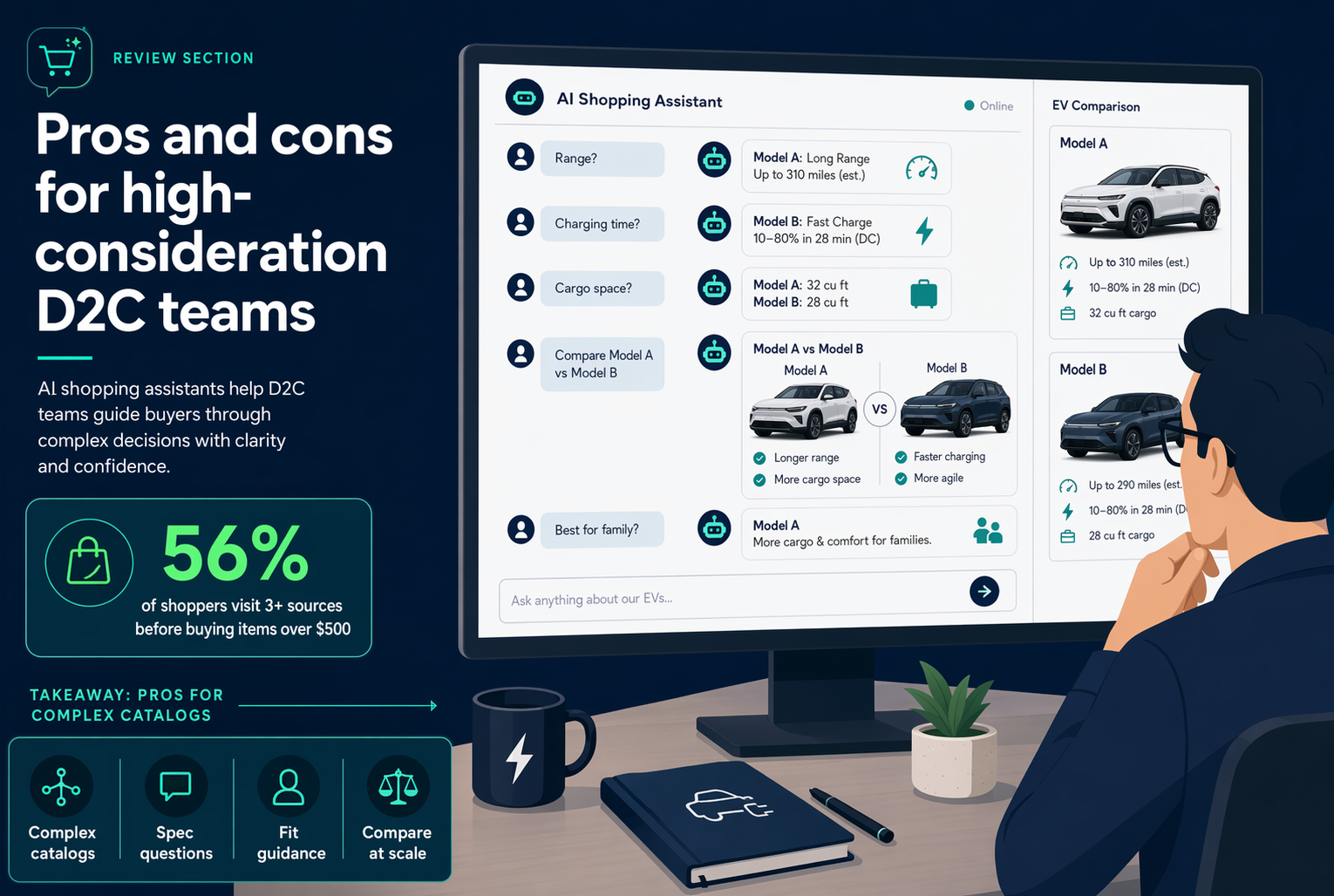
- Kandid fits complex catalogs well. It can answer spec, fit, and compare questions at scale. That matters because 56% of shoppers visit three or more sources before buying items over $500, per Emplifi research.
- Cons
- It still needs clean product data, strong review proof, and careful setup. High-consideration buyers check claims hard, and 79% read three or more reviews before purchase in the same Emplifi research. Poor answers will hurt trust fast.
Also Read: Dynamic Storefront Review: How AI-Powered Storefronts Are Reshaping Ecommerce in 2026
Is Kandid the right fit for your storefront?
Kandid fits brands with considered purchases. If shoppers ask about specs, fit, bundles, or compatibility, it can help. That matters more now because 47% of shoppers used AI somewhere in their last purchase journey, according to PYMNTS Intelligence.
- Best for brands that sell considered purchases: EV, tech, wellness, and personal care stores with lots of questions before checkout.
- When to choose a lighter alternative instead: If you sell cheap, simple items, keep it basic. Gartner found shoppers want AI to help research, not fully decide for them Gartner survey findings.

If your store feels static, try Kandid to turn product questions into guided buying and measurable conversion lift fast.
Frequently Asked Questions
Q1: How does Kandid's AI sales agents enhance e-commerce engagement and conversion rates?
Kandid answers product questions live, handles fit and compatibility doubts, and recommends the next best item. That keeps shoppers on site longer and helps more high-intent visits turn into carts and completed orders.
Q2: What core features of Kandid's dynamic storefront drive customer experience and sales growth?
Key features include real-time chat, catalog-aware answers, product comparison help, brand-voice replies, and guided recommendations. These matter most for stores with technical, high-consideration, or multi-variant products where shoppers need help before buying.
Q3: In what ways can Kandid's real-time AI agents outperform traditional e-commerce tools globally?
Traditional filters and static FAQs make shoppers do the work. Kandid reduces that friction by guiding buyers in plain language, all day, across markets, which can improve conversion, average order value, and session depth at scale.
Conclusion
Kandid looks strongest when your catalog needs guidance, not just search. That fits 2026 buying behavior, as Gorgias reports conversations now shape checkout and Salesforce found AI influenced 20% of holiday retail sales.