Dynamic Storefront Review: How AI-Powered Storefronts Are Reshaping Ecommerce in 2026
Shopify's Q1 2026 data shows the shift clearly: AI-referred shoppers convert almost 50% better, spend 14% more, and orders from AI channels rose 13x year over year. AI Storefronts are now a real growth lever. The challenge is simple: most brands still treat AI Storefronts like add-ons, not core commerce. This review maps AI Storefronts, Dynamic Storefront AI, and Ecommerce AI Agents into four layers so teams can see what matters, what fits their size, and what to test next.
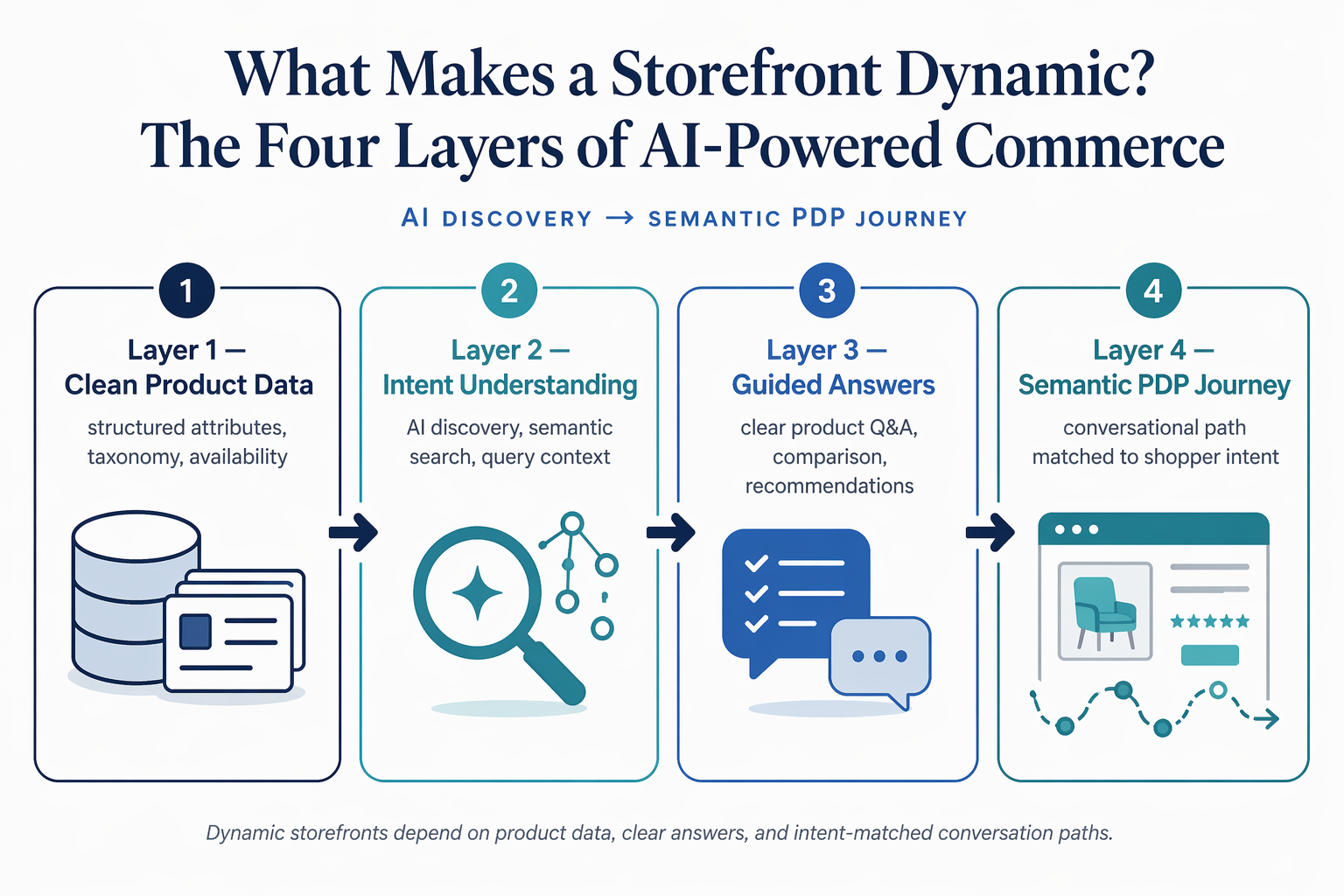
What Makes a Storefront Dynamic? The Four Layers of AI-Powered Commerce
A dynamic storefront changes what shoppers see, ask, and buy in real time. It stops acting like a fixed catalog and starts acting like a live sales system.
1. Layer 1: Agentic Discovery - Selling Inside AI Conversations
Shoppers now start inside chat, AI search, and buying agents, not just Google or category pages. That shift matters because agentic commerce lets software handle discovery, compare options, and even move toward checkout on a shopper’s behalf, as explained in Wikipedia’s overview of agentic commerce. Brands need clean product data, clear answers, and conversational paths that match intent. Tools like Kandid fit here by turning product questions into guided buying help, not dead-end search results.
2. Layer 2: Semantic PDPs - Pages That Rewrite Themselves
A semantic PDP changes based on the shopper’s question, use case, or device concerns. Instead of one static page, it pulls the right proof, specs, and comparisons forward. Research reviews show AI in ecommerce has long centered on personalization, trust, and recommendation logic, according to this academic review on AI in ecommerce. In practice, that means PDPs should adapt for:
- first-time buyers
- compatibility questions
- high-consideration products
Also Read: Dynamic Storefront Playbook for Real Time Shopping
Real ROI: What the Data Says About Conversion and Revenue Impact
Traffic Source Matters: Why AI-Referred Shoppers Behave Differently
AI-referred shoppers often arrive closer to a buying decision. Adobe found they converted 42% better than non-AI traffic in March 2026 and drove 37% higher revenue per visit according to TechCrunch’s coverage of Adobe data. Shopify saw a similar pattern: AI-referred sessions converted at nearly 50% higher rates than organic search, with 14% higher AOV in its Q1 2026 analysis.
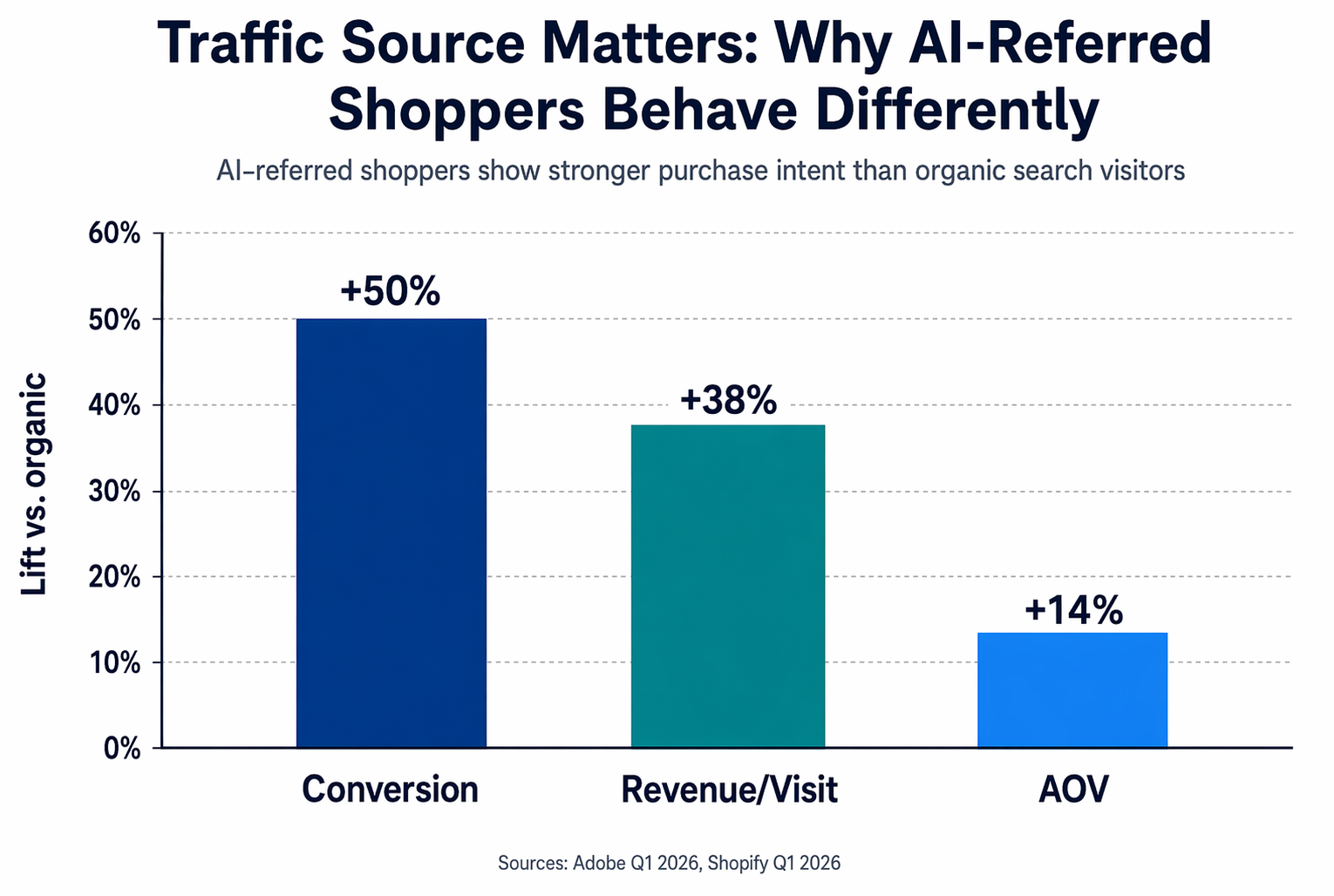
This traffic is not just bigger. It is warmer, more focused, and more ready to buy.
- AI sends users deeper into product pages
- Shoppers spend more and bounce less
- Strong answers beat generic landing pages
Also Read: Dynamic Storefront: 12 Ways to Lift Visitor Conversions
Implementation Paths for D2C Brands at Every Stage
Small brands should start with clean product data and one AI layer. Enterprise teams should connect search, PDPs, landing pages, and agentic support into one stack. That keeps setup realistic and ties AI to revenue.
Small Brand Path: Catalog Optimization and One App
Start with your catalog. Fix titles, specs, bundles, tags, and compatibility notes first. Adobe data reported by Marketing Tech News shows AI-referred shoppers spend more time, view more pages, and convert better, so your product data needs to be easy for machines to read. Then add one app, ideally a guided selling layer like Kandid, to answer product questions and route shoppers fast.
Keep the stack small. One strong AI layer beats three weak tools.
Enterprise Path: Full Intelligent Stack
Larger brands need shared data across discovery, landing pages, PDPs, merchandising, and support. Accenture says AI agents are changing who makes buying decisions in commerce in its 2026 agentic commerce report. Build for both people and agents:
- unify catalog and behavior data
- deploy semantic PDPs
- add personalized landing pages
- layer in visual merchandising and AI sales agents
Also Read: Dynamic Storefront vs Manual Merchandising: What Wins
Is an AI-Powered Dynamic Storefront Worth It in 2026?
Yes, for many brands it is worth testing now, not blindly rolling out everywhere. The value is highest if you sell complex products, have enough traffic to train models, and need better conversion from high-intent visits.
Adobe data reported by Marketing Tech News shows AI-referred retail visitors converted 54% higher in May 2026. McKinsey also says AI is already shaping discovery and comparison before checkout in its 2026 agentic commerce research.
If your PDPs are thin, your catalog is messy, or traffic is low, fix that first. AI storefronts amplify store quality.

Want AI storefront gains without a long build cycle? Try Kandid to turn live shopper questions into guided product discovery and higher conversion.
Frequently Asked Questions
Q1: How do AI-powered storefronts improve ecommerce conversion rates in 2026?
They cut friction. AI helps shoppers find the right product faster, answers buying questions in real time, and adapts pages to intent, so more sessions end in add-to-cart and checkout.
Q2: What are the key features of an AI-powered online storefront?
Look for four layers: agentic product discovery, personalized landing pages, semantic PDPs, and visual merchandising. Strong setups also track intent, learn from behavior, and connect with catalog, inventory, and analytics tools.
Q3: How can small D2C brands implement AI storefronts affordably?
Start with one high-impact use case, usually product discovery or PDP guidance. Use fast-onboarding tools like Kandid, test on top traffic pages first, and measure lift in conversion rate, AOV, and bounce before expanding.
Conclusion
AI storefronts now shape discovery, landing pages, PDPs, and merchandising as one system. Brands that adapt faster win more qualified traffic and better conversion. Recent data shows AI referrals convert higher and semantic search is moving into core storefronts.