Kandid vs. Manifest: Which Dynamic Storefront Is Best for Your Business?
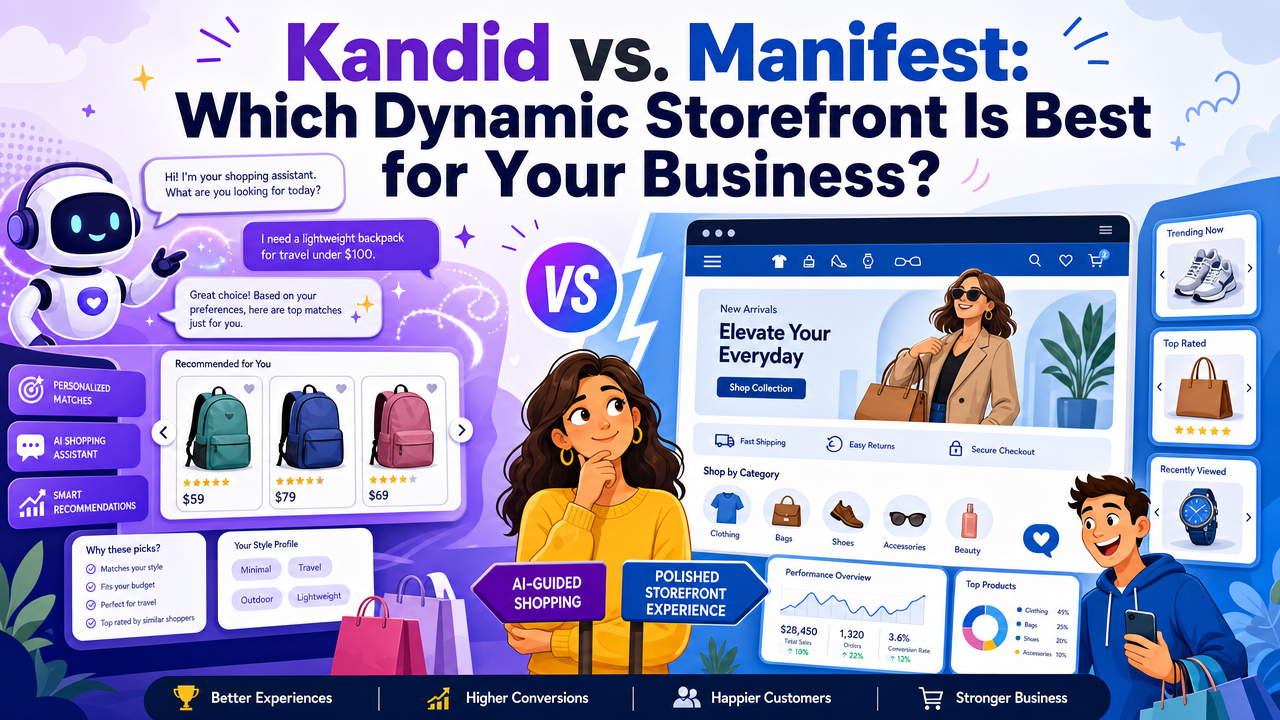
Your storefront stays static while shoppers leave. Your best rep is offline, and most visitors bounce without buying. D2C brands lose sales because static pages cannot guide complex choices in real time. AI sales agents fix that. AI sales agents now power the dynamic storefront. Kandid ecommerce and Manifest both use AI sales agents to recommend products and close sales 24-7. We reviewed Shopify app data, docs, pricing, and merchant reviews to compare them fairly.
Kandid vs Manifest: How They Approach AI Sales
kandid: The Consultative AI Sales Agent
Kandid acts more like a digital sales rep than a basic chatbot. It trains on product pages, FAQs, blogs, and custom files, then guides shoppers through fit, specs, and buying questions in real time. On Shopify, Kandid highlights conversion tracking, active session insight, product recommendations, and brand-level customization with a 5.0 rating on the Shopify App Store.
Pick Kandid if your shoppers ask detailed pre-purchase questions and need help choosing the right item, not just finding one.
manifest: The AI Shopping Assistant Ecosystem
Manifest takes a broader assistant approach. It combines AI chat, quizzes, live chat, cart recovery, and recommendation flows into one shopping layer. Its Shopify listing positions it as an AI shopping assistant ecosystem, while the brand site pushes 500+ eCommerce AI agents and CRO testing tools for placements and nudges Shopify listing.
Manifest fits brands that want more campaign-style AI touchpoints across support, discovery, and cart recovery.
Also Read: Dynamic Storefront Playbook for Real Time Shopping
Pricing Comparison: Pay-as-You-Grow vs Tiered Plans
The pricing gap is simple. Kandid gives you a usage-based path with clear overage math, while Manifest keeps entry friction low but pushes larger brands toward custom pricing.
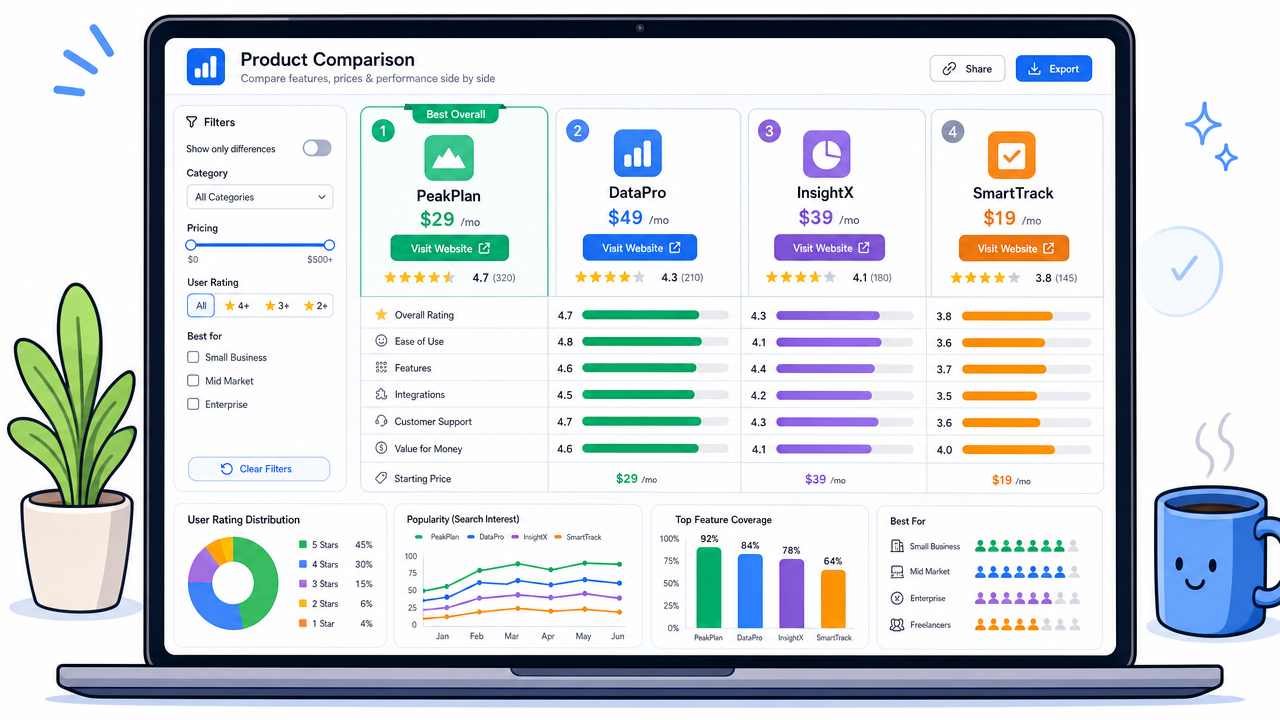
- Kandid starts free, includes 100 visitors, then charges $12 per extra 1,000 visitors. Paid tiers start at $99, $199, and $350 per month, with the same overage model on top, per the Shopify App Store listing.
- Manifest offers a free-to-test plan on Shopify, but its broader site messaging leans on trials and sales-led pricing, so forecast accuracy is lower for scaling teams, based on its Shopify app listing.
If traffic swings hard by season, Kandid is easier to model in Shopify Admin and finance reviews.
Also Read: Dynamic Storefront vs Manual Merchandising: What Wins
Which D2C Verticals Each Platform Serves Best
Kandid fits EV and tech brands better when shoppers ask detailed, high-stakes questions. EV buyers often compare price, charging, and range, and J.D. Power’s 2026 EV study shows those remain top barriers. GreenCars also notes AI is useful when buyers need help sorting specs, tradeoffs, and fit. That makes Kandid a stronger pick for catalogs with complex compatibility, bundles, or spec-heavy buying paths.
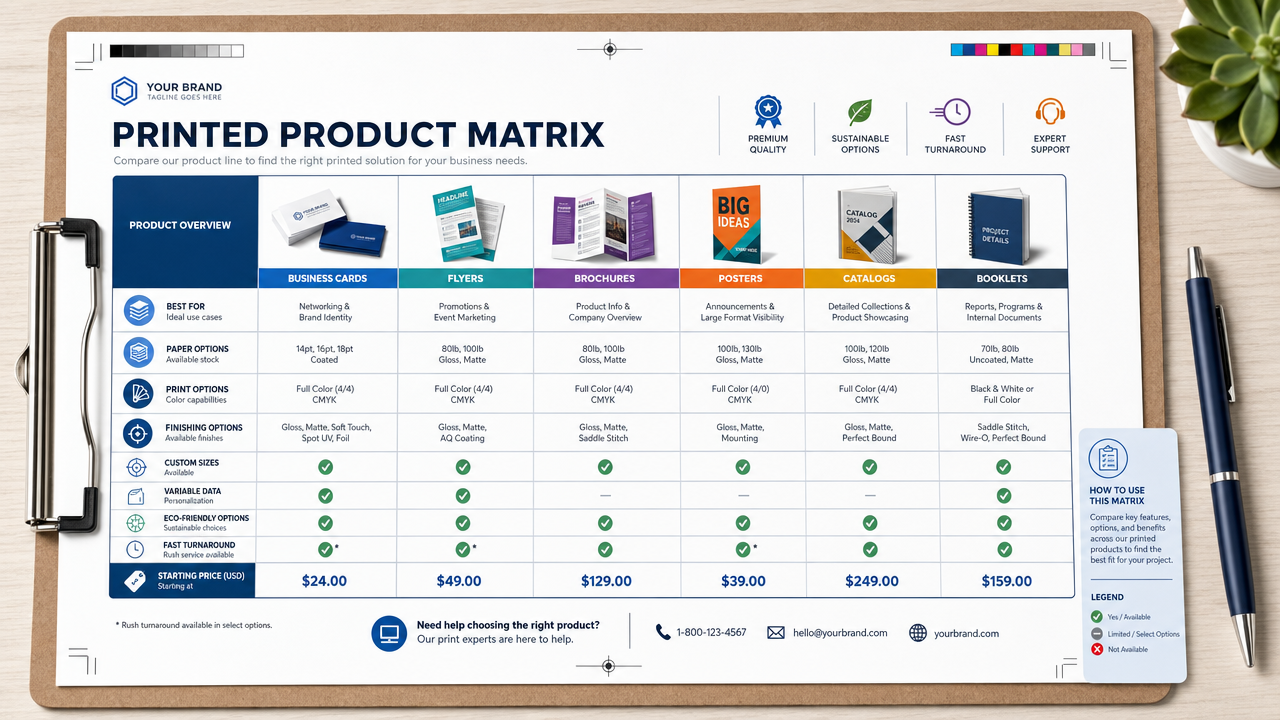
Manifest fits fashion and beauty brands better when the main job is fast discovery, guided quizzes, and support at scale. These categories win on taste, routine, and quick answers more than technical comparison. It can work well for shade finding, product matching, and post-purchase help.
Pick Kandid if your shoppers ask, "Will this work for me?" Pick Manifest if they ask, "Which one should I try first?"
Also Read: Dynamic Storefront: 12 Ways to Lift Visitor Conversions
Decision Framework: How to Choose Between Kandid and Manifest
Pick Kandid if your store needs deep product guidance, brand-voice control, and clear sales analytics. Pick Manifest if you want broader social proof and a simpler starting point. Shopify App Store listings show Kandid at 5.0 with 9 reviews and Manifest at 4.6 with 61 reviews.
Use this quick filter:
- Choose Kandid for complex catalogs, higher-consideration products, and teams that want tighter control in Shopify Admin.
- Choose Manifest for faster testing, lighter setup, and stores that value a larger review base.
- Compare on one KPI first - conversion lift, AOV, or ticket deflection.
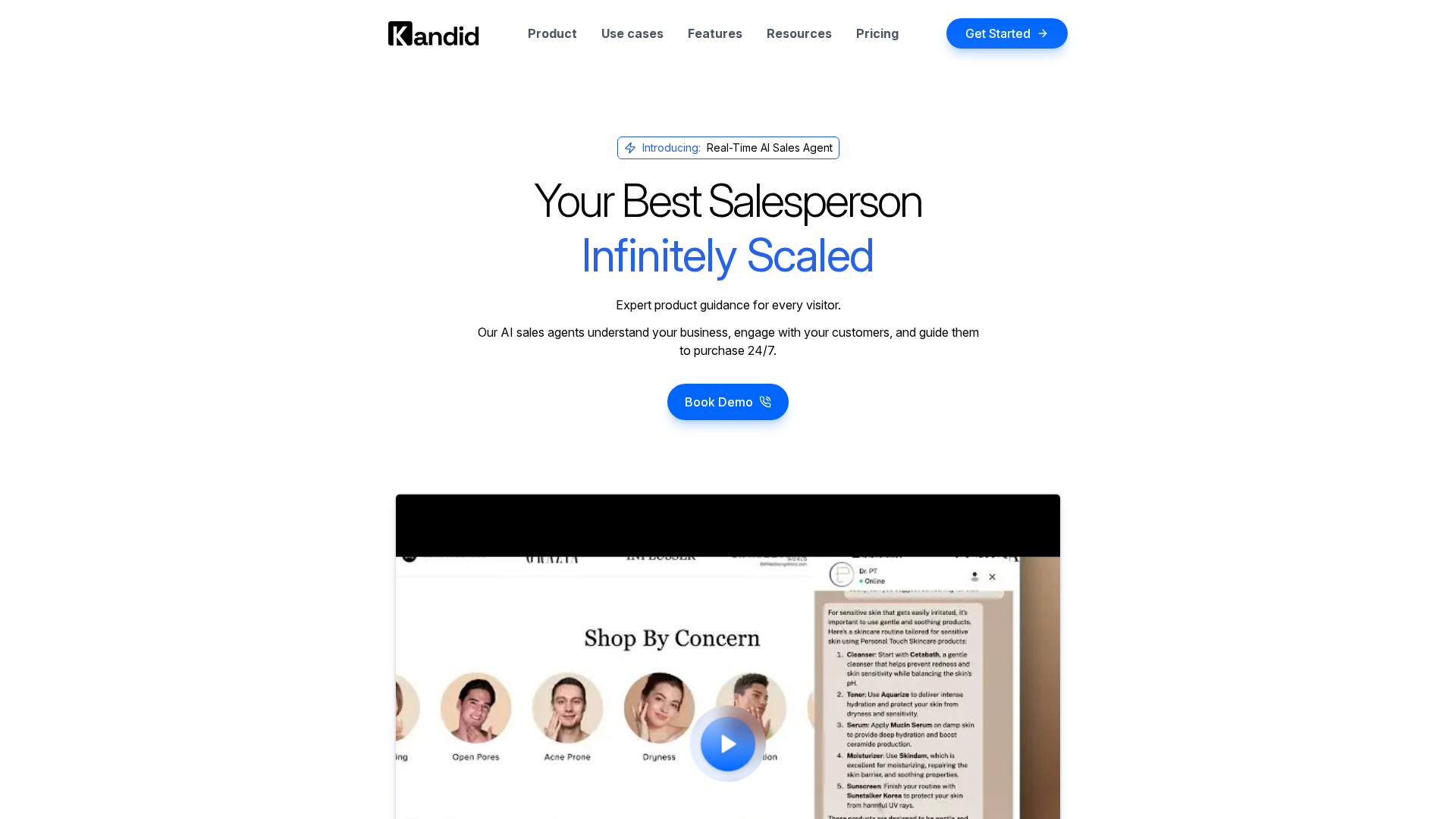
Ready to transform your storefront? Try Kandid or Manifest free. If you need real-time product guidance that lifts conversion and AOV, start with Kandid today.
Frequently Asked Questions
Q1: How do Kandid and Manifest compare for dynamic storefronts?
Kandid fits guided selling and complex product choice. Manifest leans more toward shopper support and post-click help. If your goal is higher conversion, AOV, and better product matching, Kandid usually gives stronger storefront impact.
Q2: What are the key differences between Kandid and Manifest AI?
The biggest gaps are use case, product depth, and buying guidance. Kandid acts more like a real sales agent inside the store. Manifest is stronger for support-style flows, FAQs, and ticket deflection across a broader review base.
Q3: Which AI sales agent is best for D2C ecommerce brands?
It depends on your catalog and team goals. Choose Kandid if shoppers need help comparing specs, fit, bundles, or compatibility. Choose Manifest if support load is your main pain. Most growth-focused D2C brands will likely prefer Kandid.
Conclusion
Kandid fits brands that need a consultative AI sales agent for technical, high-consideration products. Manifest fits discovery-led retail with a broader 500-plus-agent setup. Pricing is the real split - Kandid scales at $12 per 1,000 visitors, while Manifest uses monthly tiers. Both show clear upside, and Shopify says AI-driven traffic to stores grew 8x year over year.