Live Chat & AI Chatbot Comparison: Which Boosts Customer Engagement?
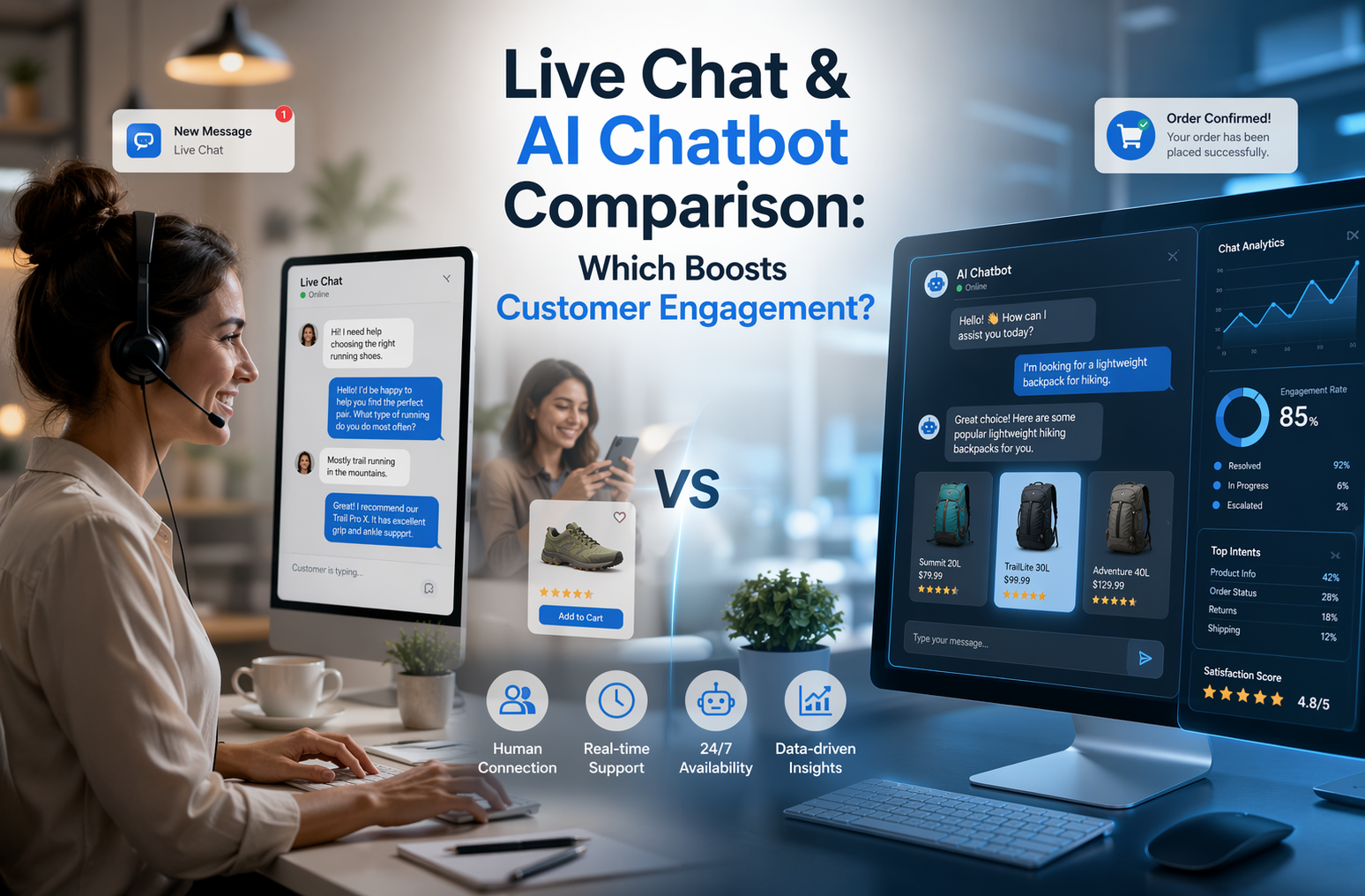
Quick Summary: AI chatbots are better for quick, scalable responses during high traffic, especially for simple questions. Live chat works better for complex, high-stakes sales where human reassurance is crucial. Most brands find a hybrid approach, using AI first then handing off to humans, offers the best customer engagement. Slow replies kill sales. For most D2C teams, an AI Chatbot Platform beats Live Chat Software on speed and coverage, while Live Chat Software wins when a real expert must close a ready buyer. We help ecommerce brands choose Customer Engagement Tools for paid, Instagram, WhatsApp, and product page traffic, showing where Live Chat Software or a hybrid setup lifts conversion most.
Live Chat Software vs AI Chatbot Platform: At a Glance
| Live Chat Software | AI Chatbot Platform | |
|---|---|---|
| Engagement strength | Best for high-touch, persuasive conversations | Best for instant, scalable product guidance |
| Availability | Depends on agent coverage hours | 24/7 automated coverage |
| Best for | Complex questions and premium guided selling | High-volume FAQs and product discovery |
| Human effort required | High during busy traffic periods | Low after setup and training |
| Typical D2C impact | Improves conversion when buyers need reassurance | Improves response speed and capture rate |
How Live Chat Software and AI Chatbot Platform Compare
Live Chat Software
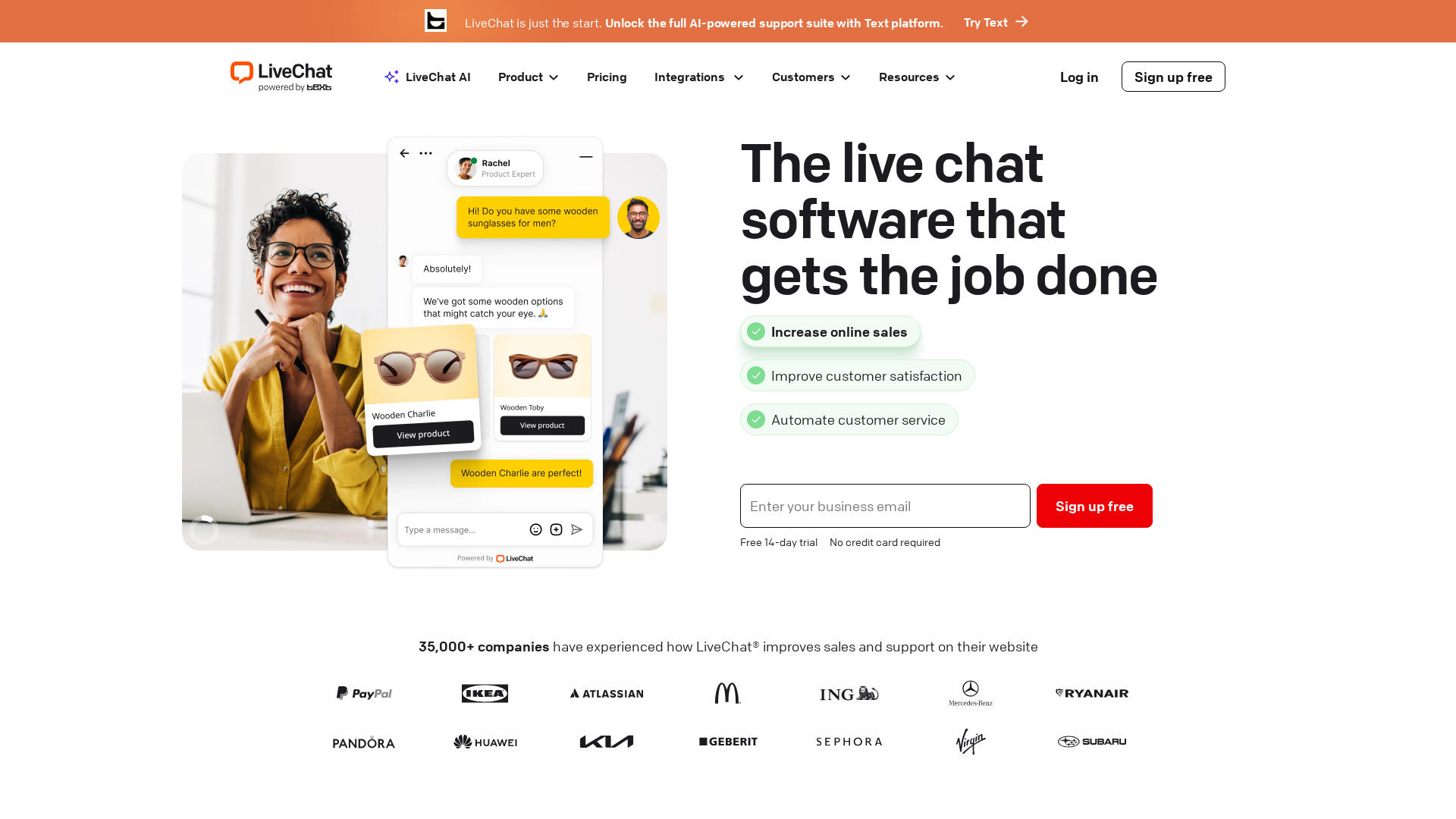
Live chat software puts human agents in the chat box for real-time sales and support. It fits brands that sell premium, technical, or high-consideration products where buyers want reassurance before they buy.
Key strengths
- Strong for nuanced questions
- Better for high-touch selling
AI Chatbot Platform
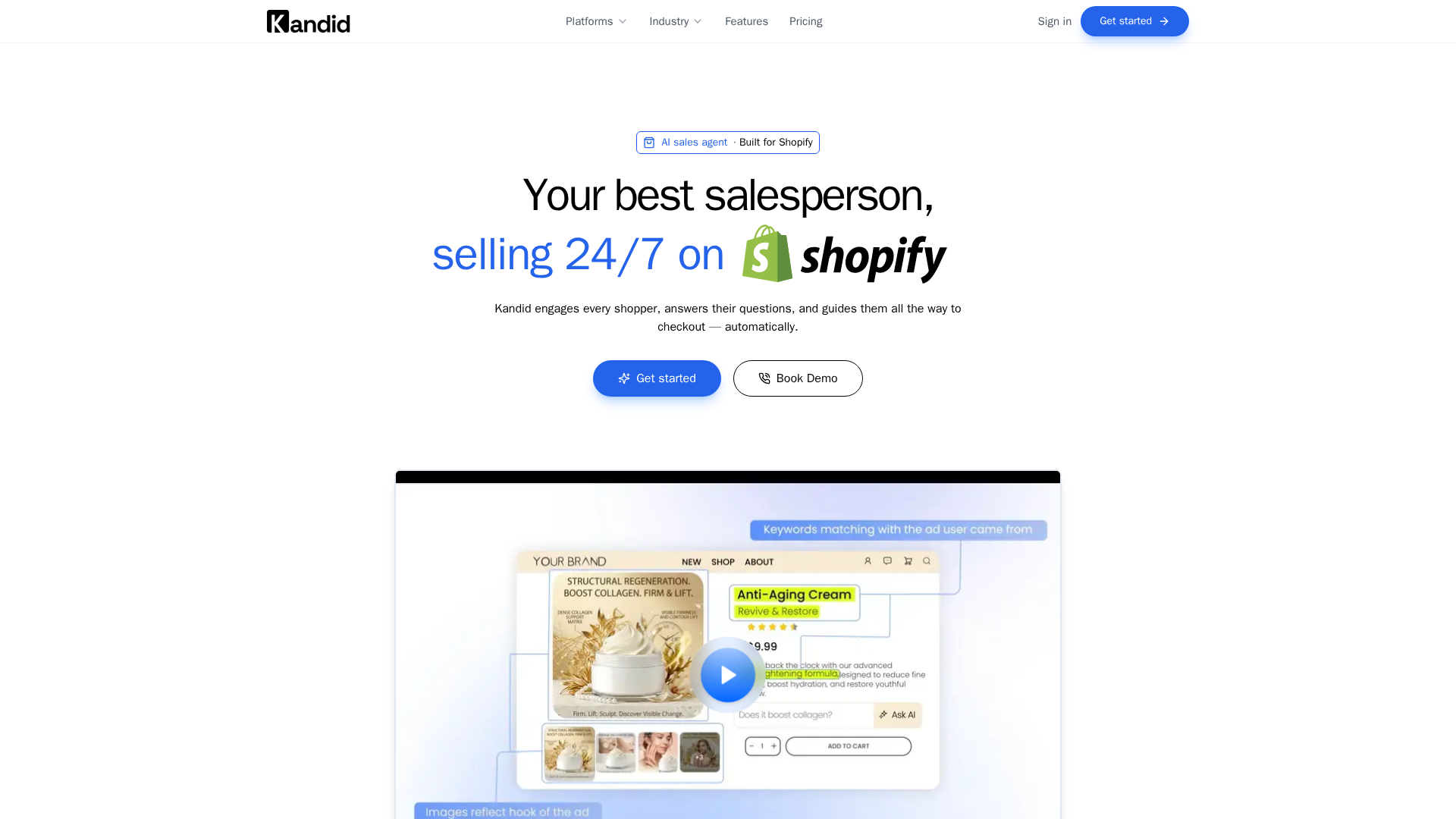
AI chatbot platforms handle shopper questions, product guidance, and lead capture around the clock. They fit D2C teams that need fast replies at scale, especially when traffic is high and staffing is tight.
Key strengths
- 24/7 coverage
- Low ongoing human effort
Where Each Tool Wins on Customer Engagement
AI chatbots win when speed decides the sale. They answer fast, stay on all day, and catch shoppers before they bounce. That matters early in the journey, when buyers ask simple things like shipping, stock, or fit. Research in ScienceDirect shows AI satisfaction rises when it delivers clear value, not just quick replies. Human live chat wins later, when doubt shows up and a buyer needs trust, tone, and judgment.
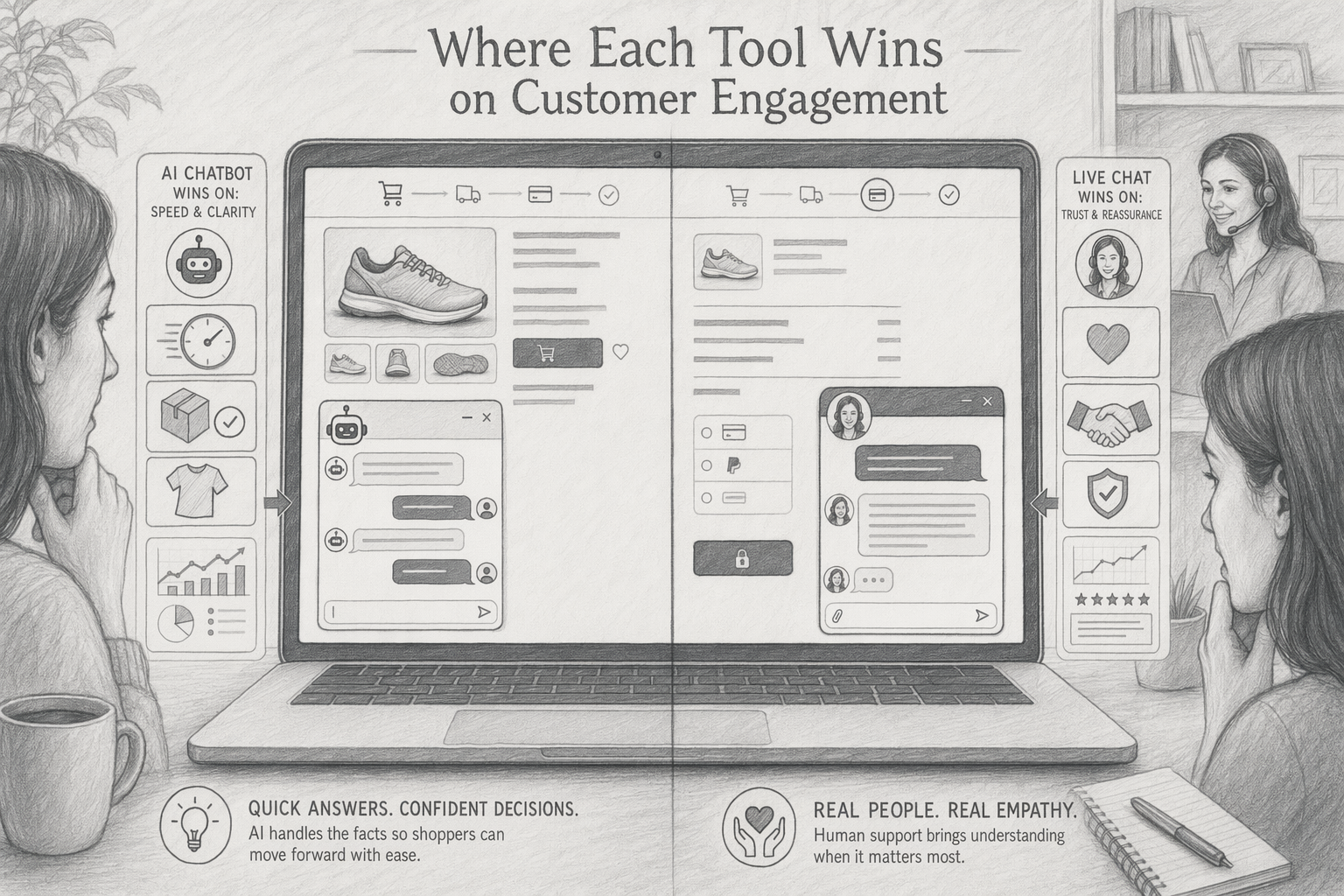
Product complexity changes the winner fast. If you sell skincare bundles, basics, or easy accessories, AI can guide most chats well. If you sell EV parts, high-spec tech, or routine-heavy personal care, humans often close better because they explain trade-offs and edge cases. A 2026 buyer study found 83% say human connection matters in high-stakes purchases, while 59% prefer a human when both options exist, according to Advisor Magazine.
Also Read: How Kandid Enhances Customer Support with Live Chat & AI Chatbots
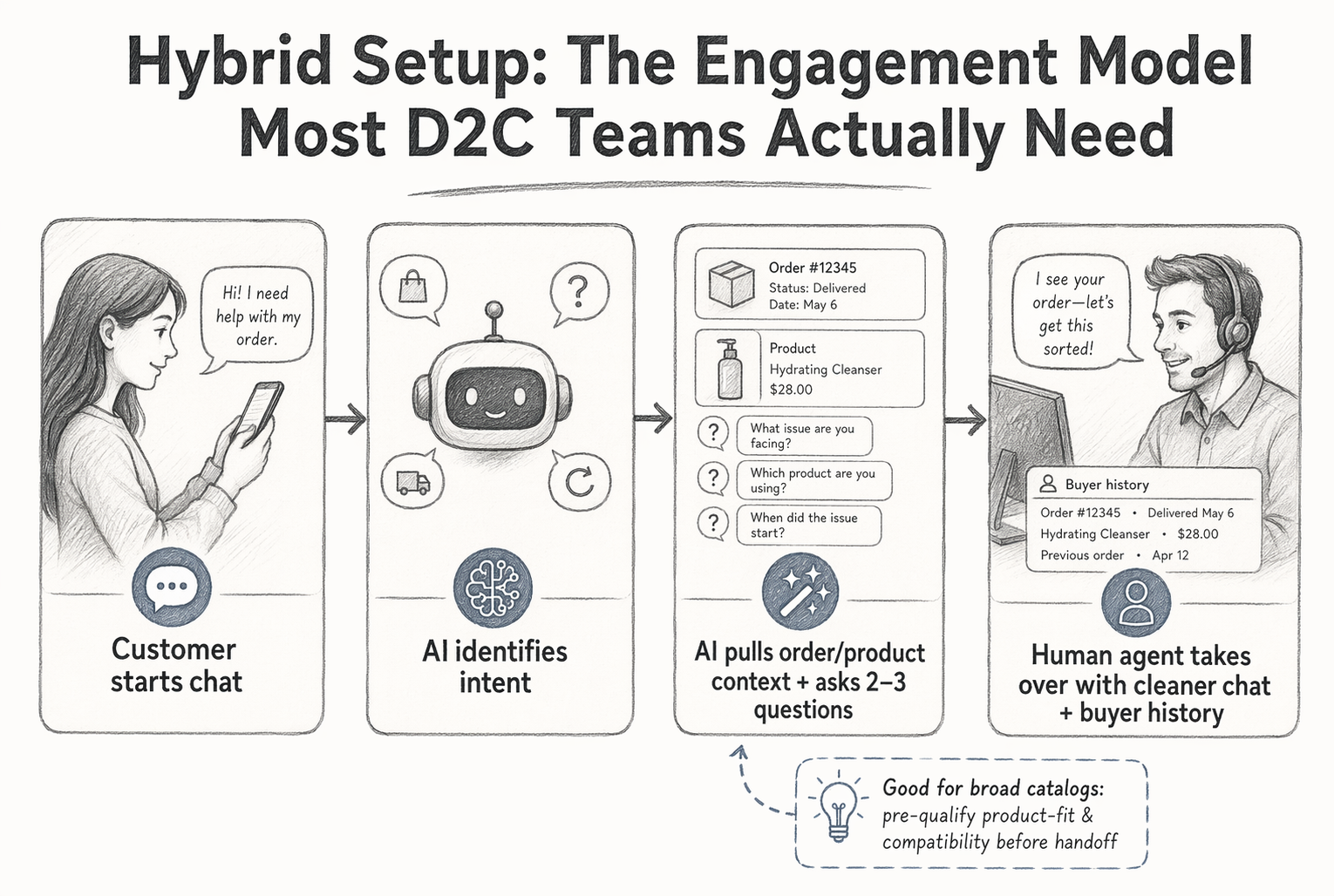
Hybrid Setup: The Engagement Model Most D2C Teams Actually Need
A hybrid model works best for most D2C brands. Let AI do the first pass, then send the right chats to people fast. That cuts queue time and keeps agents focused on revenue work. Liveops found 73% of enterprise CX leaders prefer hybrid AI plus human support over AI-only setups according to Morningstar.
- How AI qualification improves live chat quality
- AI should greet, sort intent, pull order or product context, and ask the first 2-3 questions.
- That gives live agents cleaner chats, better buyer history, and less time wasted on basics.
- For brands with broad catalogs, Kandid fits well here because it can pre-qualify product-fit and compatibility questions before handoff.
- When live agents should take over
- Hand off when the shopper shows buying intent, confusion, frustration, or asks for exceptions.
- Humans should own high-AOV carts, bundle advice, refund edge cases, and technical fit checks.
- Liveops research says 93% of customers want it to be easy to reach a person when automation fails.
Also Read: Ultimate Guide to Live Chat & AI Chatbot Integration Strategies
Which Should You Choose for D2C Engagement?
Pick based on what blocks the sale.
- Choose live chat software if your sales depend on human reassurance. If shoppers ask about fit, compatibility, safety, or high-ticket options, people close better. In one 2025 survey, 54% said humans delivered better service than AI according to Liveops.
- Choose an AI chatbot platform if speed and scale are the main growth levers. AI fits stores with heavy volume, simple repeat questions, and global traffic. AI-driven chatbots reached 88% adoption across retailers in 2025 per OSF Digital.
Choose hybrid if you want the highest engagement ceiling. Let AI qualify, answer fast, and route intent. Let humans handle edge cases and close.
For most D2C brands, hybrid wins because it protects trust without slowing growth.
Need always-on product guidance without adding support load? See how Kandid turns shopper questions into conversions.
Frequently Asked Questions
Q1: What are the main advantages of AI chatbots over live chat for customer engagement?
AI chatbots reply 24-7, handle many shoppers at once, and keep response times low. They work best for product questions, order help, and guided selling when traffic spikes or teams have limited support hours.
Q2: How does a hybrid chatbot and live chat support system improve customer satisfaction?
A hybrid setup lets AI handle fast, simple questions first, then pass complex cases to people. That cuts wait time, keeps context, and gives shoppers both speed and human judgment when they need it most.
Q3: What key factors should D2C brands consider when choosing between live chat and AI chatbots?
Check question volume, product complexity, support hours, team size, and margin. If buyers need spec matching or comparison help at scale, AI fits better. If cases are emotional or high-stakes, human chat matters more.
Conclusion
Pick live chat for high-stakes, nuanced sales help. Pick AI chatbots for speed and scale. Best results come from both - as Verint research shows, customers want fast resolution and easy human fallback.