How Kandid is Revolutionizing Real Time Shopping Worldwide
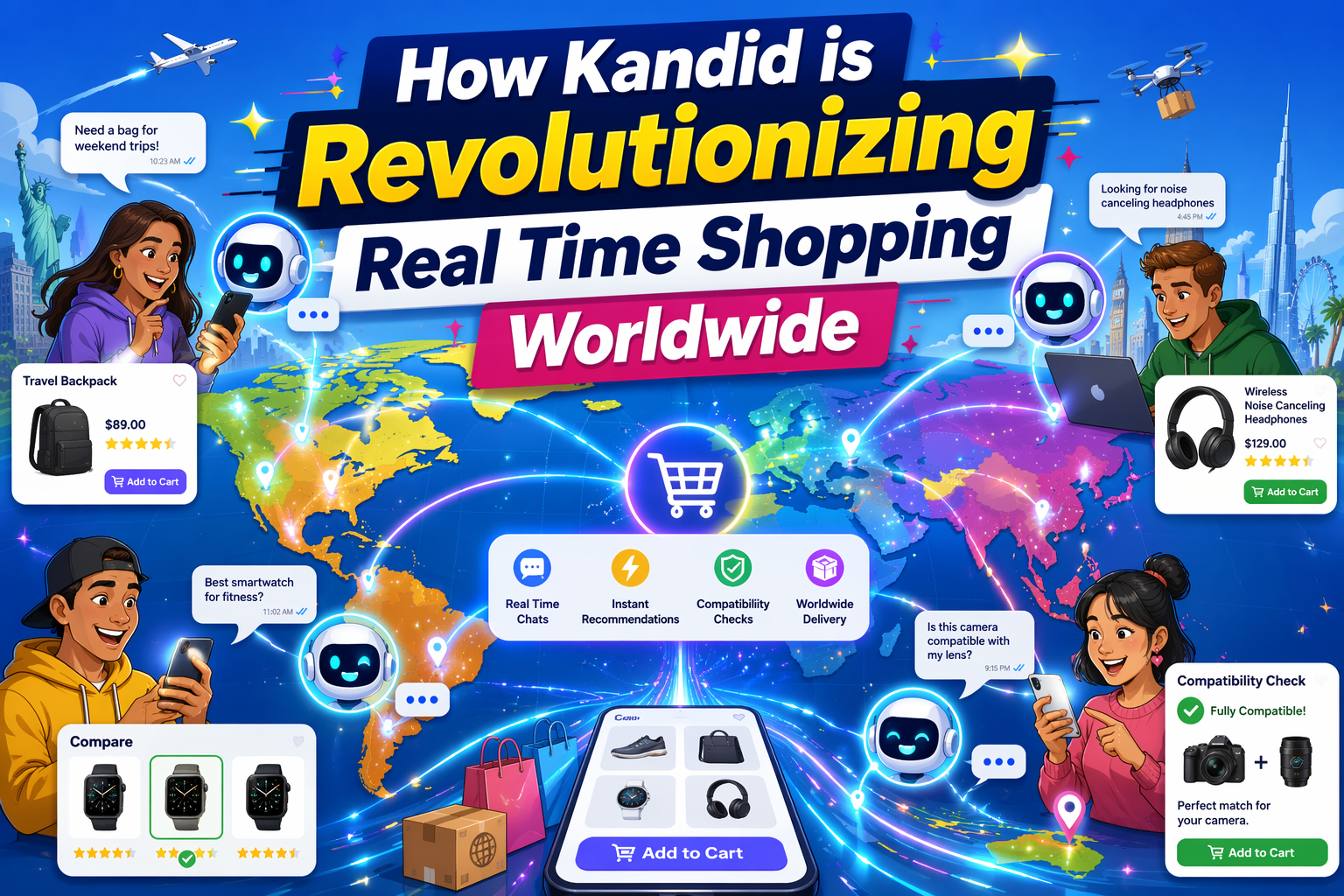
Quick Summary: Kandid helps brands respond instantly to shoppers' questions, reducing hesitation and keeping buyers engaged in the purchase flow. It works especially well in tech, EV, and beauty categories where decision complexity and risk are high. By delivering fast, context-aware answers, Kandid boosts conversion rates, average order value, and reduces cart abandonment.
A fast answer can save a sale. If a shopper asks whether an EV trim fits their commute or a serum suits sensitive skin, Kandid helps brands reply in seconds and keep that buyer moving in the same session. The real problem is delay - slow replies, extra tabs, and dropped intent. This guide shows how Kandid cuts friction, speeds decisions, and lifts conversion across complex product categories with real buying use cases.
How Kandid turns hesitation into an in-session sale
Hesitation usually comes from two things: slow answers and too many choices. Research from Harvard Business School shows shoppers are more sensitive to delays at checkout, while EdUHK research notes that too many options can drain decision quality fast.
| Friction point | What the shopper feels | How Kandid helps |
|---|---|---|
| Slow reply | "I will come back later" | Answers in-session |
| Too many options | "I am not sure which one fits" | Narrows choices fast |
| Spec confusion | "I do not want to buy the wrong one" | Explains fit and tradeoffs |
- Why response time is the real conversion lever
- Fast help matters because intent fades quickly.
- Kandid meets the question the moment it appears, not after the shopper exits.
- That keeps high-intent traffic warm and cuts drop-off.
- How the conversation stays inside the purchase flow
- The shopper does not need to open new tabs or wait for email.
- Kandid handles comparison, fit checks, and objections right on the product path.
- Fewer steps means less friction before checkout.
- What makes Kandid different from a basic chatbot
- Basic bots route tickets or repeat scripts.
- Kandid acts more like a sales rep with product context, brand voice, and purchase guidance.
- It helps buyers decide, not just ask.
Also Read: Kandid Review: Is This the Best Real Time Shopping AI for Brands?
Where Kandid drives the biggest gains across global ecommerce categories
Kandid works best where shoppers hesitate because choices feel risky, technical, or personal. That pattern shows up most in electronics, EV, and beauty.
- Electronics and gadgets: make technical specs understandable
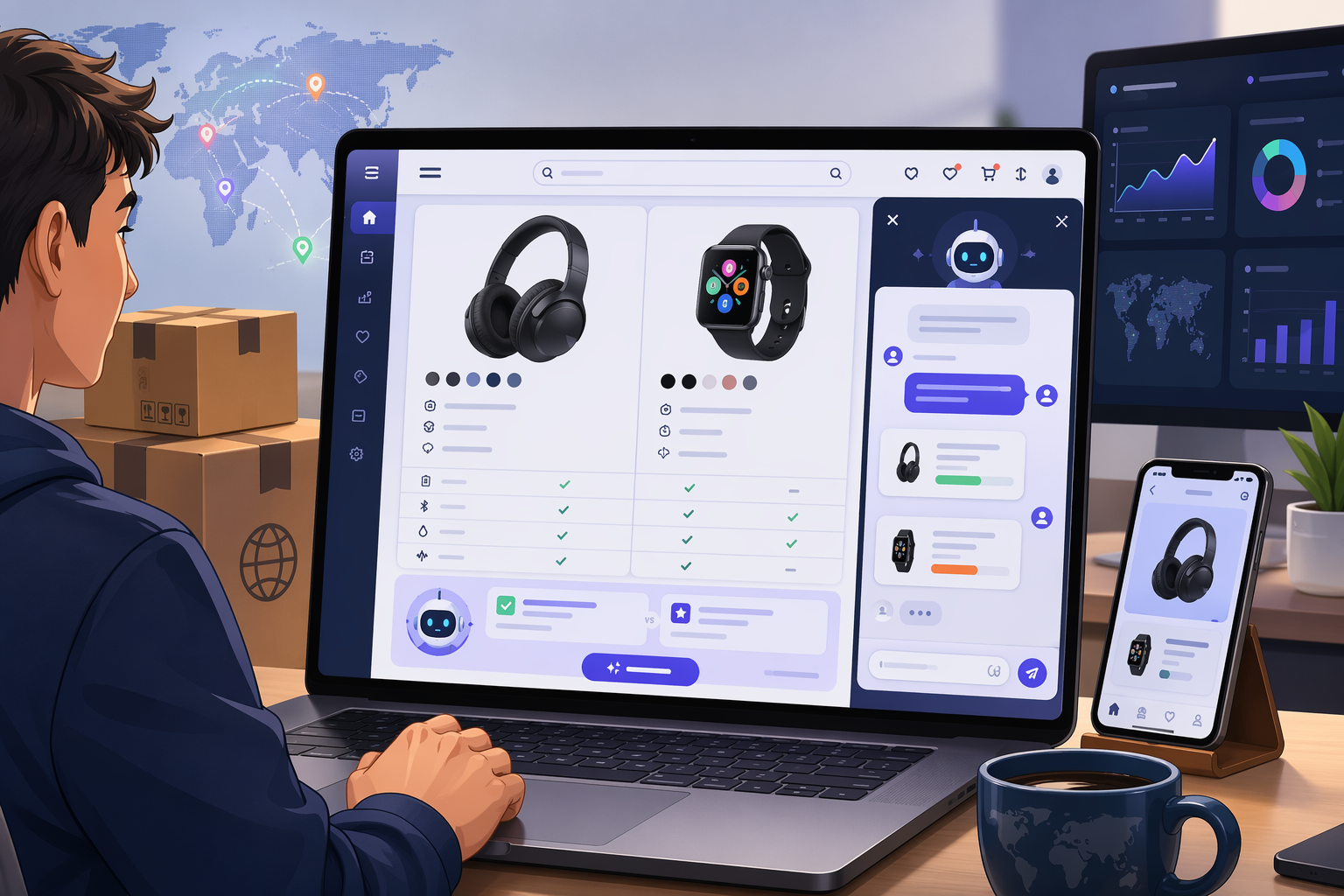
Shoppers compare features, prices, and reviews before they buy, and many start that research with AI or search according to McKinsey. Kandid helps by turning spec sheets into plain answers:
- Which model fits my use case?
- What works with my setup?
- What is worth the price jump?
- EV and automotive: qualify high-intent buyers before they go cold
EV buyers stall on price, charging, and range. JD Power says charging availability, charging time, and purchase price remain top rejection reasons in 2026 for EV shoppers. Kandid keeps intent warm by:
- answering fit and ownership questions fast
- filtering serious buyers by budget and use case
- guiding them to the right next step
Fast answers matter most when the purchase takes thought.
- Beauty and personal care: personalize routine and regimen decisions
Beauty buyers need help picking shades, routines, bundles, and refill timing. Kandid can ask a few simple questions, then narrow the path:
- skin type
- concern
- routine length
- product match
That cuts choice overload and lifts confidence without pushing shoppers out of the chat.
Also Read: 15 Real Time Shopping Features Enhancing Customer Engagement
What performance signals prove Kandid is working
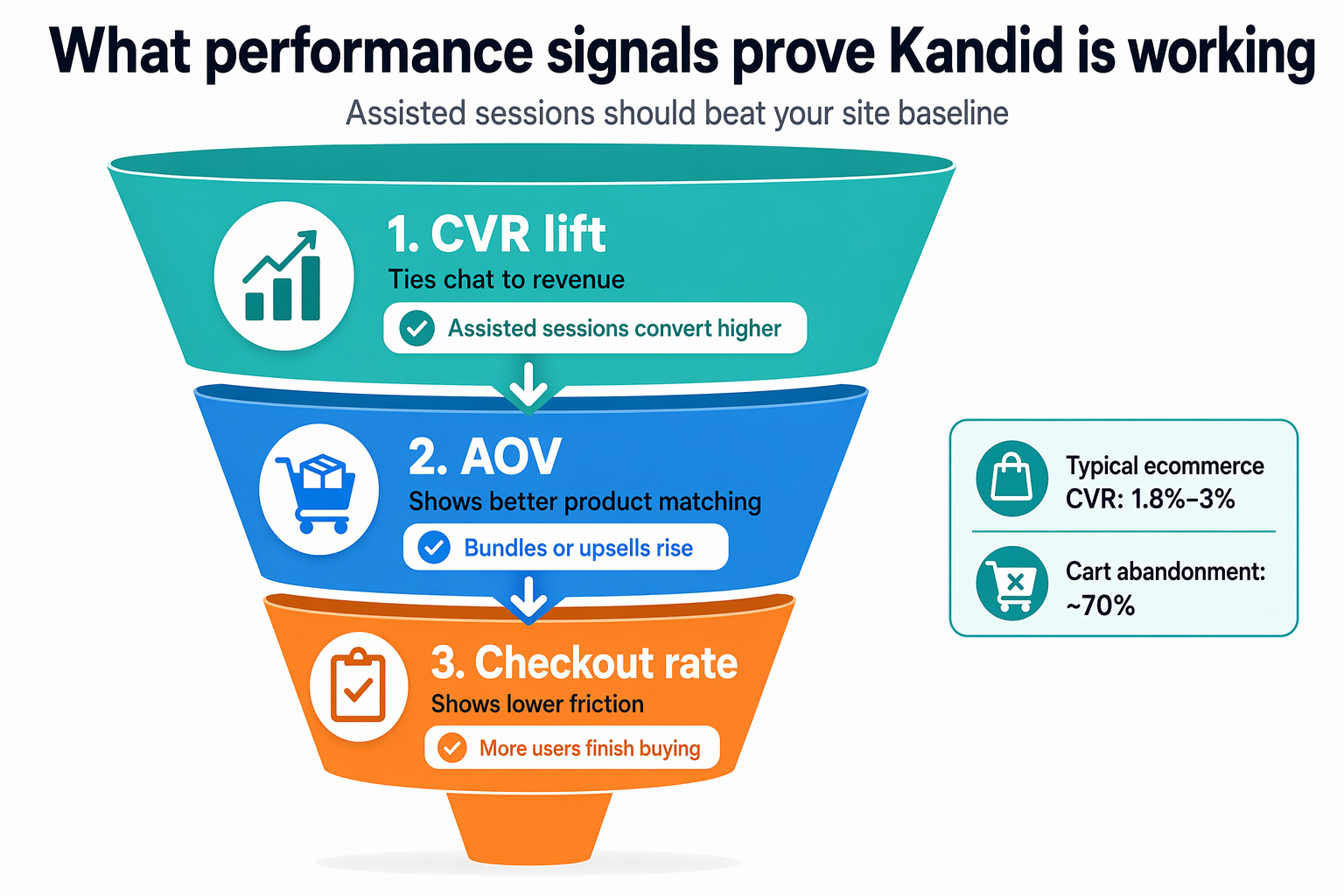
Watch three signals first: purchase conversion rate, add-to-cart rate, and checkout completion. That mix shows if Kandid is helping shoppers decide, not just chat. Benchmarks vary by category, but ecommerce conversion often sits around 1.8% to 3% and cart abandonment remains high, with Baymard summarizing a long-run average near 70% cart abandonment. If your assisted sessions beat your site baseline, the agent is doing useful sales work.
| Signal | Why it matters | Good sign |
|---|---|---|
| CVR lift | Ties chat to revenue | Assisted sessions convert higher |
| AOV | Shows better product matching | Bundles or upsells rise |
| Checkout rate | Shows lower friction | More users finish buying |
Before rollout, judge category fit by question load and buyer doubt:
- Technical specs
- Compatibility checks
- Product comparison needs
- Higher AOV or longer decision time
Kandid tends to shine where shoppers need answers before they buy.
After deployment, success looks like:
- Faster reply times
- More assisted sessions reaching cart
- Higher revenue per visitor
- Fewer exits on product pages
Link this back to the parent guide: How Kandid is Revolutionizing Real Time Shopping Worldwide.
Ready to turn high-intent traffic into buyers? Kandid gives your store real-time AI sales help, fast onboarding, and measurable conversion lift.
Frequently Asked Questions
Q1: How is Kandid transforming real-time shopping experiences across different industries globally?
Kandid answers product questions fast, compares options, and handles fit or compatibility concerns inside the buying flow. That helps EV, tech, and personal care brands reduce drop-off and guide high-intent shoppers to a clear next step.
Q2: What are the key features of Kandid's AI sales agents that improve conversion rates worldwide?
Key features include real-time replies, catalog-aware recommendations, brand-voice control, product comparison, and objection handling. Teams also get fast setup and measurable lift across conversion rate, AOV, ROAS, and session engagement.
Q3: How does Kandid’s real-time AI engagement compare to traditional eCommerce methods internationally?
Traditional stores rely on static pages, filters, and delayed support. Kandid keeps shoppers in one conversation, answers intent-rich questions instantly, and shortens decision time. That usually means fewer exits and more completed purchases across markets.
Conclusion
Kandid stands out because fast answers win sales. Shoppers already use AI in buying journeys, according to PYMNTS research, and many switch when brands respond slowly, per Invoca.