Kandid vs Manifest: Which D2C Product Recommendation Platform Wins in 2026?
One bad product match can mean a return, lost trust, or both. For D2C product recommendations, Kandid works like an AI sales agent for complex buying decisions, while Manifest leans toward broad discovery. I have reviewed how teams use D2C product recommendations across ecommerce stacks. This comparison shows which platform gives better real-time AI recommendations and stronger D2C product recommendations for your catalog.
Kandid vs Manifest: Side-by-Side Comparison
| Kandid | Manifest | |
|---|---|---|
| Core Focus | Real-time consultative AI sales agent that decodes specs and compares features | Broad AI shopping assistant with 500+ pre-built agent personalities for discovery and support |
| Recommendation Style | Intent-driven, consultative - asks clarifying questions, compares models, addresses compatibility | Discovery-driven - natural-language search, quizzes, image-based matching, cross-questioning |
| Channel Coverage | Website, WhatsApp, Instagram - unified inbox for all three | Website (Shopify native), WhatsApp via BIK.ai integration, Gorgias/Zendesk handoff |
| Pricing Model | pay-as-you-grow: free (100 visitors/mo), $99 (10K visitors), $199 (25K), $350 (50K); $12 per extra 1K | Free tier (250 messages); Pro $99/mo; Growth $249/mo; Scale $799/mo; custom Enterprise |
| Best For | D2C brands with technically complex products (EVs, personal care, electronics, furniture) | Shopify stores with large catalogs needing discovery tools, quizzes, and visual search |
How Kandid and Manifest Compare
Kandid
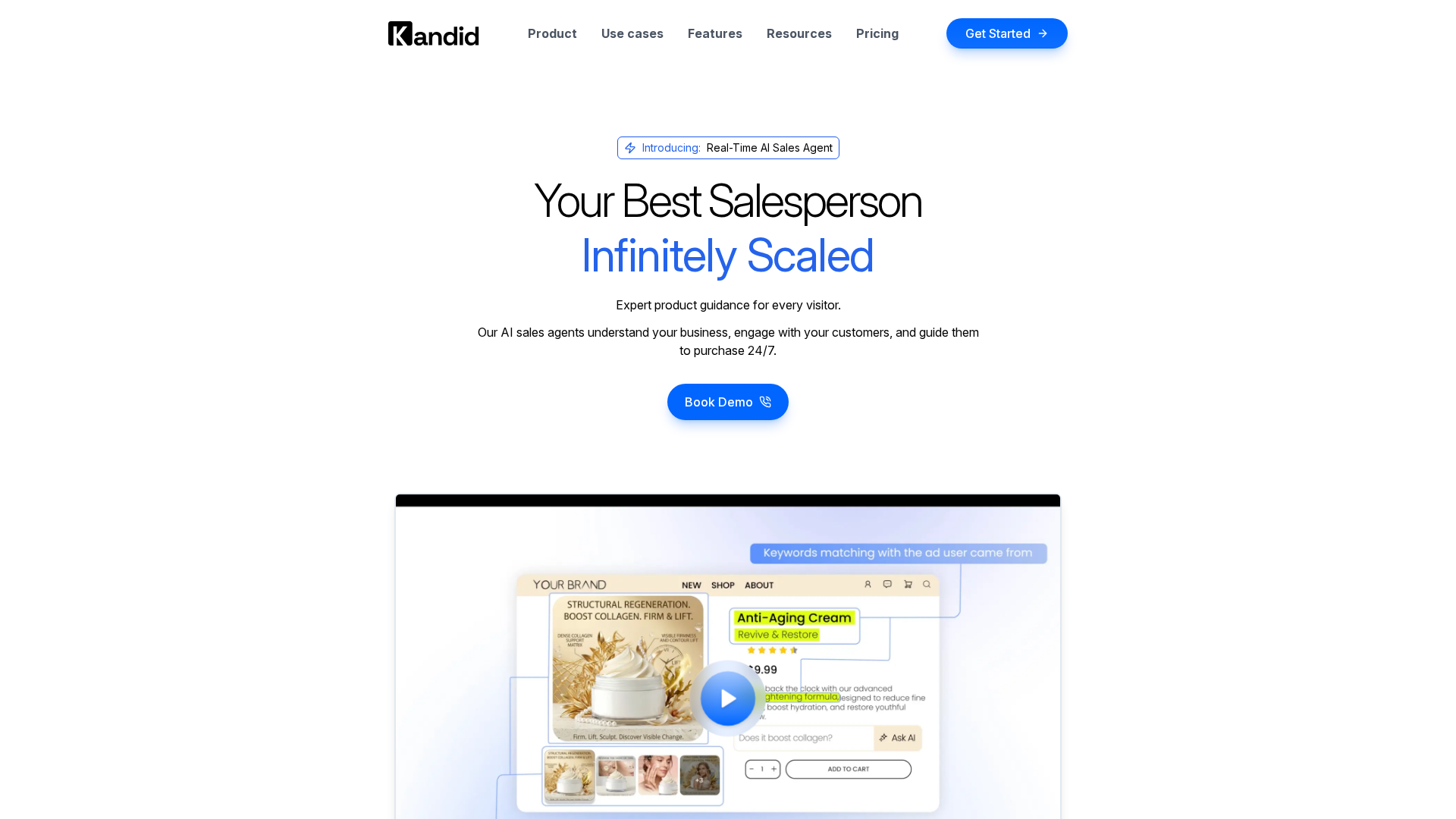
Kandid is a real-time AI sales agent built for brands that need consultative buying help. It fits D2C teams selling technical or high-consideration products, with support across website, WhatsApp, and Instagram, as shown on its site.
Key strengths
- Spec decoding and feature comparison
- Compatibility guidance
- Multi-channel inbox
Manifest
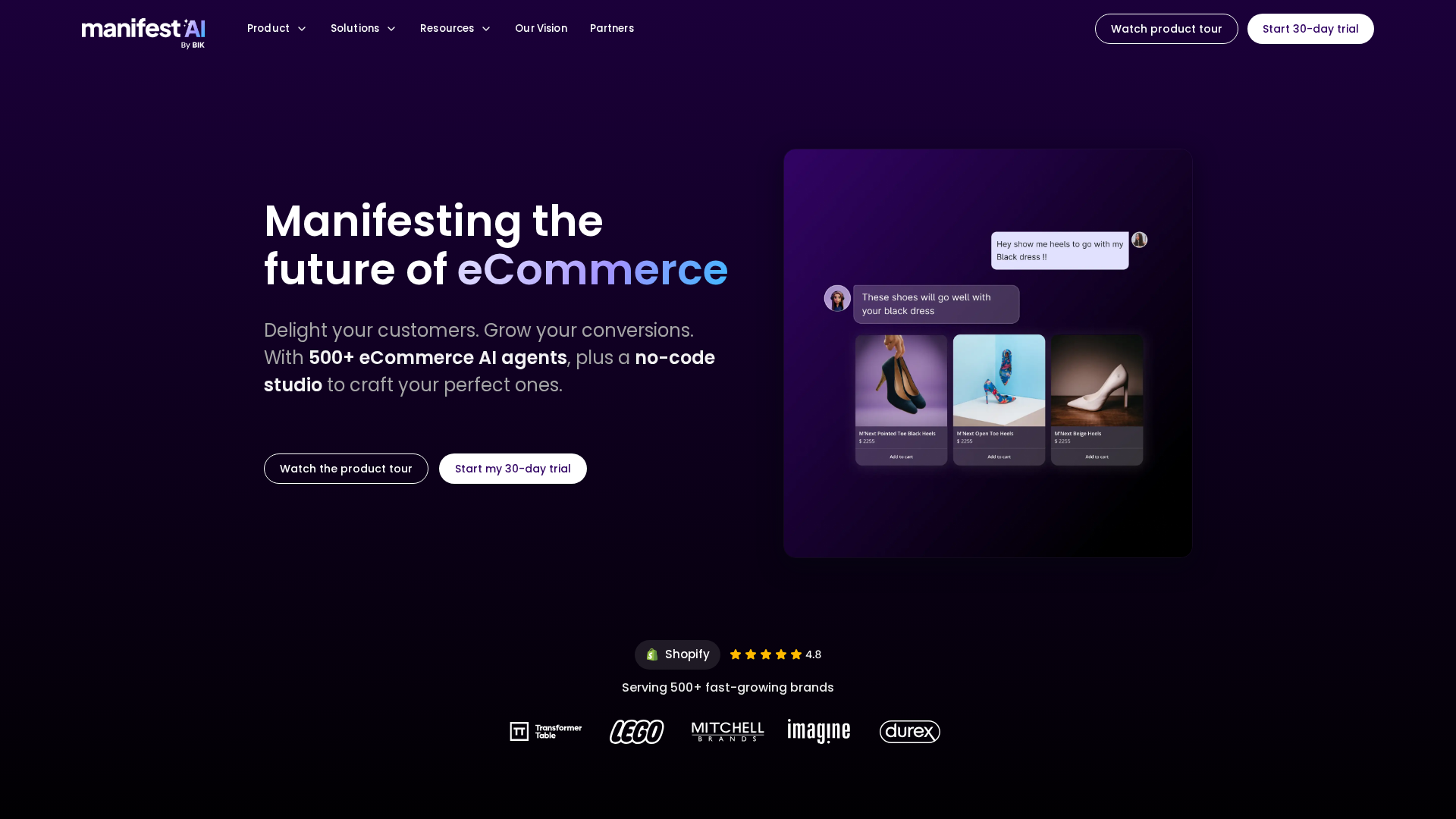
Manifest is a Shopify-focused AI shopping assistant built for discovery, quizzes, and broad catalog support. It suits merchants that want pre-built agent variety, natural-language search, and visual-first shopping flows, based on its product page.
Key strengths
- 500+ pre-built agents
- Shopify-native setup
- Quizzes and visual search
Real-Time Recommendation Depth: Consultative vs Discovery-Driven
How Each Platform Handles Complex Product Questions
The split is simple: Kandid fits consultative buying, while Manifest fits discovery-first browsing.
Research backs the gap. The 2026 AAAI ShoppingBench paper found even strong shopping agents stayed under 50% success on harder shopping tasks with real product constraints, which shows why depth matters for technical catalogs AAAI ShoppingBench.
- Kandid is stronger when shoppers ask:
- Compatibility questions
- Spec tradeoff questions
- Use-case questions
- Manifest is better when shoppers want:
- Quick discovery
- Broad option browsing
- Visual search flows
If your sales team often answers pre-purchase questions, Kandid usually maps better.
Also Read: D2C Product Recommendations in 2026: What’s Changing Now
Channel Coverage and Omnichannel Selling
WhatsApp matters because shoppers already prefer messaging. In Meta’s 2026 business messaging report, 73.3% of consumers said they prefer messaging with businesses. Manifest has a clear edge here for brands that want to extend beyond onsite chat. Its stack links website AI with WhatsApp, Instagram, and email through BIK, and one case study says WhatsApp alone drove 15X ROI for Ace Blend.
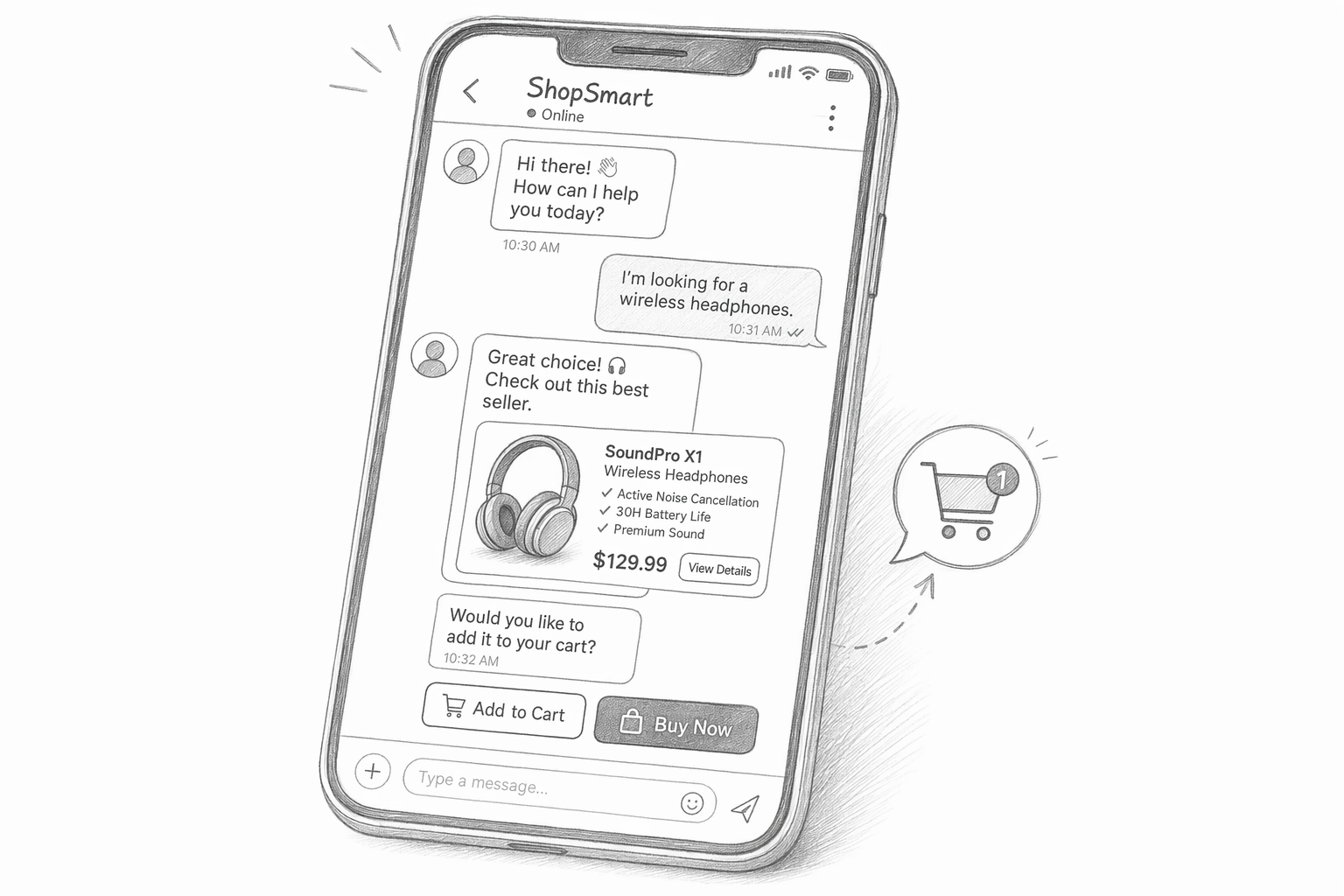
Kandid fits best when your main sales motion starts on your site and needs deep, consultative guidance first.
Also Read: D2C Product Recommendations News: Personalization Shifts 2026
Pricing and Scalability for Growing D2C Brands
Hidden Costs: What Each Platform Doesn't Tell You Up Front
The real cost is rarely the sticker price. Shopify now supports recurring, usage-based, or mixed app billing through Shopify App Pricing, so your monthly total can rise with traffic, sessions, or recommendations served.
Watch for hidden costs like:
- Usage spikes during promos or peak season
- Extra setup work for custom catalog logic
- Higher plan jumps once volume grows
- Platform overlap if you still need quizzes, search, or support tools
Kandid fits better when complex sales flows replace multiple tools. That can lower total stack cost.
Manifest may look simpler up front, but Kandid often scales cleaner for technical D2C brands.
Also Read: D2C Product Recommendations: 15 Personalization Rules That Work
Which Should You Choose: Kandid or Manifest?
Choose Kandid if your shoppers ask hard product questions before they buy. Its Shopify listing highlights training on store data, PDFs, blogs, and FAQs, plus real-time analytics and product recommendations on Shopify App Store. That makes it a better fit for EV, electronics, mobility, and personal care brands with edge-case buying questions.
Choose Manifest if you want a faster Shopify-first rollout with many pre-built agent options. Manifest says it offers 500+ eCommerce AI agents and a no-code studio on its website.
Simple rule: pick Kandid for consultative selling depth, Manifest for agent variety and quick Shopify experimentation.
Need consultative product recommendations, not generic prompts? See how Kandid helps complex D2C brands convert faster.
Frequently Asked Questions
Q1: How does Kandid compare to Manifest for D2C product recommendations?
Kandid fits complex catalogs and live consultative selling. Manifest fits Shopify brands that want broad pre-built agents and visual search.
Q2: Which D2C product recommendation platform is best in 2026?
Pick Kandid for technical products and guided buying. Pick Manifest for faster Shopify deployment and wider ready-made agent options.
Q3: What are the key differences between Kandid and Manifest?
Main gaps are catalog complexity, real-time guidance, agent variety, and visual search. Kandid wins on depth. Manifest wins on breadth.
Conclusion
Kandid is the better fit for complex, consultative D2C sales. Manifest suits simpler Shopify discovery. Shopify’s native engine improved in 2026, but larger catalogs still often need stronger tools, per Online Store News.