Recent Developments in Live Chat and AI Chatbot Technology Worldwide
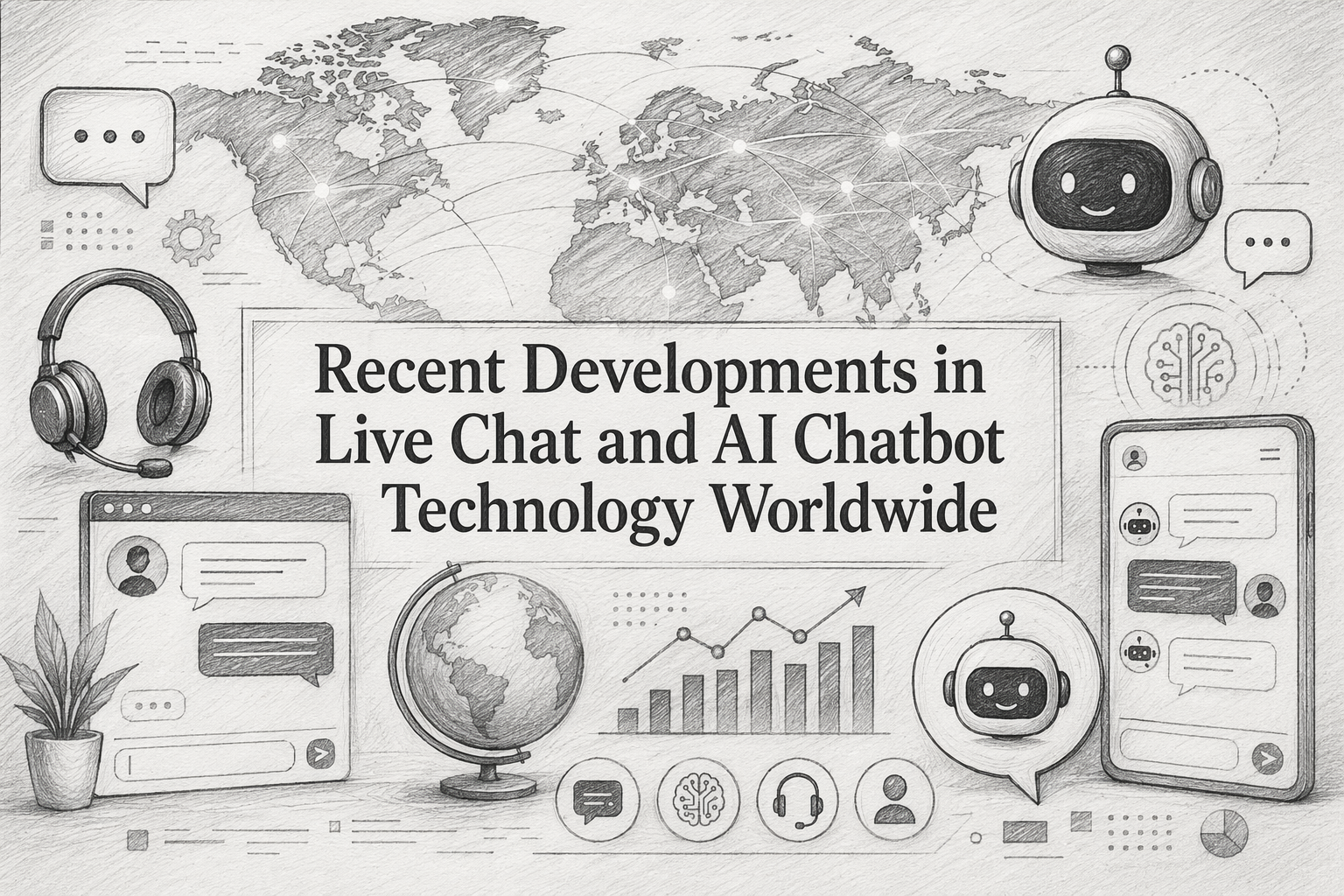
Quick Summary: In 2026, chatbots have evolved from simple answerers to active resolution agents that handle complex tasks across chat, voice, and multimedia channels. Support tools now focus on resolving issues and improving customer experience rather than just deflecting tickets. Multimodal input and real-time data sharing make interactions faster and more natural, with AI expected to resolve 80% of common service issues by 2029.
In 2026, AI Chatbot Trends point to a clear shift. Bots now do more than answer. New launches from Zoom, Zendesk, Microsoft, Genesys, NiCE, and SoundHound show tools that act across chat, voice, and back-end systems. Gartner expects agentic AI to resolve 80% of common service issues by 2029. For teams buying Live Chat Technology and Customer Support AI, this is the core of AI Chatbot Trends and the key AI Chatbot Trends story to watch.
Why 2026 Became the Year of Agentic Chatbots
What the latest product launches show
2026 is the year chatbots stopped acting like scripted helpers and started acting like resolution agents. Zoom’s Virtual Agent 3.0 now handles multi-step workflows across voice and chat, with multimodal input like images and forms on the roadmap, according to Zoom’s product launch. Meta also rolled out Business Agent more widely, pushing AI beyond support into product recommendations, lead qualification, and sales across WhatsApp, Messenger, and Instagram, as shown in Meta’s announcement.

The big shift is simple: vendors now sell bots that act, not just answer.
Why live chat is no longer just a reply box
Live chat now sits inside a larger AI action layer. It can pull order data, route cases, keep context across channels, and hand off with full history. That matches Gartner’s view that agentic AI will resolve 80% of common customer service issues by 2029 while cutting costs, according to Gartner.
- Chat is becoming a control surface
- Voice and multimodal input are now standard
- Resolution rate matters more than reply speed
Also Read: How Kandid Enhances Customer Support with Live Chat & AI Chatbots
How Multimodal and Voice AI Are Expanding Support Channels
Voice support is becoming real-time and conversational. Support bots no longer just read scripts. Microsoft says real-time voice agents in Copilot Studio are now generally available, built for low-latency, interruptible, speech-to-speech support that can adapt mid-call real-time voice agents. That matters for commerce teams handling order edits, billing questions, and urgent service issues.
Voice AI works best when it can pause, listen, and act without forcing the customer to repeat context.
Images, documents, and identifiers are now part of the conversation. Customers can share a damaged item photo, invoice PDF, warranty code, or reservation number inside one support flow. Twilio says its Conversation Orchestrator now keeps context across voice and messaging channels, so the thread can move from call to SMS without losing history connected conversations. For D2C brands, that means faster verification, fewer handoffs, and higher self-service completion.
Also Read: Ultimate Guide to Live Chat & AI Chatbot Integration Strategies
What These Changes Mean for E-Commerce and Support Teams
The KPI shift: from deflection to resolution
E-commerce teams should stop praising bots for blocking tickets and start measuring resolved outcomes. Gartner says 91% of service leaders face pressure to implement AI in 2026, but the goal is better customer experience, lower effort, and stronger first-contact resolution, not fewer agent chats alone (Gartner press release).
- Track:
- Resolution rate
- Recontact rate
- Escalation quality
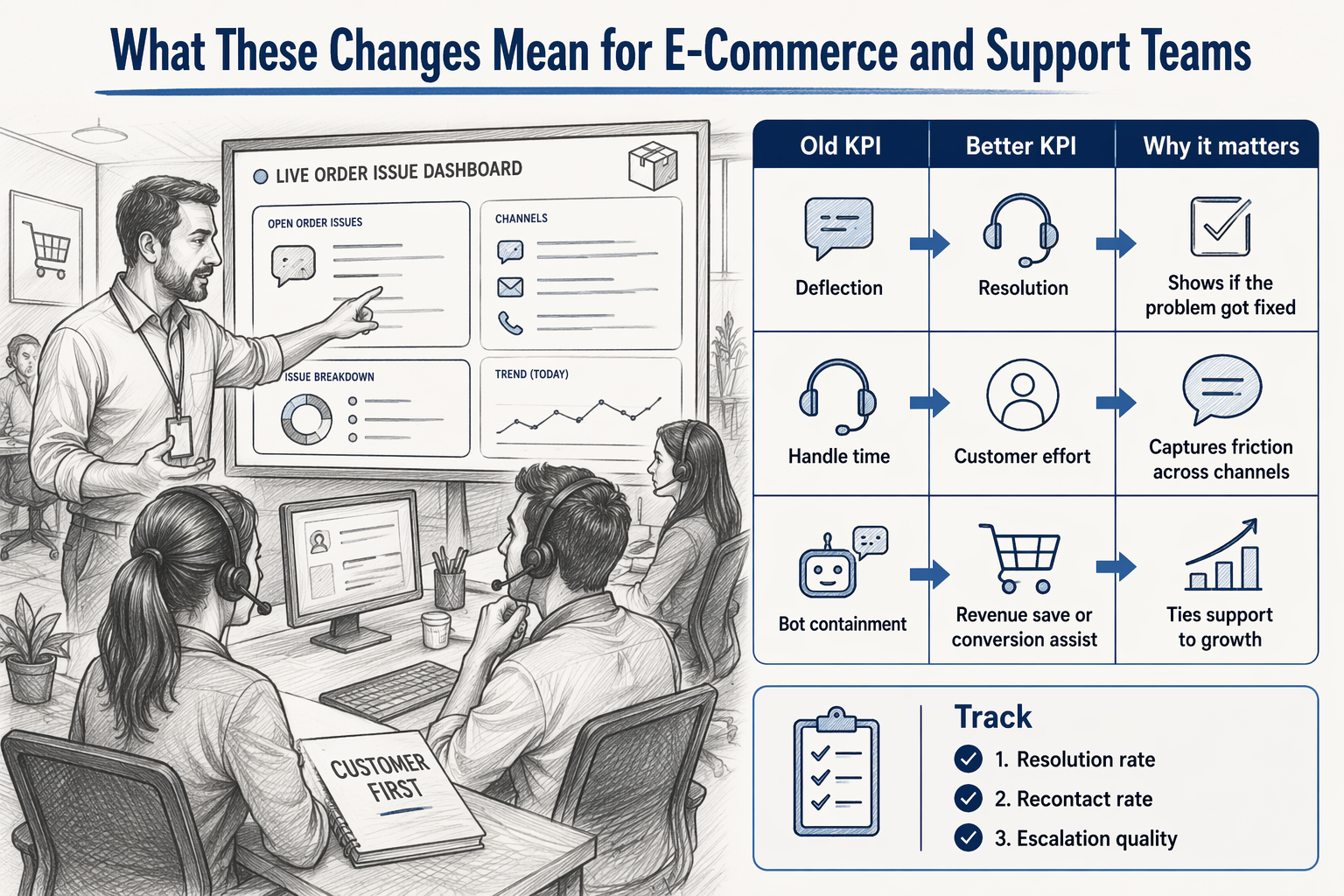
| Old KPI | Better KPI | Why it matters |
|---|---|---|
| Deflection | Resolution | Shows if the problem got fixed |
| Handle time | Customer effort | Captures friction across channels |
| Bot containment | Revenue save or conversion assist | Ties support to growth |
Keep humans on refunds, edge cases, and high-value buyers. Gartner also expects more than 80% of organizations to expand human agent responsibilities, not erase them (Gartner survey coverage).
Also Read: Live Chat vs AI Chatbot: Which One Actually Converts Better in 2026?
How We Got Here: The Old Chatbot Model and Why It’s Giving Way
Old chatbots were built to deflect tickets, not solve real problems. They followed scripts, matched keywords, and failed when a customer asked a messy, multi-step question. That worked for order status and basic FAQs, but not much else.
Now the bar is higher. Gartner says at least 70% of customers will start service in a conversational AI interface by 2028, while newer AI agents can handle more complex actions and handoffs according to Gartner. Gartner also expects agentic AI to resolve 80% of common service issues by 2029 in this 2025 forecast.
Need a chatbot that actually sells, not just answers tickets? See how Kandid turns product questions into purchases with real-time AI sales agents.
Frequently Asked Questions
Q1: What recent technological breakthroughs are shaping AI chatbot development worldwide in 2026?
Three shifts stand out: agentic workflows, multimodal input like text, image, and voice, and better real-time retrieval from product, policy, and order data. Bots now solve tasks, not just answer FAQs.
Q2: How do multimodal and voice AI chatbots enhance customer engagement across industries globally?
They cut effort. Shoppers can speak, upload a photo, or ask follow-up questions naturally. That helps with fit, specs, damage checks, and urgency, which raises containment, speed, and conversion across support and sales.
Q3: What are the key features and benefits of autonomous AI agents in modern chatbot solutions?
Top features include memory, tool use, task planning, and safe handoff rules. The benefit is simple: fewer dead-end chats. Teams get lower ticket volume, faster resolution, and more consistent answers at scale.
Pick systems that can act, explain, and hand off cleanly. That mix matters more than flashy demos.
Conclusion
Live chat has shifted from scripted support to agentic, multimodal, voice-ready resolution. Gartner highlights multiagent systems as a 2026 trend, while Google shows faster audio AI for real-time service in Gartner’s 2026 trends and Gemini 3.1 Flash Live.