D2C Product Recommendations News: Personalization Shifts 2026
In 2026, D2C product recommendations are shifting from fixed homepage blocks to live choices that react with every click, scroll, and tap. Most brands still bolt them on as a PDP extra, which fails when shoppers expect real D2C personalization everywhere. This news brief breaks down 2026 personalization, how AI sales agents reshape D2C personalization, and how to keep D2C personalization powerful, not creepy.
What real-time personalization means for D2C product recommendations in 2026
How real-time recommendation logic differs from static widgets
Static recommendation widgets use cached rules like "bought together" that update on a schedule.
Real-time personalization reacts to every click, scroll, and question in the same session.
AI engines now adjust product tiles, bundles, and messaging based on live behavior and context, not just past orders. Shopify reports that smart, behavior-driven product recommendations can lift cart value by over 30 percent in some setups Shopify’s Smart Product Recommendations Drive 31% Cart Value Increases.
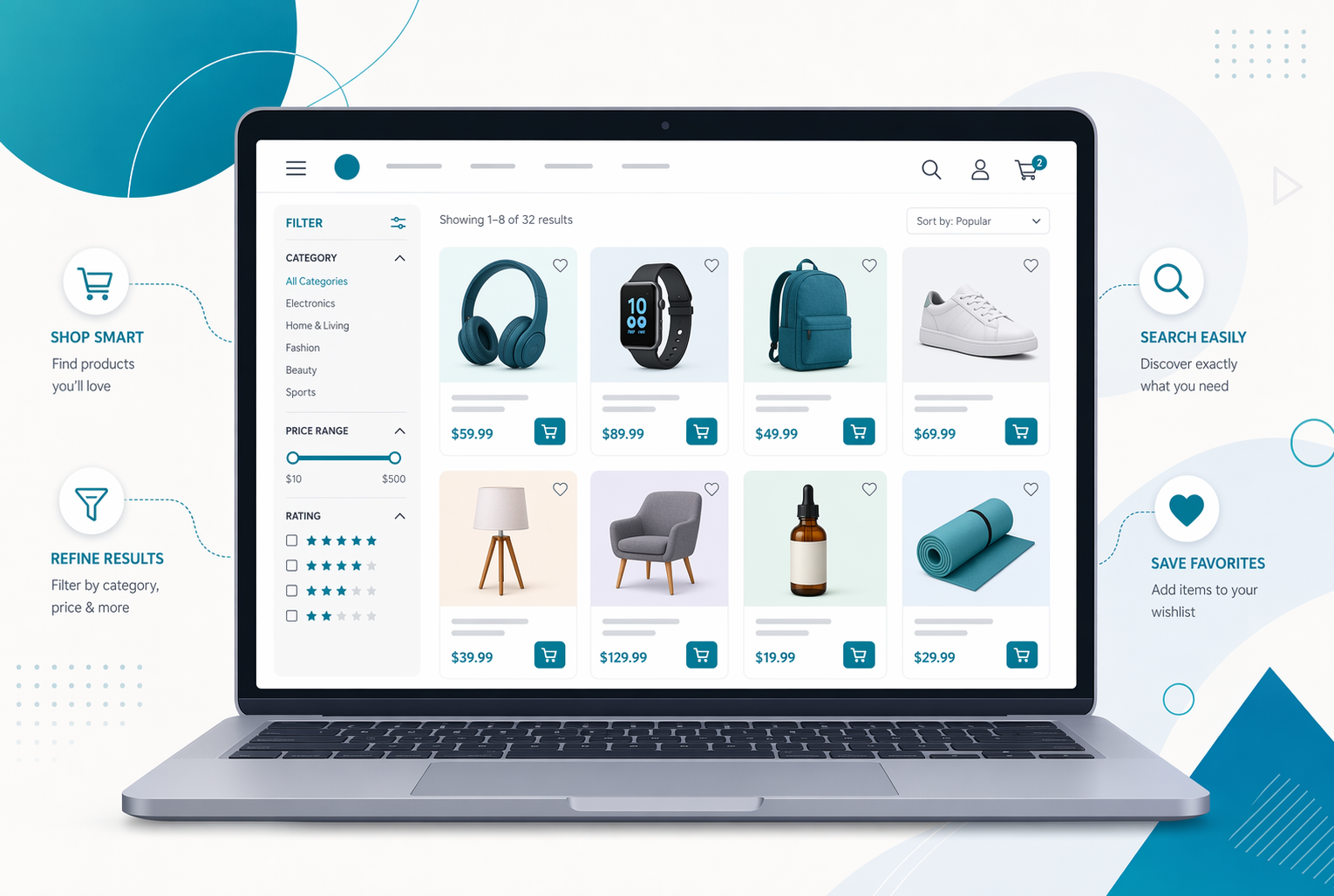
Static widgets guess what might work. Real-time logic watches what this shopper is doing right now and adapts instantly.
The signals that matter most in 2026
Focus on signals that show intent, not vanity:
- Session depth and time on key PDPs
- Click paths across categories and filters
- On-site search terms and typos
- Questions asked to AI sales agents like Kandid
- Device, location, and entry source (within consent)
Leading AI-native storefront tools use semantic understanding of product attributes and shopper language to match the right items, instead of only using past transactions How Shopify’s New Semantic Product Pages Are Rewriting Conversion.
Treat every session like a fresh signal stream, not a smaller version of your CRM.
Why this matters for retention, not just conversion
Real-time product recommendations do more than bump today’s AOV. When shoppers keep seeing items that fit their needs and constraints, they learn that your store "gets them."
Effects that help retention teams:
- Fewer returns, because fit and use case are clearer
- Higher repeat visit rates, because discovery feels easier
- More trust to share first-party data and preferences
AI sales agents such as Kandid turn support-style questions (compatibility, specs, refills) into tailored flows that guide shoppers back to relevant products, even when they do not purchase on the first visit.
Think of real-time personalization as a relationship system: every good recommendation teaches the customer that it is worth coming back.
Why AI sales agents are replacing static recommendation widgets
What an AI sales agent does that a widget cannot
Static widgets only surface products based on rules like "similar items" or "bestsellers." AI sales agents act like a smart store associate: they ask questions, decode specs, compare products, and handle objections in real time. Brands like Michael Kors already use AI assistants to guide shoppers through complex choices, boosting engagement and conversion, according to Mastercard's Shopping Muse launch.
Static widgets react to clicks. AI agents react to intent, context, and language.
Where agents fit in the D2C journey
AI sales agents now sit across the full D2C funnel, not just on PDPs.
Key placements:
- Homepage: qualify traffic and route to the right paths
- Category and quiz pages: narrow choices fast
- PDP: answer compatibility and comparison questions
- Cart and checkout: reduce doubts, upsell bundles
Google highlights how AI led shopping journeys blend search, comparison, and purchase in a single flow, cutting friction for buyers, in its AI shopping update.
If your experience forces users to hop between pages, an agent can stitch it into one guided path.
Signals that let agents recommend better than rules
AI sales agents tap many signals at once, while static widgets mostly use page or product rules.
Useful signals include:
- Natural language questions and objections
- Click and scroll patterns in the current session
- Past purchases and returns (privacy safe, first party)
- Real-time stock and shipping options
- Device, location, and traffic source
Kandid and peers like Manifest or Sage Pilot turn these signals into ranked, conversational suggestions, not fixed carousels. This lets agents adapt when a shopper changes their mind mid chat, or when inventory shifts.
If your rules do not change within a session, the shopper already outgrew your widget.
How to use first-party and zero-party data without being creepy
Use consented preference data, not overreach
Zero-party data is what customers share on purpose in forms, quizzes, or chats, often for better offers or picks, as Forrester explains in its work on collecting zero-party data.
- Ask only what you will use in the next 1-2 sessions.
- Explain the value in plain words, next to each field.
- Give a clear way to change mind: a visible preference center link in emails and account pages.
If you cannot explain why you collect a field in one sentence, drop it.
Layer behavior on top of declared preferences
First-party data is what you see from customers on your own sites and apps.
Use it to confirm what they said, not to spy:
- Start from declared goals in your quiz or AI chat.
- Check what they click, search, and add to cart.
- Shift recommendations when behavior repeats 3+ times.
Treat behavior as a nudge, not a reason to ignore stated needs.
Signals that feel helpful instead of invasive
Helpful signals:
- Product usage goals (from quizzes or chats)
- Budget range
- Skin type, EV range needs, or space limits, if your product needs it
Creepy signals:
- Guessing health status from late night visits
- Using location history that users never gave you
- Pulling social data they did not share
Forrester notes that trust grows when brands only collect data they will clearly use for customer value, not curiosity, in its roadmap for useful customer data collection guide.
What D2C teams should change next
Three quick wins to test this quarter
- Swap static carousels for a real-time recommendation engine that reacts to each click.
- Add a simple preference center to capture style, budget, and use case.
- Pilot an AI sales agent like Kandid on high-intent pages to guide specs-heavy shoppers, similar to how Shopify's generative engine personalizes storefronts.
Treat these as experiments, not forever decisions. Move budget from one underperforming widget to fund them.
When to invest in a real-time personalization stack
Invest once you see 3 signals:
- You already have decent traffic, but flat conversion.
- Merchandising teams cannot keep up with manual rules.
- You plan to scale SKUs or markets in the next 12 months.
Platforms like AWS show that real-time stacks pay off when latency drops and signals stay live, as in their Valkey based setup.
If your team spends more time tuning rules than shipping campaigns, you waited too long.
The metric that matters most: recommendation lift over time
Optimize for recommendation lift over time, not one week spikes. Track:
- Conversion rate from sessions with recommendations vs without
- AOV for AI guided sessions (via Kandid or peers)
- Repeat purchase rate from those cohorts
Put it in a simple table every month: channel, model used, lift vs baseline.
Any tool that cannot show clear incremental lift over a 60 to 90 day window is just UI, not personalization.
Review your current recommendation stack against the 2026 standard, then explore the parent D2C personalization pillar for the full lifecycle strategy. If gaps are obvious, see how Kandid uses real-time AI sales agents to plug them fast.
Frequently Asked Questions
Q1: What does “real-time” personalization mean for D2C product recommendations in 2026?
Real-time means the experience changes while the shopper browses: page views, clicks, scroll depth, and live questions adjust recommendations within seconds, not the next visit. It replaces batch segments with 1-to-1, session-level decisions that feel like a smart salesperson.
Q2: How should D2C brands shift to AI sales agents instead of static recommendation widgets?
Start with high-intent pages: PDPs, comparison pages, and checkout. Add an AI sales agent like Kandid alongside existing widgets, then A/B test. Feed it your catalog, FAQs, and brand voice. Scale across traffic once it beats your baseline conversion and AOV.
Q3: How can D2C product recommendations use first-party and zero-party data without being creepy?
Be explicit about what you collect and why, use a clear preference center, and keep questions helpful and narrow. Tie every use of data to visible value: better fit, fewer returns, faster decisions. Avoid guessing sensitive traits or using offsite behavior.
Conclusion
Real-time, privacy-safe recommendations now define serious D2C growth, as seen in AI-native storefronts covered by Ecommerce Times. AI sales agents guide and adapt, and teams win by personalizing deeper without breaking trust or new disclosure rules Online Store News.