Kandid vs Manifest Law: Which D2C Product Recommendation Tool Wins?
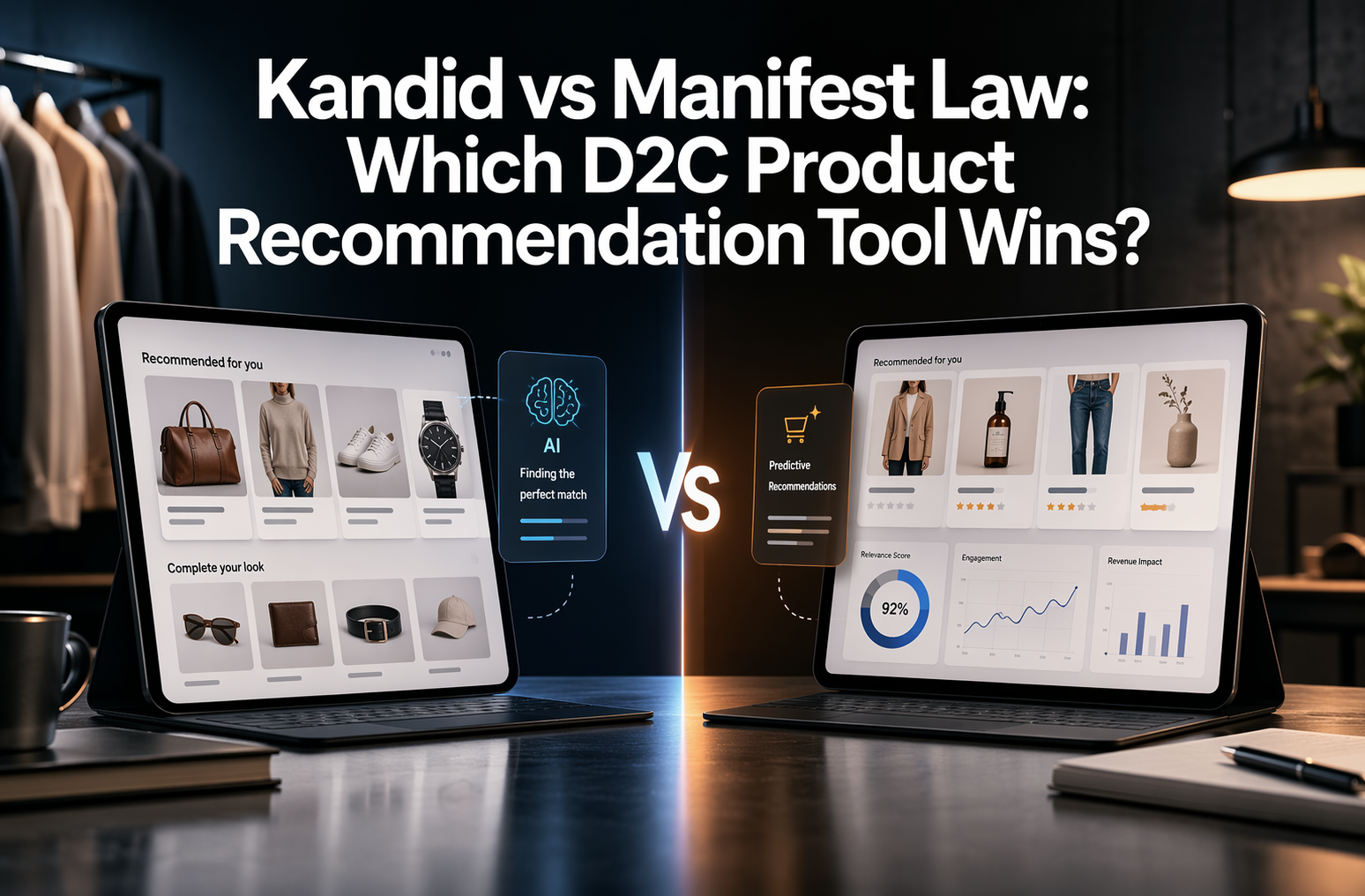
Quick Summary: Kandid is best for complex, high-consideration products that need guided selling, answering detailed questions in real time. Manifest AI works better for broad catalog browsing and quick discovery, especially if you want fast setup. Choose Kandid if your shoppers need help with specs or compatibility, and go with Manifest if your focus is quick exploration and inspiration.
If buyers need guidance before they can choose, Kandid usually fits better. If they mostly need fast catalog discovery in Shopify, Manifest AI is the safer pick. We review recommendation depth for complex D2C catalogs, where the wrong tool leads to drop-offs, weak upsells, and generic suggestions. This comparison cuts to where each platform fits the buying journey.
Kandid vs Manifest AI: Recommendation Fit at a Glance
| Kandid | Manifest AI | |
|---|---|---|
| Recommendation approach | Consultative, real-time guidance | Discovery-led shopping assistant |
| Best for | Complex D2C products and high-intent buyers | Broad catalog browsing and quick setup |
| Shopify integration | Auto-syncs product catalog and supports cart actions | Shopify-native with store data import |
| Channel coverage | Website, WhatsApp, Instagram | Website, helpdesk handoff, WhatsApp via BIK |
| Pricing starting point | Free to install; usage-based plans from $99/month | Free to test; paid tiers from $99/month |
How Kandid and Manifest AI Compare
Kandid
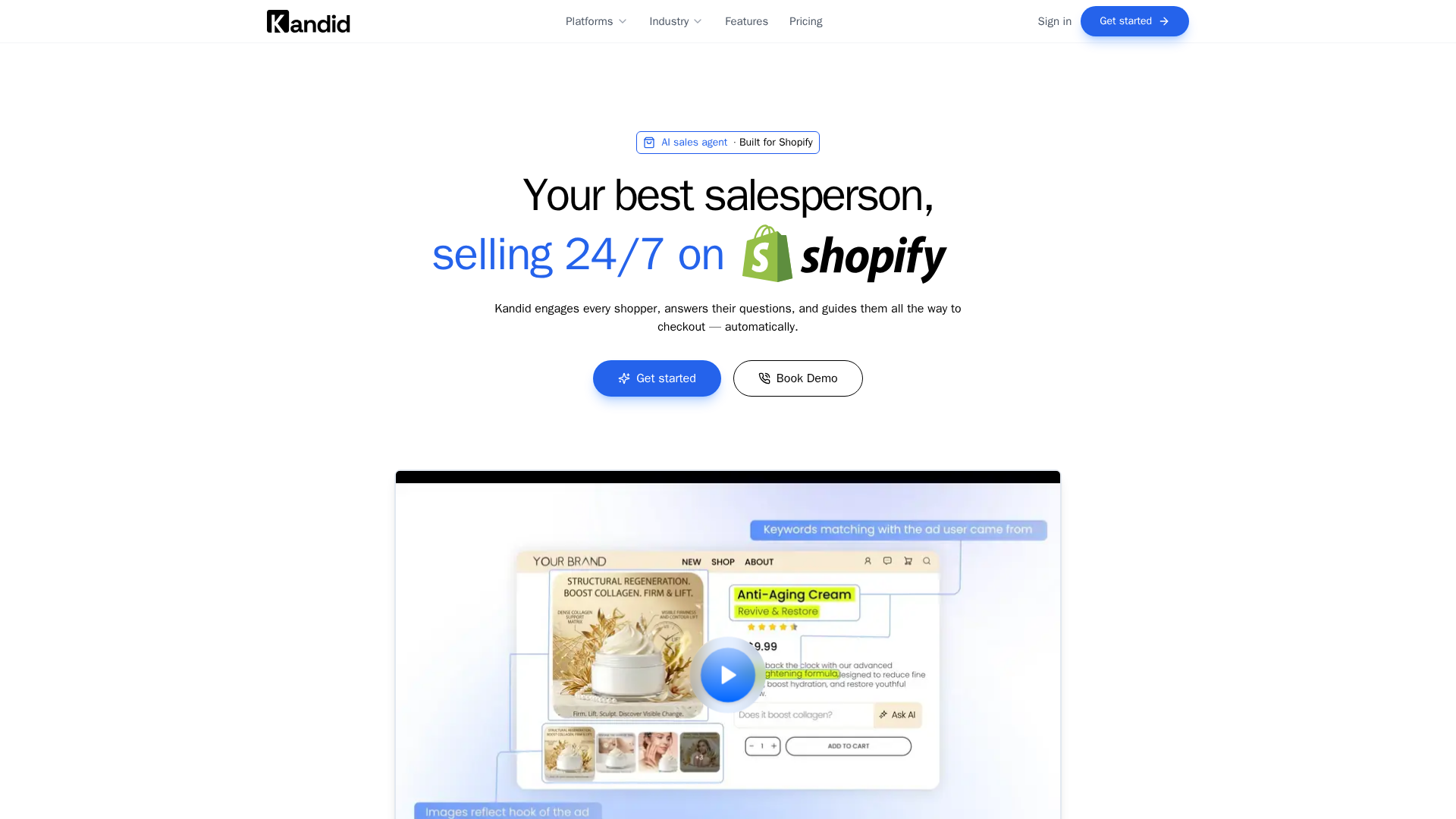
Kandid is a real-time AI sales agent for D2C brands that need consultative product guidance. It fits technical or high-consideration catalogs, with Shopify sync, cart actions, and support across website, WhatsApp, and Instagram, as shown on its site.
Manifest AI
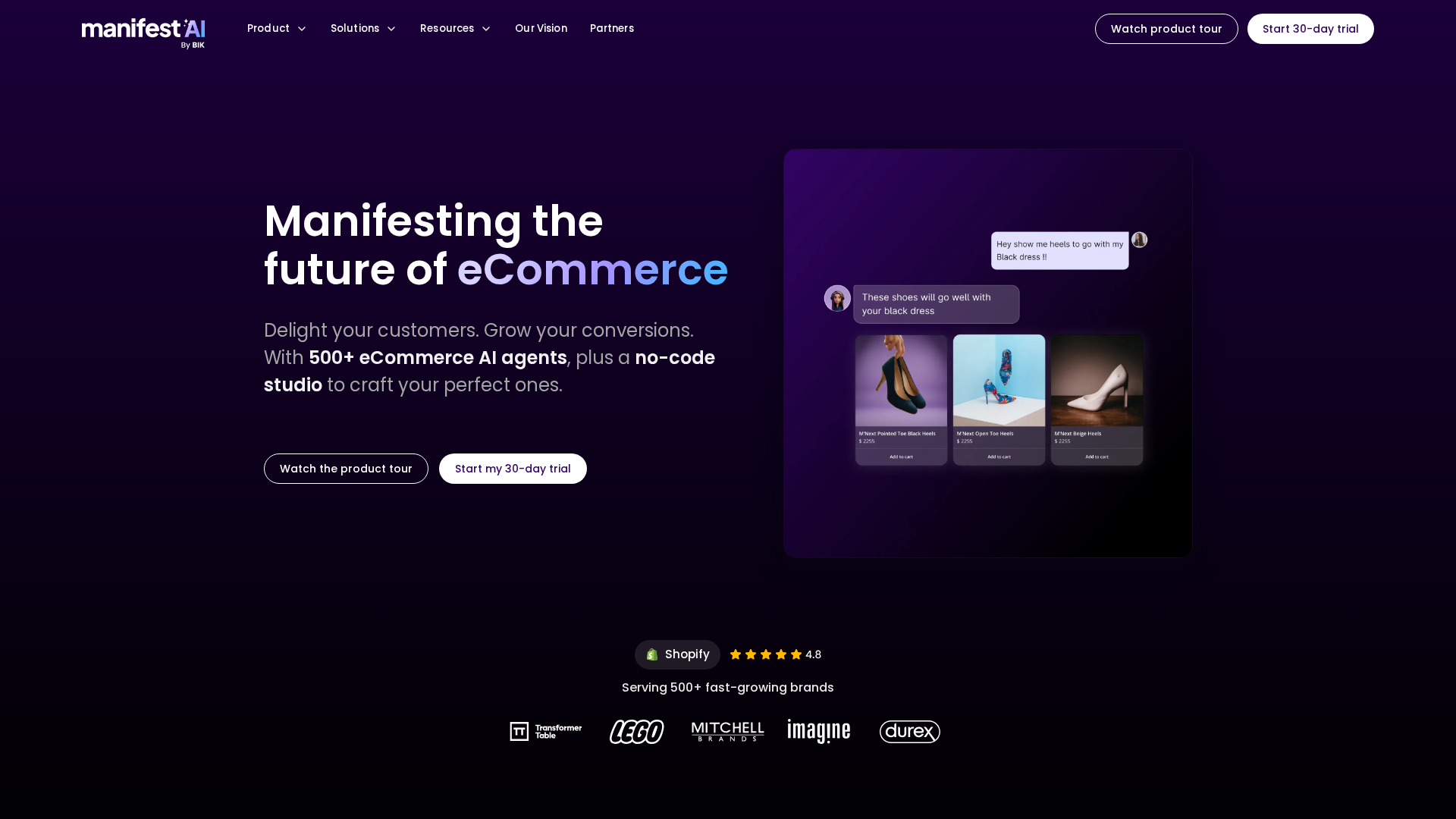
Manifest AI is a Shopify-first shopping assistant built for product discovery, quizzes, nudges, support, and recommendations. It suits brands that want fast setup and broad catalog browsing, with 500+ agents and WhatsApp extension through BIK on its product page.
Recommendation depth: guided selling vs discovery-led shopping
Shoppers buying technical products need help before choice. Guided selling asks questions, translates needs into product fit, and explains why the match works. That matters when buyers do not know specs but do know the problem they need solved, as guided selling describes.
- Kandid fits this model well
- Best for compatibility, sizing, setup, and edge-case concerns
- Strong when one wrong pick leads to support tickets
Broad exploration wins when shoppers want inspiration, style, or adjacent options. Discovery shopping leans on browsing, similar items, and visual paths instead of deep qualification, as discovery shopping explains.
Pick guided selling for decision risk. Pick discovery for browsing joy.
| Need | Better fit |
|---|---|
| Narrow to the right item | Guided selling |
| Browse and compare ideas | Discovery-led shopping |
Better fit usually means fewer returns.
Also Read: Top Trends Reshaping D2C Product Recommendations in 2026
Data training and catalog handling: how each tool learns your products
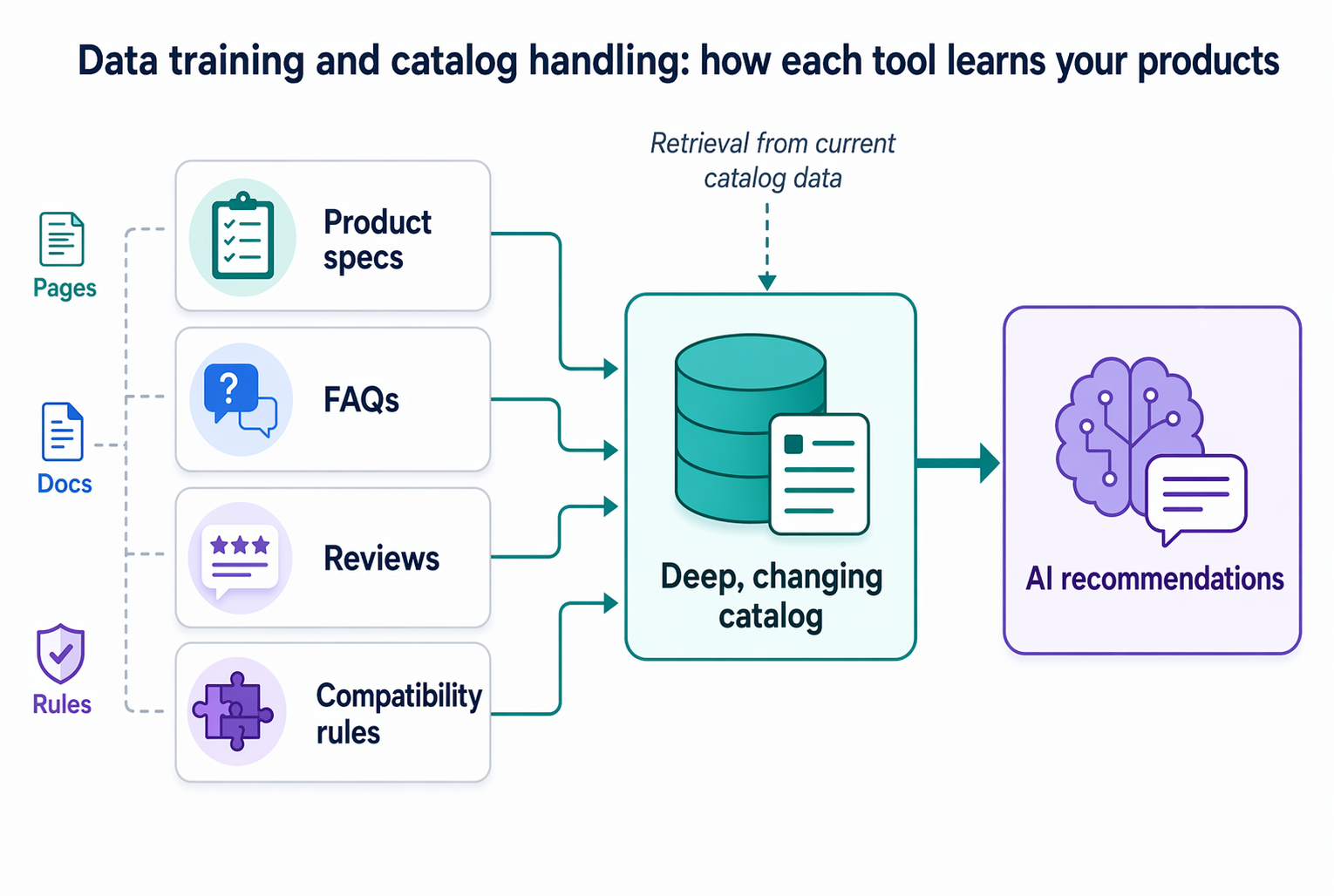
Both tools learn from more than your site copy. They can ingest product titles, specs, FAQs, policies, and support content. The key difference is how they use it. RAG systems pull live facts from an external source at answer time, not just fixed model memory, as Wikipedia explains. Kandid fits best when that source is a deep, changing catalog.
- Product pages
- Spec sheets
- Compatibility rules
- Help docs and reviews
Structured catalog data matters more for technical products because shoppers ask exact questions. Size, voltage, fit, warranty, and part match must be consistent. Shopify notes that poor catalog grouping creates precision failures and recall failures, which can surface wrong items or miss valid variants in agentic commerce Shopify engineering.
If your catalog has edge-case specs, clean attributes matter more than clever prompts.
- Strong attributes improve match quality
- Weak taxonomy raises return risk
Analytics become the edge when the tool learns from:
- Click paths
- Questions asked
- Conversions and returns
Also Read: Comprehensive Guide to D2C Product Recommendations for 2026
Which one fits your D2C stack better?
- Choose Kandid if your shoppers ask "which one is right for me?"
Pick Kandid when your catalog needs guided selling. It fits brands with specs, fit questions, bundles, and compatibility risk. If shoppers compare options before buying, Kandid’s real-time sales agent model is the better match for consultative conversion, not just surface-level discovery.

- Choose Manifest AI if your store needs broad discovery and fast experimentation
Manifest AI makes more sense if your goal is wider product discovery, lighter buying help, and quick tests across more shopper journeys. That lines up with the broader shift toward conversational shopping and AI-led browsing reported by TechCrunch on Pinterest's AI shopping app and Shopify's 2026 agentic shopping guide.
If your margin gets hurt by wrong-fit orders, recommendation quality matters more than novelty.
- Final recommendation for D2C teams
Use Kandid for technical, high-consideration products. Use Manifest AI for broader discovery-led stores. If you sell products that need explanation before trust, Kandid usually fits the stack better.
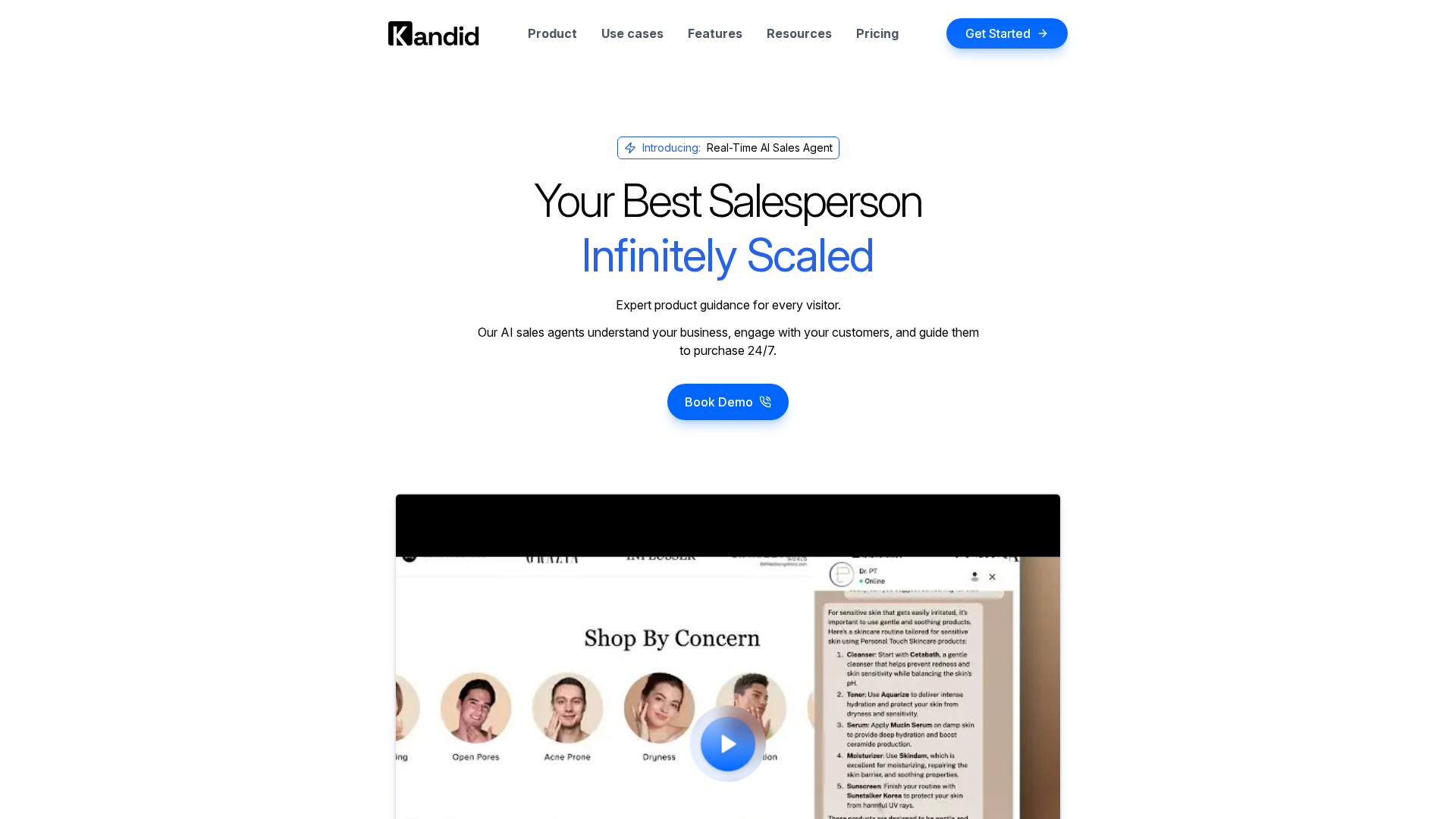
Need consultative, real-time product guidance? Try Kandid to turn complex shopper questions into conversions fast.
Frequently Asked Questions
Q1: How does Kandid's real-time AI sales agent compare to Manifest Law in boosting D2C product recommendations?
Kandid fits complex, consultative buying better. It answers live questions, handles specs and fit issues, and guides shoppers fast. Manifest Law may suit broader discovery, but Kandid usually wins when recommendation accuracy affects conversion and returns.
Q2: What are the key technical differences between Kandid and Manifest Law for D2C product recommendation tools?
Kandid acts like a real-time sales layer trained on catalog details and buyer intent. Manifest Law leans more toward shopping assistant discovery. The gap shows up most in technical catalogs, compatibility checks, and guided product narrowing.
Q3: Which tool, Kandid or Manifest Law, provides better integration with eCommerce platforms like Shopify in 2023?
For most Shopify brands, the better fit depends on use case, not just integration. If you need fast setup plus high-quality guided selling, Kandid is often stronger. If you want lighter discovery help, Manifest Law may be enough.
Conclusion
Kandid fits complex, consultative catalogs best. Manifest Law suits broader discovery. AI shopping assistants now shape buying behavior, as Shopify notes, so recommendation quality matters more than ever.