Dynamic Storefront 2026: How Data Quality Shapes Retail Visibility
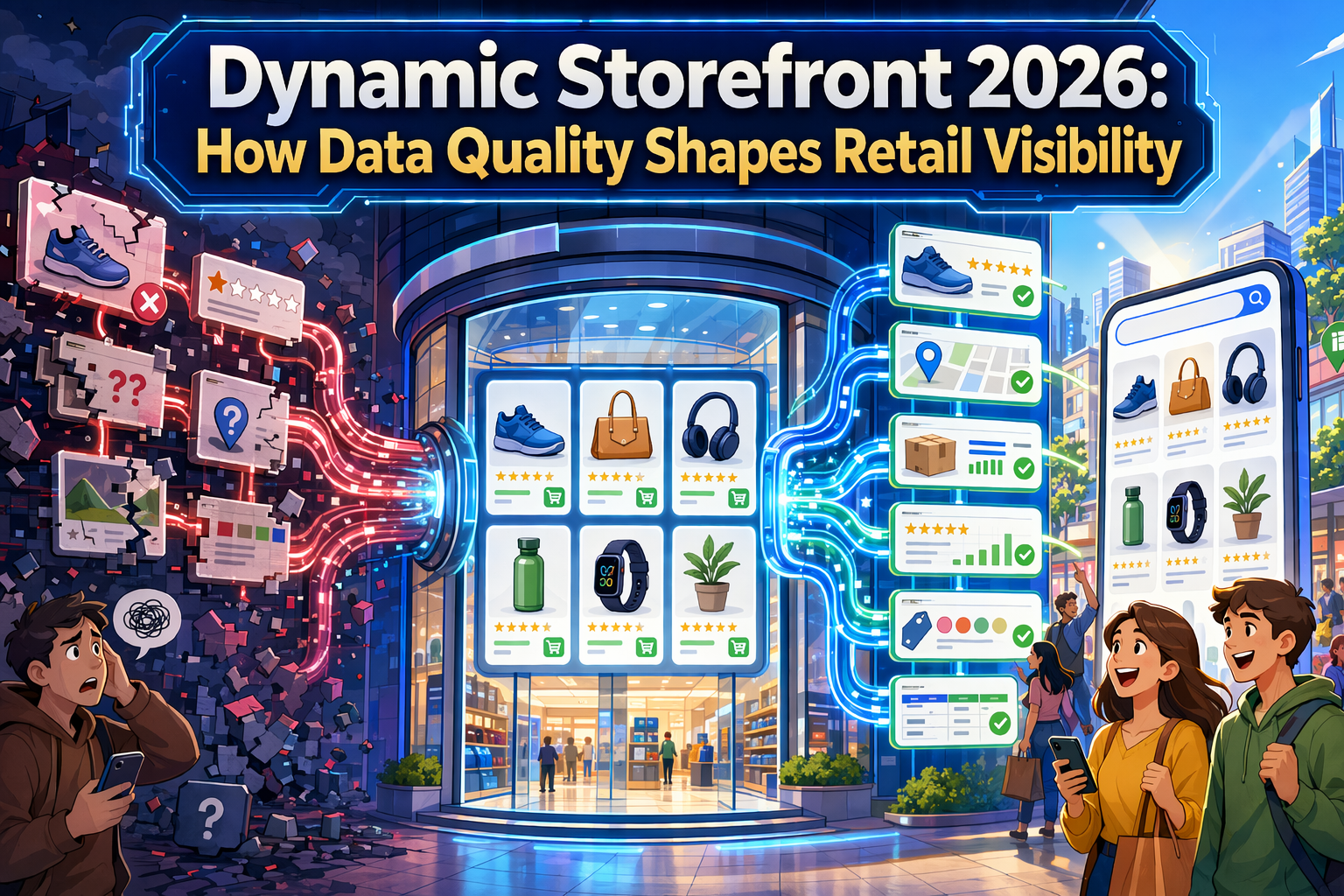
Quick Summary: Good product data is crucial for retail visibility in 2026 because AI systems rely on structured, accurate information to rank and recommend products. Incomplete or mismatched data can hide products from search, shopping, and AI assistants, reducing sales opportunities. Keeping inventory, pricing, and attributes current and consistent across all platforms improves discovery and customer experience.
Retail Visibility now depends on how well machines can read your catalog. In Q1 2026, Shopify said AI-referred orders jumped nearly 13x year over year, while NIQ warned weak structured data can make products vanish from AI assistants and buying agents. For operators, poor Data Quality cuts Retail Visibility across search, chat, marketplaces, and dynamic storefronts. This guide shows how Retail Visibility improves through better Storefront Optimization, cleaner feeds, and live inventory signals.
Why Retail Visibility Now Starts With Product Data
What AI shopping systems need to see
AI shopping systems need clean, structured facts before they can rank, compare, or recommend a SKU. Google says product pages can show richer results with price, stock, reviews, shipping, and returns, and that using both structured data and Merchant Center feeds helps Google understand and verify products better Google Search Central. Google also announced new AI performance insights in Merchant Center for AI Mode, AI Overviews, and Gemini, with product attribute gap reporting Merchant Center change log.

Why incomplete data reduces visibility
Missing fields make AI less sure about what you sell. That hurts visibility fast.
- Missing color, material, or compatibility blocks long-tail matching
- Wrong price or availability breaks trust
- Weak titles and thin specs limit product comparisons
Better data does not just help search. It helps AI answer real buying questions.
For brands with broad catalogs, this is where tools like Kandid can help turn product detail into shopper-ready guidance.
Also Read: How to Build a Dynamic Storefront for Maximum Conversion
How Dynamic Storefronts Turn Clean Data Into Better Discovery
Semantic search now reads intent, not just exact words. Shopify’s semantic search reached general availability in May 2026, and merchants with fully indexed catalogs saw search-to-purchase rates rise 18 to 34 percent, according to D2C Times. That means weak titles, vague specs, and missing use cases get ignored faster.
Dynamic merchandising works only when inputs stay clean. Google’s product understanding layer checks feeds, structured data, pages, price, availability, and variants together, and FeedOps notes that mismatches lower confidence. If your feed says one thing and your PDP says another, discovery drops across search and shopping surfaces.
Clean data is not a nice-to-have. It is the base layer for search, recommendations, and AI-guided product matching.
- Fix titles
- Normalize attributes
- Sync variant, stock, and price data
Also Read: Kandid's Dynamic Storefront Review: Boost E-Commerce Engagement
The Data Fields That Matter Most in 2026
Accuracy beats volume in 2026. The fields that matter most are the ones platforms can trust and match across your site, feed, and markup.
- Title, brand, GTIN/SKU, price, availability, and condition need to say the same thing everywhere.
- Google states merchant listings can highlight price, availability, shipping, and return information when your product markup is complete and valid Google Search Central.
- Google Merchant Center also warns that structured data must match what users see, or products may not match your shopping data Merchant Center Help.

Real-time signals now change visibility fast:
- Inventory status
- Current price
- Shipping details
- Return policy
If those lag by even a few hours, visibility can drop. This is where systems like Kandid help, because shopper-facing answers stay aligned with live catalog data instead of stale copy.
Also Read: 7 Dynamic Storefront Features to Boost Your Online Sales
What Brands Should Do Next
Start with a fast audit. Check the same 20 top SKUs in three places - your product page, structured data, and Merchant Center feed. Google says using both structured data and Merchant Center feed helps it verify product details, and mismatches can block visibility or trigger issues Google Search Central.
- Review these fields first:
- Title
- Price
- Availability
- GTIN or SKU
- Variant data like size or color
- Mark each SKU:
- Match
- Partial match
- Broken
| Check area | What to spot | Priority |
|---|---|---|
| Feed vs page | Price or stock mismatch | High |
| Schema vs page | Missing required fields | High |
| Variant logic | Wrong size or color mapping | Medium |
Fix the high-traffic SKUs first. Google notes inaccurate product data can lead to disapprovals and limited visibility Merchant Center spec.

Bad data hides great products. Kandid turns catalog complexity into clear buying guidance, helping shoppers find the right fit faster. See how it can lift conversion, AOV, and retail visibility.
Frequently Asked Questions
Q1: How does data quality influence retail visibility and sales in 2026?
Clean titles, specs, pricing, stock, and media help marketplaces, search engines, and AI shopping agents rank products correctly. Bad data hides products, creates wrong matches, and hurts conversion when shoppers see errors or missing details.
Q2: What role does real-time data play in enhancing store digital storefronts?
Real-time feeds keep availability, delivery dates, promos, and compatibility current. That reduces bounce, cuts support tickets, and helps dynamic storefronts show the right product and message at the exact moment a shopper is ready.
Q3: How can high-quality data improve personalization and customer experience in retail?
Strong product data gives recommendation engines better inputs. Shoppers get more accurate bundles, fit guidance, and comparison help. Tools like Kandid work better when catalog data is complete, current, and structured across every product attribute.
Conclusion
Retail visibility now depends on clean, complete product data. Google’s 2026 updates tie discovery to structured attributes and AI shopping insights in Merchant Center, while product data specs still decide eligibility, accuracy, and reach.