D2C Product Recommendation Setup for Higher Store Conversions
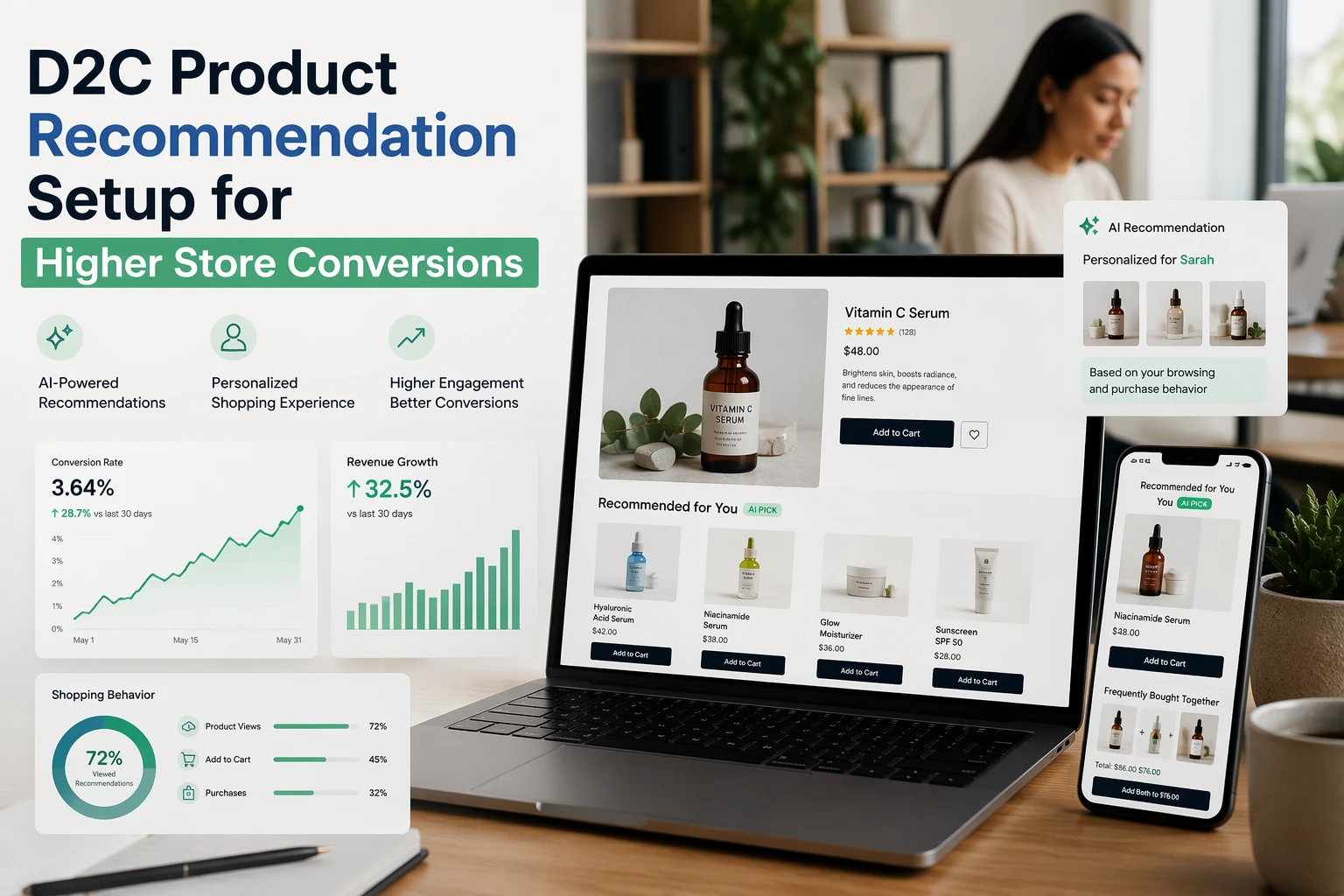
Quick Summary: Effective D2C product recommendations should guide shoppers closer to purchase by reducing friction and matching their intent. They work best when placed on product pages, cart, and post-purchase, focusing on relevant add-ons and bundles. Using first-party and zero-party data improves recommendation accuracy, and measuring success through metrics like revenue per visitor and conversion rate is crucial. Combining strategy, placement, tools, and testing leads to higher store conversions.
A skincare brand can lose a ready-to-buy mobile shopper fast when a product page shows a generic carousel instead of refill bundles, shade matches, or routine add-ons. That gap is the core problem this guide fixes. You will see a practical D2C Conversion Optimization setup that connects strategy, placements, Product Recommendation Tools, and Ecommerce Personalization Software. This framework comes from real D2C Conversion Optimization work across complex catalogs, repeat purchase flows, and revenue-focused store teams.
What D2C Product Recommendations Should Actually Do
Recommendations should move shoppers one step closer to purchase. In D2C Conversion Optimization, their job is simple: reduce choice friction, keep people on site, and raise basket value. Shopify notes that strong recommendation systems help shoppers find relevant products faster and can lift average order value and repeat purchases through better discovery Shopify’s guide.
- Top of funnel: show bestsellers, category starters, or recently viewed items
- Mid funnel: compare options, surface substitutes, answer fit questions
- Bottom of funnel: push add-ons, bundles, and cart complements

Relevant recommendations match intent, not just product tags. Shopify’s 2026 engineering write-up says better systems read buyer journeys as sequences of searches, views, carts, and purchases, not single clicks Shopify engineering.
If a recommendation cannot explain why this item, for this shopper, right now, it is probably noise.
Also Read: Comprehensive Guide to D2C Product Recommendations for 2026
The Data Signals That Power Better Recommendations
Start with first-party behavior. Use viewed products, cart adds, search terms, bundle clicks, and past orders to spot real intent. Didomi’s guide draws a clean line here: first-party data is observed behavior from your own channels, so it is usually your strongest base signal.
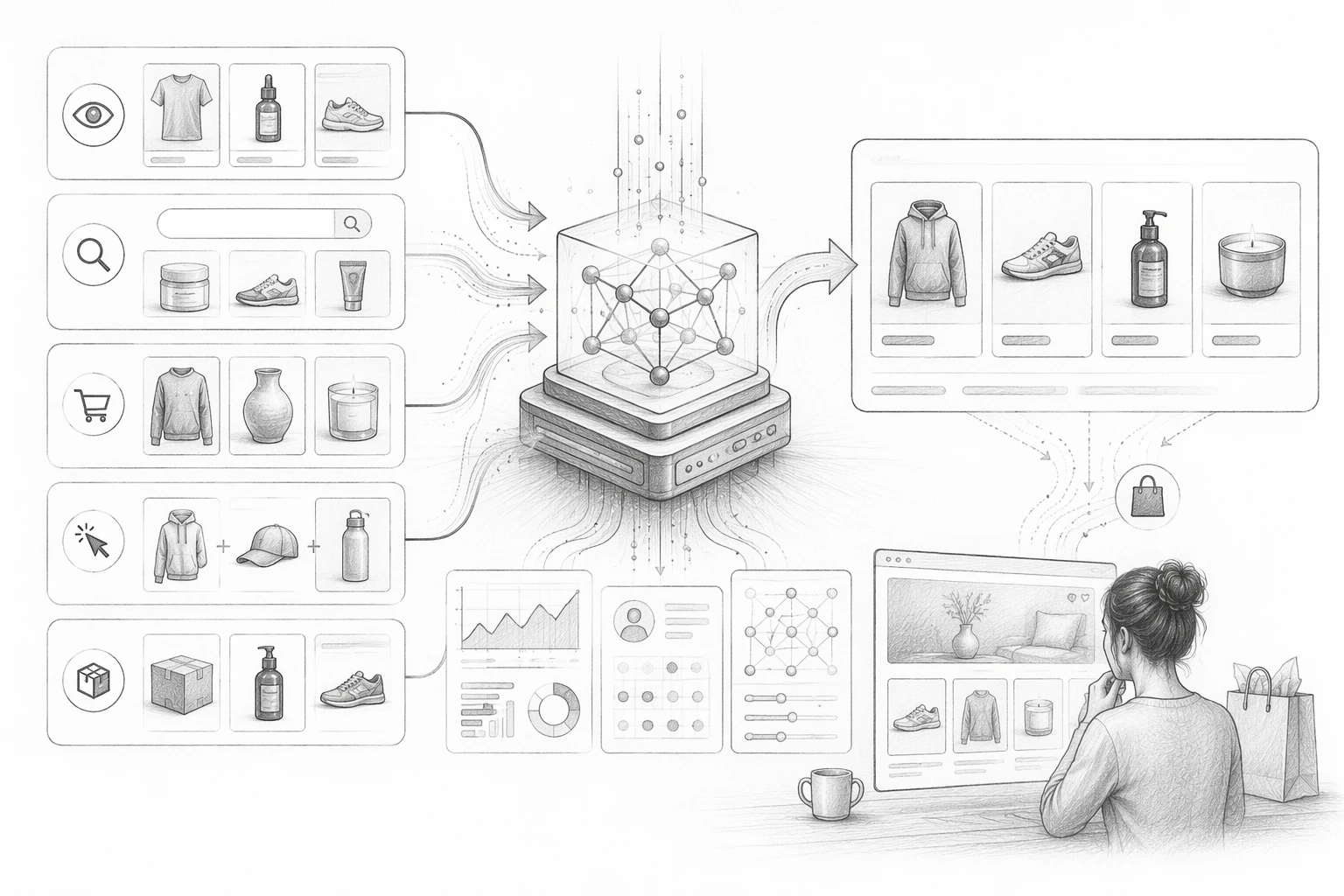
Add zero-party data where it removes guesswork. Ask for skin type, fit, budget, gift intent, or compatibility needs only when the answer changes what you recommend. This is where a tool like Kandid can help, since live shopper questions often reveal high-value preference data fast.
Keep privacy and consent in view. The FTC’s privacy guidance stresses clear promises, sound security, and collecting only what you need.
Also Read: 9 D2C Cross-Sells That Increase Average Order Value
Where to Place Recommendations for the Highest Conversion Lift
Put recommendations where buying intent is already high. The best spots are product pages, cart, checkout, and post-purchase. Baymard’s checkout research shows friction kills conversion, so each placement needs to feel helpful, not pushy.
- Product pages: Recommend complements first, then close alternatives. Show chargers, refills, cases, or compatible parts near the buy box. If the shopper hesitates, alternatives can save the sale.
- Cart and checkout: Use low-friction add-ons only. Baymard found many desktop sites still miss the mark on relevant cart cross-sells. Keep it to 1 to 3 items, one-click add, no page detours.
- Post-purchase: Drive repeat purchase and AOV with replenishment, accessories, and setup extras in confirmation pages, email, or a Kandid agent follow-up.
Also Read: D2C Recommendations vs Static Bundles for Higher AOV
How to Choose the Right Recommendation Tool and Measure Success
Pick a tool that fits your catalog, traffic, and team. Look for fast setup, low page impact, clear rules, strong product data handling, and easy testing. Shopify says recommendation systems only matter when they can be deployed and measured in real conditions, not just modeled in theory Shopify’s engineering write-up.
Measure business lift first. The core metrics are:
- Conversion rate
- Average order value
- Revenue per visitor
- Attach rate on add-ons
- Recommendation click-to-cart rate
| Metric | Why it matters | Good use |
|---|---|---|
| Revenue per visitor | Ties clicks to money | Primary success metric |
| AOV | Shows upsell value | Cross-sell placements |
| Conversion rate | Shows purchase impact | Sitewide readout |
Do not judge tools on clicks alone.
Test one placement at a time with a control group. A/B testing remains the key way to compare recommendation performance, even though it takes time and traffic to reach confidence research on recommender A/B testing.
Want product recommendations that actually convert? See how Kandid turns shopper questions into guided buying paths, better fit, and higher conversion fast.
Frequently Asked Questions
Q1: What are the key components of an effective D2C product page SEO strategy?
Match search intent, write clear titles, use strong product copy, add schema, improve speed, and show proof like reviews. Keep recommendations relevant so shoppers find the right item faster and bounce less.
Q2: How can I optimize my D2C product pages to boost organic traffic and conversions?
Tighten copy around real buyer questions, improve internal links, sharpen images and FAQs, and place recommendations near decision points. Test bundles, alternatives, and compatibility prompts to raise both click depth and conversion rate.
Q3: What technical SEO best practices should D2C brands follow for product pages?
Use clean URLs, canonicals, fast load times, mobile-first layouts, structured data, and index control for variants. Avoid thin duplicate pages. Make sure recommendation widgets do not slow the page or block core content.
Conclusion
Strong D2C recommendations win when strategy, placement, tooling, and measurement work together. Site search users often convert far better than browsers, according to Hello Retail. Recommendation quizzes can also lift orders and AOV, based on RevenueHunt benchmark data.