Salesforce Acquires Fin for $3.6B to Accelerate AI Sales Agent Push
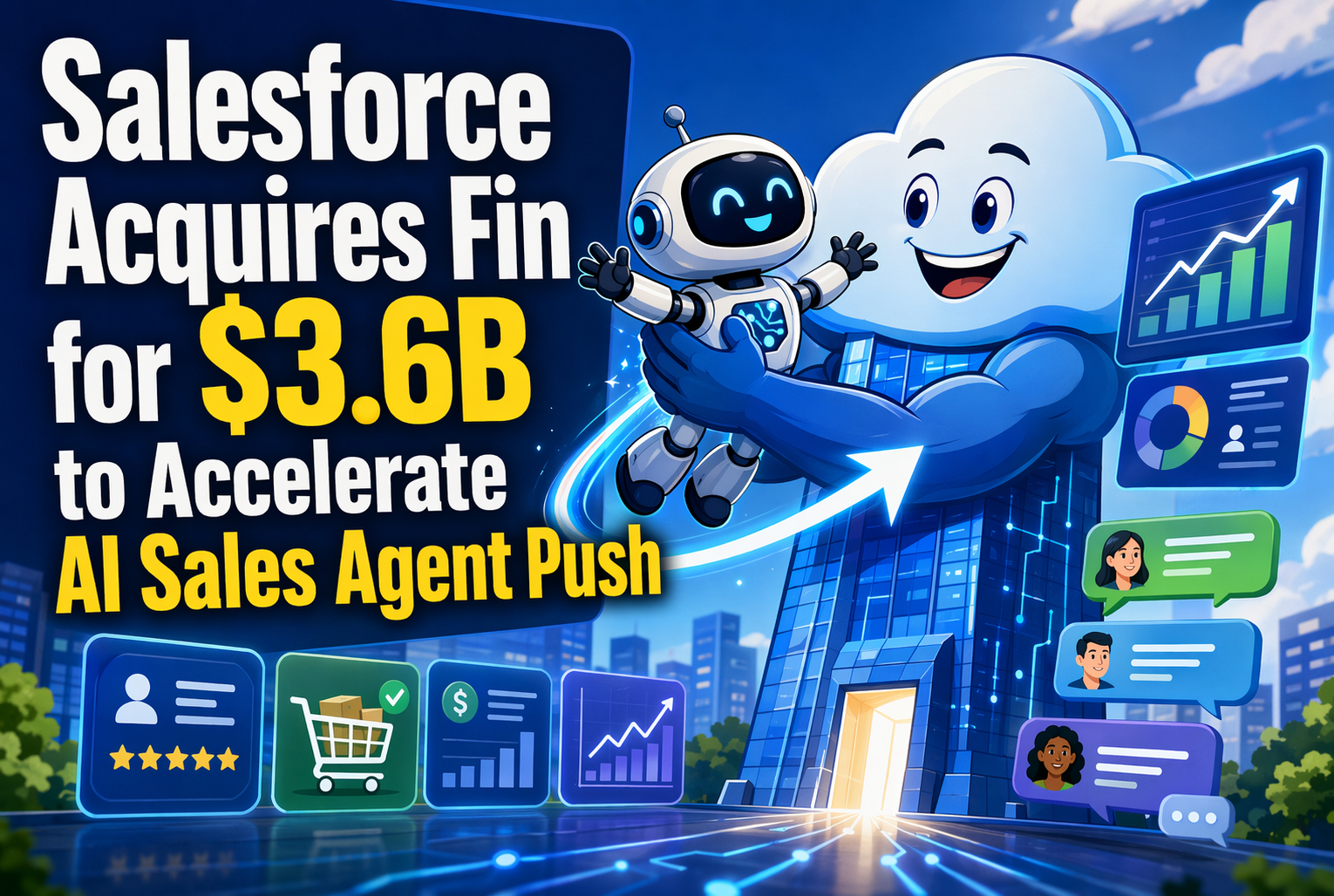
Salesforce said on June 15 it will buy Fin for $3.6 billion, bringing in an AI agent that resolves 76% of support chats end-to-end for $0.99 per successful case. That matters if your support costs rise with every order. This Salesforce AI acquisition puts AI Sales Agents, AI Sales Agents, and AI Sales Agents inside the Agentforce platform, giving D2C teams a faster path to automation without heavy setup or risky upfront spend.
What the $3.6B Fin Deal Means for AI Sales Agents in Customer Service
Salesforce is not buying a small feature. It is buying proven AI service-agent muscle. The company says Fin will expand Agentforce with faster-to-launch customer agents, and the deal is set to close in Q4 of Salesforce’s fiscal 2027, pending approvals, according to Salesforce’s announcement.
For operators, the signal is clear:
- Autonomous resolution is now a board-level metric
- Time-to-value matters as much as model quality
- Outcome-based buying will get more attention
Salesforce says Fin agents have resolved an average 76% of support volume end-to-end in some cases and bring a base of 30,000+ companies into its orbit, per the same deal statement.
Also Read: AI Sales Agents News: 2026 Launches and Measurable Gains
Outcome-Based Pricing: The Real Game Changer for D2C Brands
Outcome pricing matters because it cuts the biggest adoption risk: paying for AI that talks a lot but sells little. In Fin’s case, analysts told CIO that charging per resolved conversation shifts risk back to the vendor, not the buyer.
For D2C brands, that changes the buying math fast.
- You tie spend to resolved conversations or measurable lift
- You avoid bloated seat fees before value shows up
- You get a cleaner path to prove ROI to finance
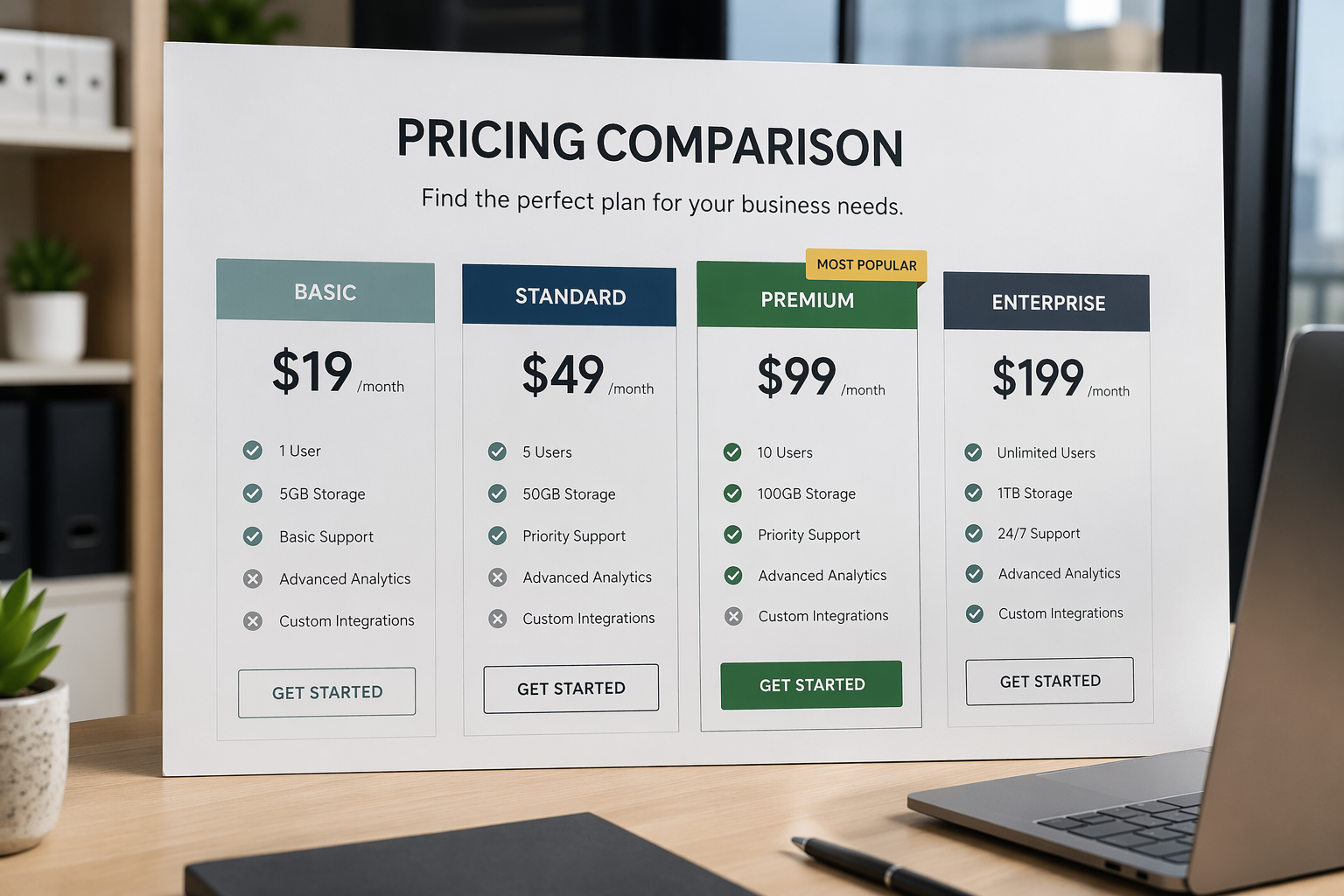
Salesforce says Fin’s AI agents have resolved an average of 76% of support volume end-to-end for some customers, according to its deal announcement. That makes outcome pricing easier to trust.
For brands looking at tools like Kandid, this is the real lesson: buy against business results, not demo quality.
Also Read: AI Sales Agents: 12 Use Cases for D2C Growth
What Fin Adds to Agentforce That Enterprise-First Buyers Didn't Have
Salesforce did not buy Fin just for scale. It bought a faster path to working AI service agents. Salesforce says Fin adds packaged, fast-to-value service agents to Agentforce, plus stronger cross-channel support across chat, email, WhatsApp, SMS, phone, and Slack in its deal announcement.
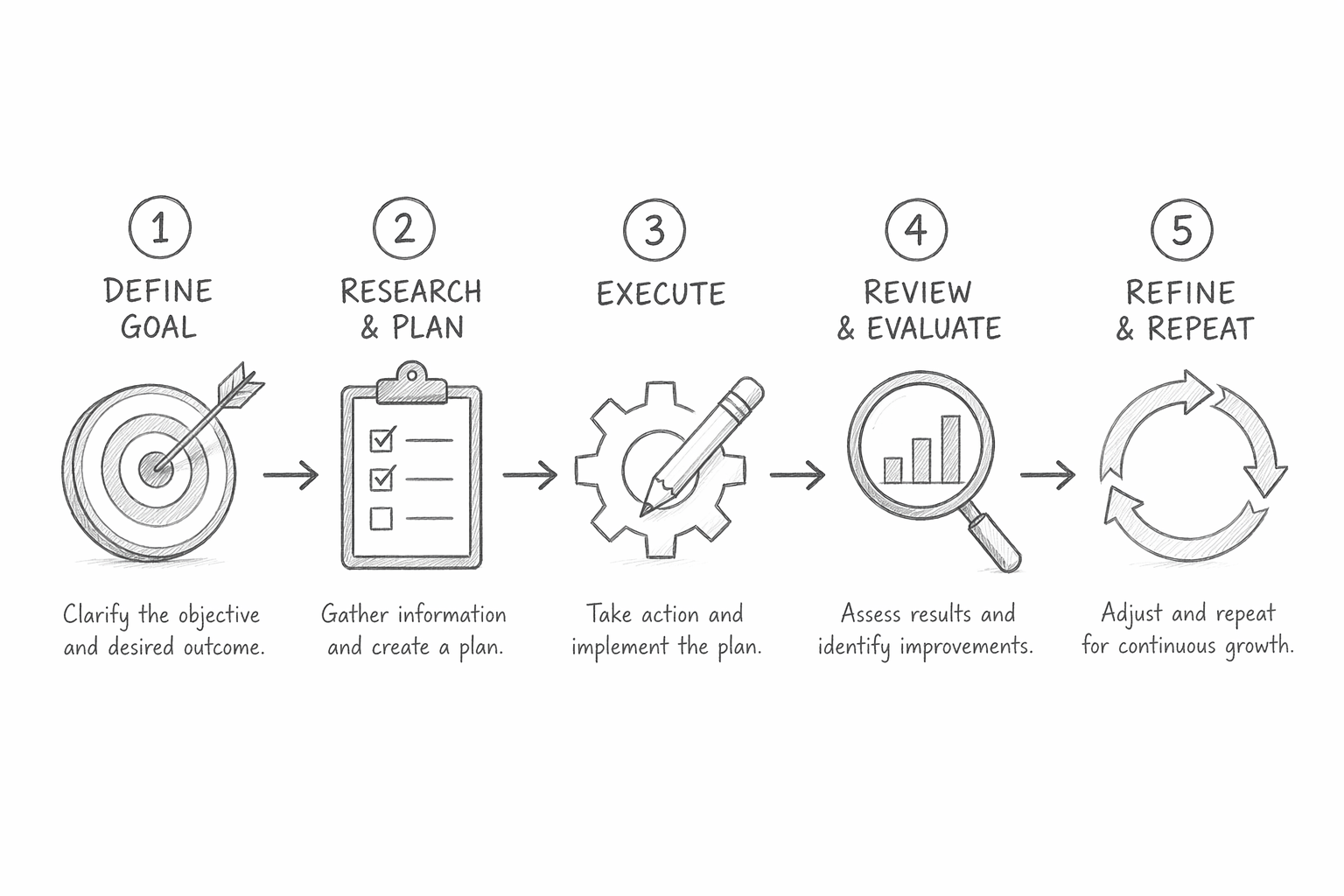
For enterprise-first buyers, that matters because Agentforce was strong on custom builds, governance, and deep Salesforce workflows. Fin fills the gap with:
- Faster deployment
- More out-of-the-box service use cases
- A higher autonomous resolution benchmark
Salesforce says some Fin customers resolve 76% of support volume end-to-end. TechCrunch also notes the $3.6B deal is meant to improve Agentforce’s existing custom agent platform with proven service agent tech and team depth in its coverage.
For D2C teams, the real takeaway is simple: less setup risk, faster launch, and clearer ROI pressure on every AI agent vendor.
Also Read: AI Sales Agents: 7 Metrics to Prove Revenue Impact
What This Means for Your Business: Key Takeaways for D2C and E-Commerce Leaders
Timeline to Practical Integration
This deal matters, but not tomorrow. Salesforce says the Fin acquisition is expected to close in Q4 of fiscal 2027, so most D2C teams should treat 2026 as a planning window, not a full platform switch according to Salesforce.
What should you do now?
- Audit high-intent conversations - product fit, compatibility, shipping, returns.
- Pick one revenue use case - not a broad AI rollout.
- Set success metrics - conversion rate, AOV, resolved chats, cost per resolution.
- Pressure-test pricing - outcome-based models sound great, but define what counts as a real resolution.
The real takeaway: buy for time-to-value and measurable outcomes, not AI branding.
CIO notes the bigger integration story may take 12 to 24 months beyond close, so brands that want faster wins may prefer focused tools like Kandid now while enterprise suites settle as reported by CIO.
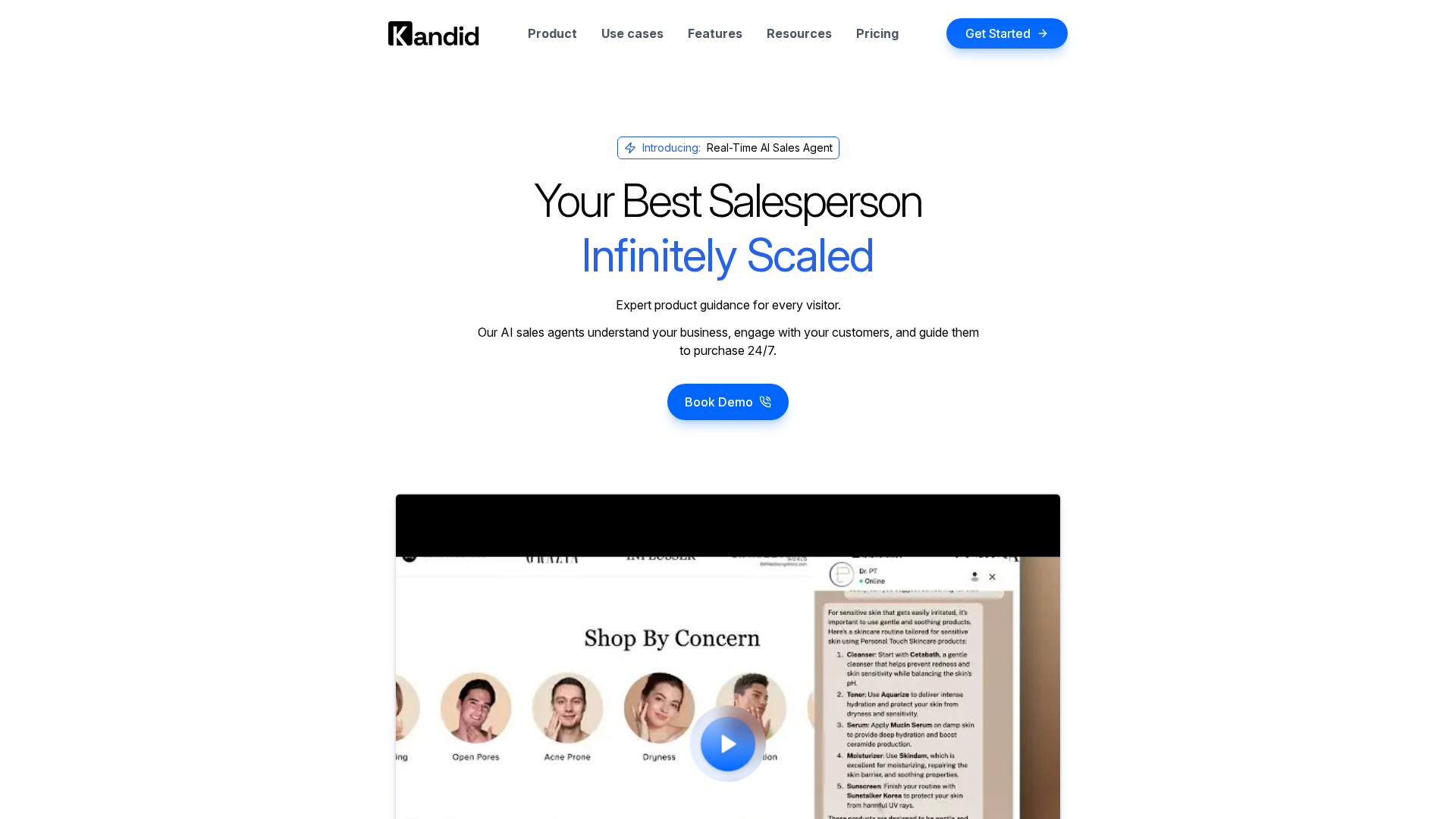
If Salesforce’s move makes AI sales agents feel urgent, test one built for D2C now. Kandid helps shoppers choose faster, clears product doubts, and turns high-intent traffic into measurable revenue.
Frequently Asked Questions
Q1: How does Salesforce's Fin acquisition impact AI sales agents?
It signals bigger investment in AI agents that can handle sales and support tasks with less human help. Expect faster product upgrades, more outcome-based pricing, and stronger pressure on smaller vendors to prove real conversion lift.
Q2: What does the $3.6B Fin deal mean for small D2C brands?
Small brands should expect more choices, but also more noise. The key shift is buyer focus. You will need to ask vendors for clear proof on resolution rates, revenue impact, setup speed, and catalog accuracy before signing.
Q3: Why did Salesforce buy Fin for $3.6 billion?
Salesforce wants deeper control of the AI agent stack and a stronger story for enterprise sales teams. The deal helps it sell automation tied to revenue, not just support savings, which matters as AI budgets move closer to commerce teams.
Conclusion
Salesforce’s Fin deal shows AI sales and service agents are shifting from promise to operations. For e-commerce teams, the real watchpoints are autonomous resolution, faster setup, and pricing tied to results, not seats, as CIO noted.