AI Sales Agents: 12 Use Cases for D2C Growth
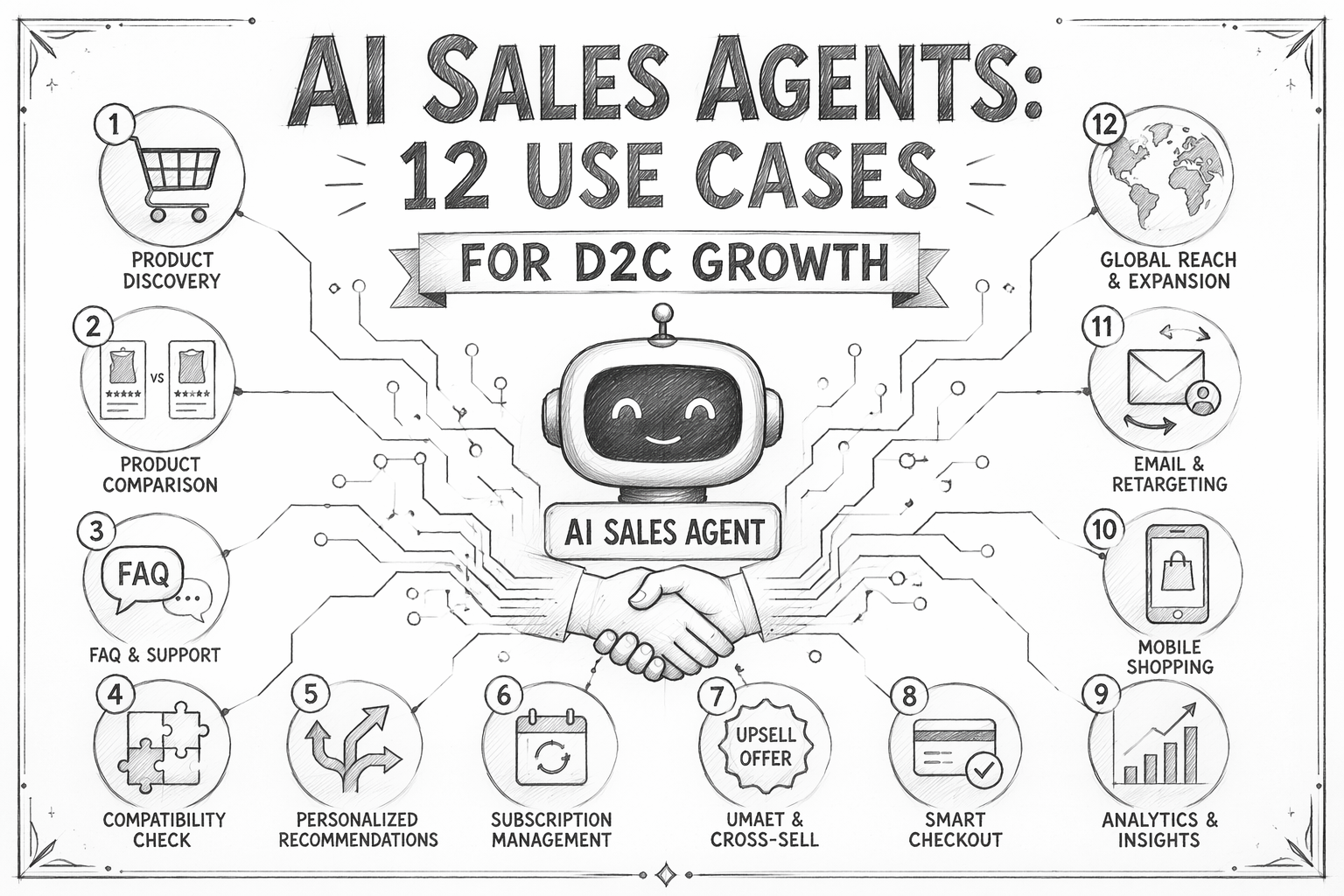
A shopper hits your D2C store at 11:47 p.m. with one last question. If AI sales agents do not answer fast, that order often dies in the cart. Most D2C teams still lean on static FAQs and generic chat, so high-intent users bounce instead of buy. AI sales agents fix that gap with real-time guidance, AI sales automation, and always-on selling, turning support moments into D2C growth.
Quick Comparison
| AI Sales Agent | Best for | Primary channel | Core growth lever | Implementation depth |
|---|---|---|---|---|
| Kandid | Consultative D2C selling | Website | Conversion and AOV | Medium |
| Manifest AI | Shopify-first D2C brands | Website | Discovery and cart recovery | Medium |
| Helium | Performance-driven D2C teams | Storefront plus ads | Conversion and ROAS | High |
| Verifast AI | Omnichannel D2C brands | Web, WhatsApp, Instagram, email | Conversion and recovery | Medium |
What to know about AI sales agents
AI sales agents are commerce-focused assistants that act like digital sales reps on your site and channels. They guide product discovery, recommend items, answer buying questions, recover abandoned carts, and push shoppers toward purchase in real time.
For D2C brands, the power is simple: more revenue from the same traffic, without more headcount. They also feed back shopper data that sharpens your merchandising, ads, and support playbook across the whole funnel.
1. Kandid
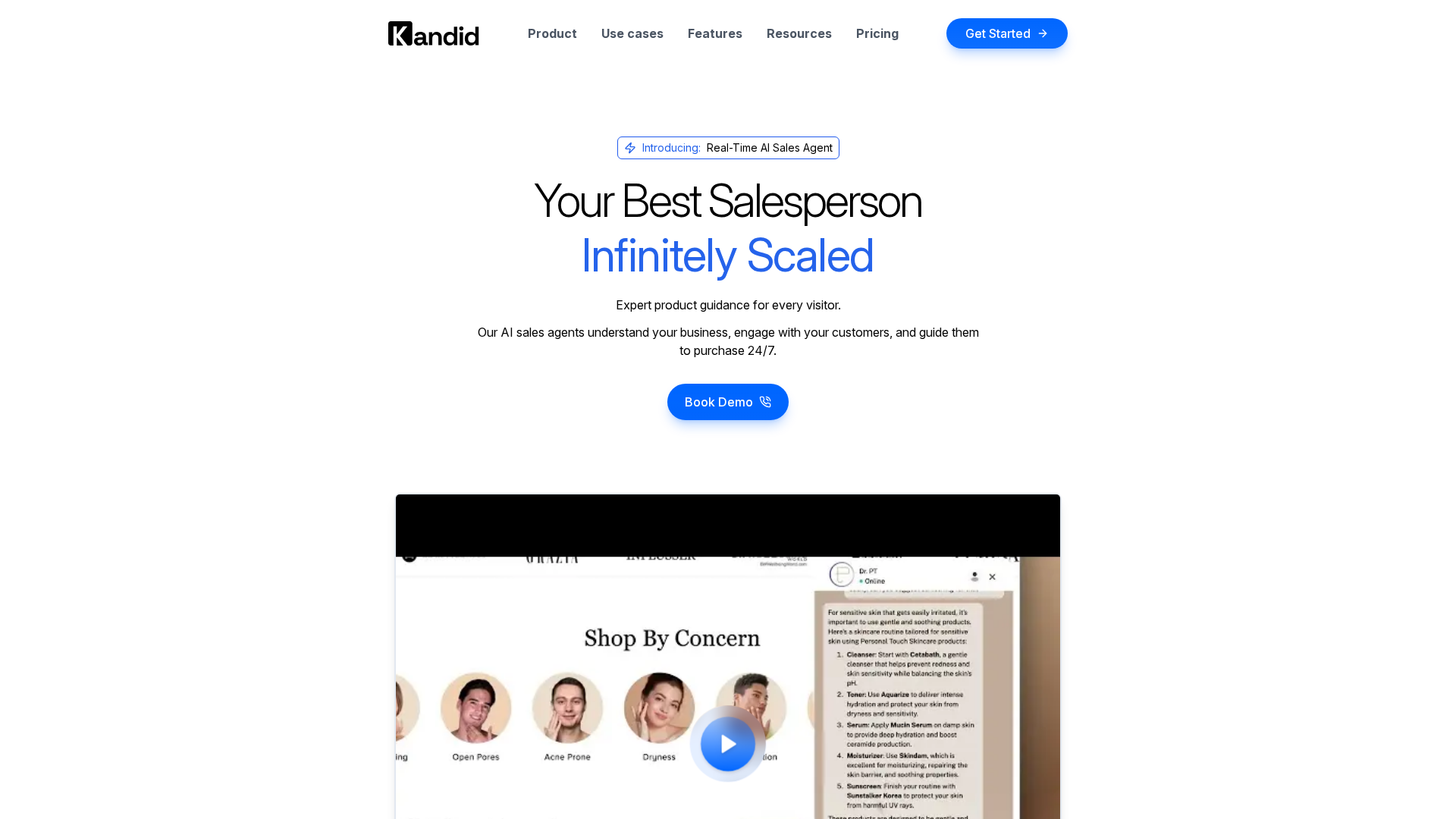
Kandid acts like an in-store expert on your site, guiding hesitant shoppers to the right product with real-time, consultative help. It trains on your catalog and content so it can answer nuanced questions, compare options, and push shoppers toward a confident purchase, not just deflect tickets.
Highlights
- Trains on product pages, FAQs, blogs, and PDFs so answers match your brand voice
- Handles spec-heavy questions and side-by-side product comparisons for high-consideration carts
- Supports smart upsells, bundles, and recommendations to lift AOV and conversion
- Gives you a dashboard for sessions, revenue, and common questions, similar to what you see in tools on the Shopify App Store and detailed in this Brand Ripper teardown
Specs
- Best for: Consultative D2C selling
- Primary channel: Website
- Core growth lever: Conversion and AOV
- Implementation depth: Medium
Pros
- Strong fit for complex, technical, or comparison-heavy products
- Built to drive revenue, not just reduce support load
- Great for guided selling, bundles, and post-recommendation nudges
- Deeply brandable and store-specific
Cons
- Less focused on omnichannel than some competitors
- Needs solid product data and content to perform at its best
It ranks here because it maps almost 1:1 to this article’s promise: use AI sales agents to turn high-intent D2C traffic into more revenue per session.
Last updated: June 2, 2026
2. Manifest AI
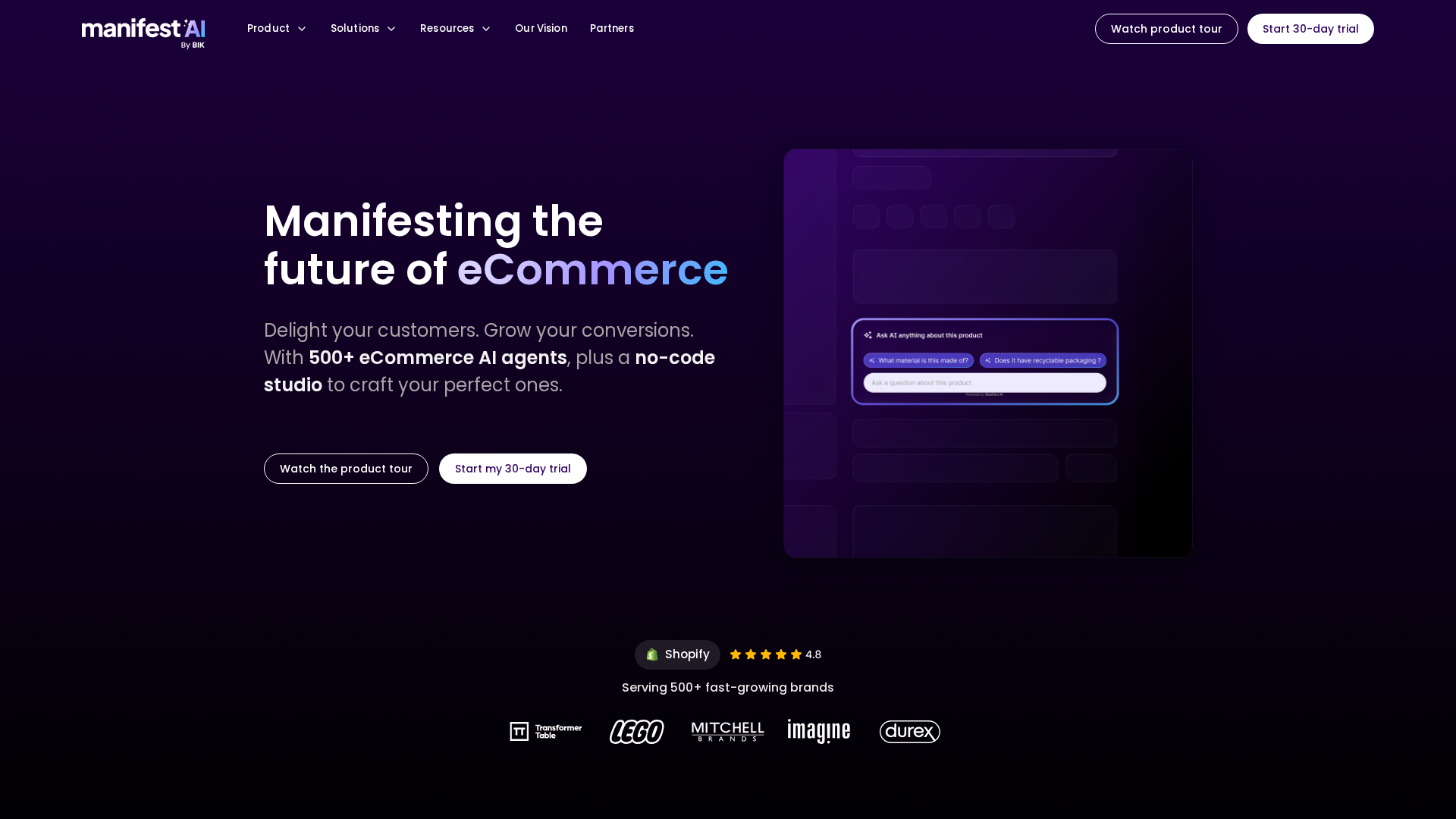
Manifest AI is a commerce-focused AI sales agent that acts like a digital store associate on your site. It guides shoppers with AI shopping pages, quizzes, and a Shopify-native chatbot so you plug it straight into your D2C flows. For most Shopify brands, it covers discovery, conversion, and basic post-purchase support in one place.
Highlights
- No-code studio for custom agents and flows
- AI shopping pages and guided discovery journeys
- Cart recovery nudges and tailored product recommendations
- Tight Shopify and ecommerce tool integrations
Specs
- Best for: Shopify-first D2C brands that want a flexible AI sales assistant
- Primary channel: Website and onsite chat experiences
- Core growth lever: Discovery and cart recovery through guided shopping and nudges
- Implementation depth: Medium - faster than custom builds, deeper than a simple bot
Pros
- Broad mix of revenue and support use cases across the funnel
- Strong fit inside the Shopify ecosystem and app store, as shown on the Shopify listing
- No-code setup lowers the barrier for ecommerce managers
- Focus on AI shopping pages gives more than a basic Shopify chatbot
Cons
- Ecom-centric focus means limited value for non-retail use cases
- Feature breadth might feel heavy for very small or single-SKU teams
Manifest AI ranks high here because it is one of the most complete commerce agents available and maps cleanly to multiple D2C growth levers on Shopify.
Last updated: June 2, 2026
3. Helium
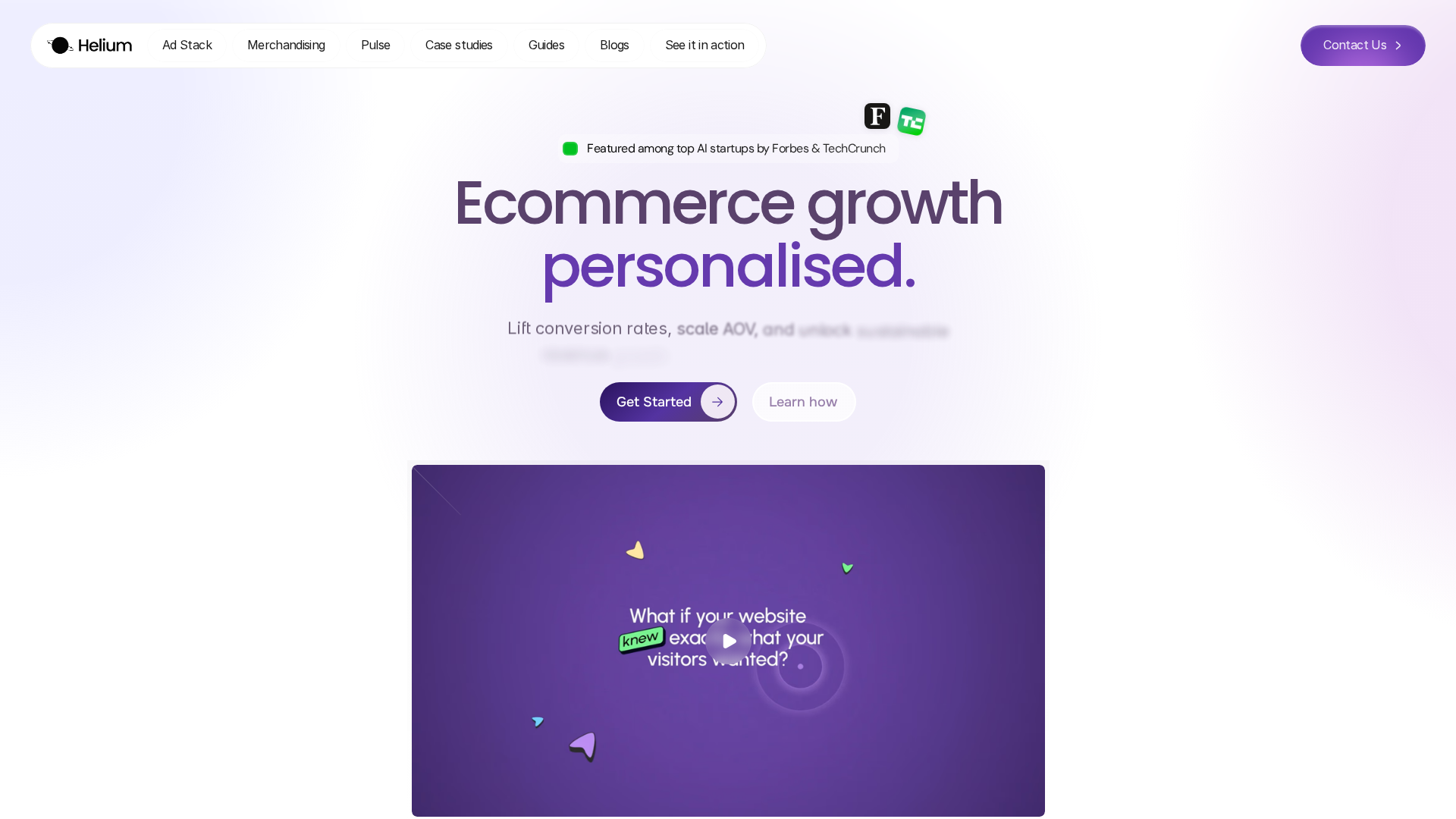
Helium is an agentic growth platform that connects AI-driven personalization, merchandising, and ad signals across your D2C funnel. It goes beyond simple chat to adapt the storefront in real time and push high intent signals into your Meta and Google ad stack for stronger ROAS.
Highlights
- Adaptive storefronts that change layouts, recommendations, and modules based on shopper intent, as shown in Helium's personalization overview.
- AI merchandising that boosts the right SKUs and collections by learning from live traffic and purchase data.
- Ad signal automation that sends high intent audience and SKU signals to Meta and Google to help improve ROAS, detailed in their ad stack docs.
- Real-time funnel analytics and alerts that flag breakpoints across the journey.
Specs
- Best for: Performance-driven D2C teams
- Primary channel: Storefront plus ads
- Core growth lever: Conversion and ROAS
- Implementation depth: High
Pros
- Connects onsite experience, merchandising, and paid media signals into one growth loop.
- Strong fit for teams doing CRO, merchandising, and media buying under one roof.
- Analytics layer helps teams spot and fix funnel issues faster.
Cons
- More complex than basic AI chat assistants like Kandid or Sage Pilot.
- Best suited for brands with a mature growth stack and clear experimentation process.
Helium ranks here because it tackles the full D2C growth loop, tying conversion, merchandising, and acquisition efficiency into a single AI-driven system.
Last updated: June 2, 2026
4. Verifast AI
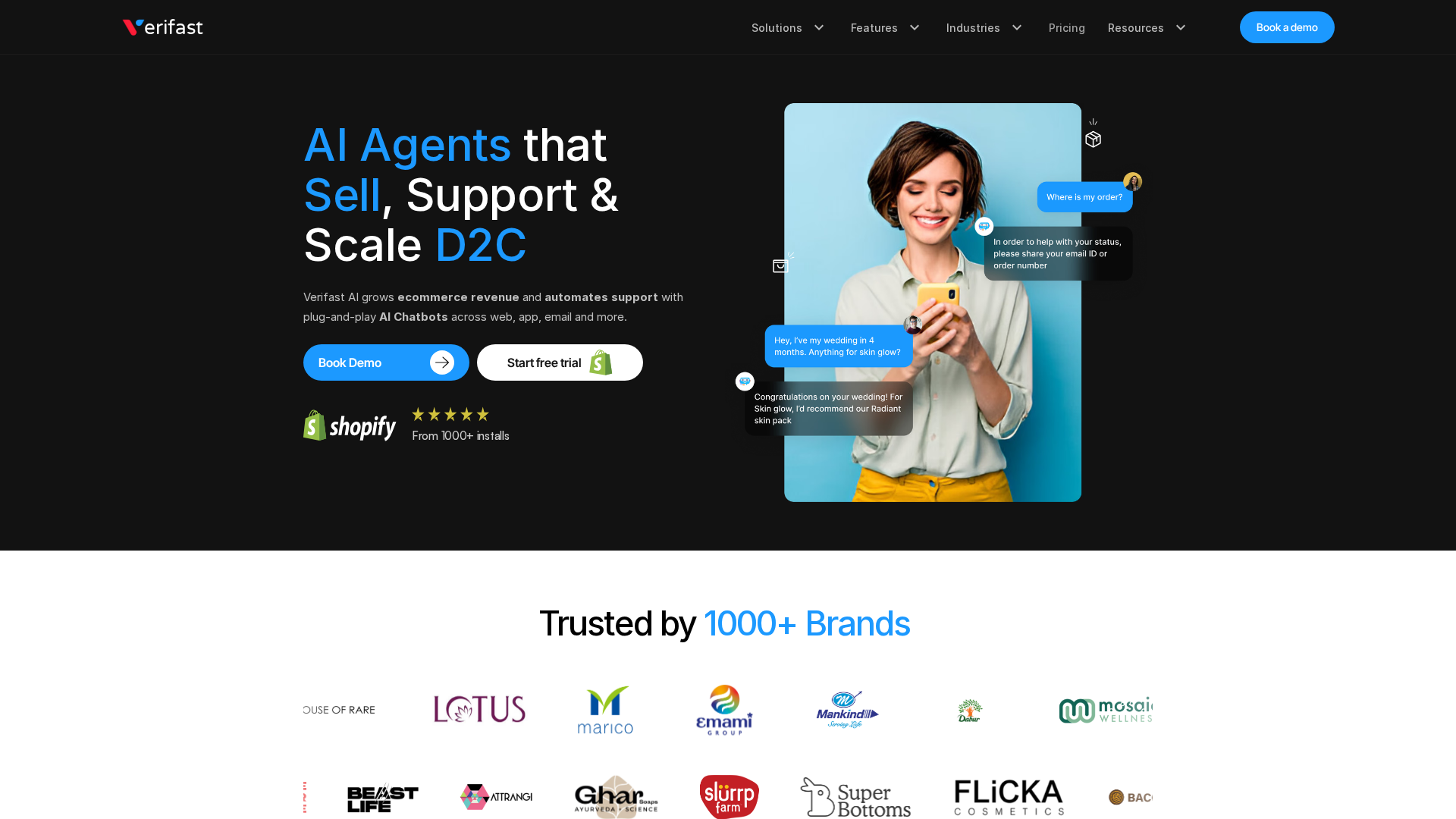
Verifast AI is an omnichannel AI sales and support agent built for D2C brands that sell across web and social. It runs proactive conversations, gives product recommendations, recovers abandoned carts, and supports customers in many languages across your site, WhatsApp, Instagram, and email.
Highlights
- Website, WhatsApp, Instagram, and email coverage for one consistent AI agent
- Personalized product recommendations to lift on-site and social conversions
- Cart recovery flows triggered by behavior, not just email reminders
- Multilingual support plus conversation insights for global teams
Specs
- Best for: Omnichannel D2C brands
- Primary channel: Web, WhatsApp, Instagram, email
- Core growth lever: Conversion and recovery
- Implementation depth: Medium
Pros
- Strong coverage beyond the website for social and messaging led brands
- Handles both sales and support without needing two tools
- Fits multilingual and international brands with many markets
- Solid abandoned-cart and exit-intent workflows to win back revenue
Cons
- May feel heavy if most of your traffic still converts only on-site
- Cross-channel value depends on how well your team maintains flows and routing
Verifast AI ranks fourth because its multichannel scope matches how modern D2C shoppers move between site, chat, and social before they buy.
Last updated: June 2, 2026
How to choose the right AI sales agent
Start from your buying journey, not the tool page. Use these filters:
- Consultative vs simple FAQ
Pick a consultative agent (like Kandid or Helium) if you sell high-consideration, spec-heavy, or configurable products and get many compatibility questions. - Single-channel vs omnichannel
Choose an omnichannel platform if shoppers message you on WhatsApp, Instagram, email, and your site. - Merchandising-first vs support-first
If growth cares about AOV and ROAS, choose a merchandising-first system that controls recommendations and bundles, not just answers questions. - Shopify-native vs custom stack
Go Shopify-native for fast setup and app-store ease. Go more flexible (Kandid, Manifest) if you want deeper workflows across markets. - Analytics depth
Only shortlist tools with clear reporting on conversion rate, revenue per session, and cart recovery, not just chat volume. - Match to your support model
If you want a sales rep substitute, prioritize guided selling flows and product comparison.
If you want blended sales plus support, make sure it hands off to human agents and your helpdesk cleanly.
Ready to turn these AI sales agent use cases into revenue, not theory? See how Kandid lifts conversion, AOV, and ROAS with real-time, on-site AI sales agents. Book a demo and watch your high-intent traffic actually buy.
Frequently Asked Questions
Q1: How do AI sales agents convert D2C website visitors into buyers 24/7?
They act like a trained salesperson on every page. They answer product questions, compare options, remove doubts, suggest bundles, and hand over clean carts or leads. This cuts friction and pushes high-intent visitors to checkout anytime.
Q2: What are the best AI sales agent use cases for D2C growth in 2025?
Top plays: guided product quizzes, objection handling, live comparison for SKUs, upsell and cross-sell at PDP and cart, pre-sale financing questions, post-purchase care, and reactivation of return visitors based on past behavior and sessions.
Q3: How can an AI sales agent improve conversion rate, ROAS, and AOV for D2C brands?
It improves conversion by removing confusion, ROAS by squeezing more orders from paid traffic, and AOV by suggesting relevant upgrades and bundles. The key is deep catalog training, real-time intent signals, and tight tracking into analytics.