How Real Time Shopping Innovations are Reshaping 2026 Retail Trends
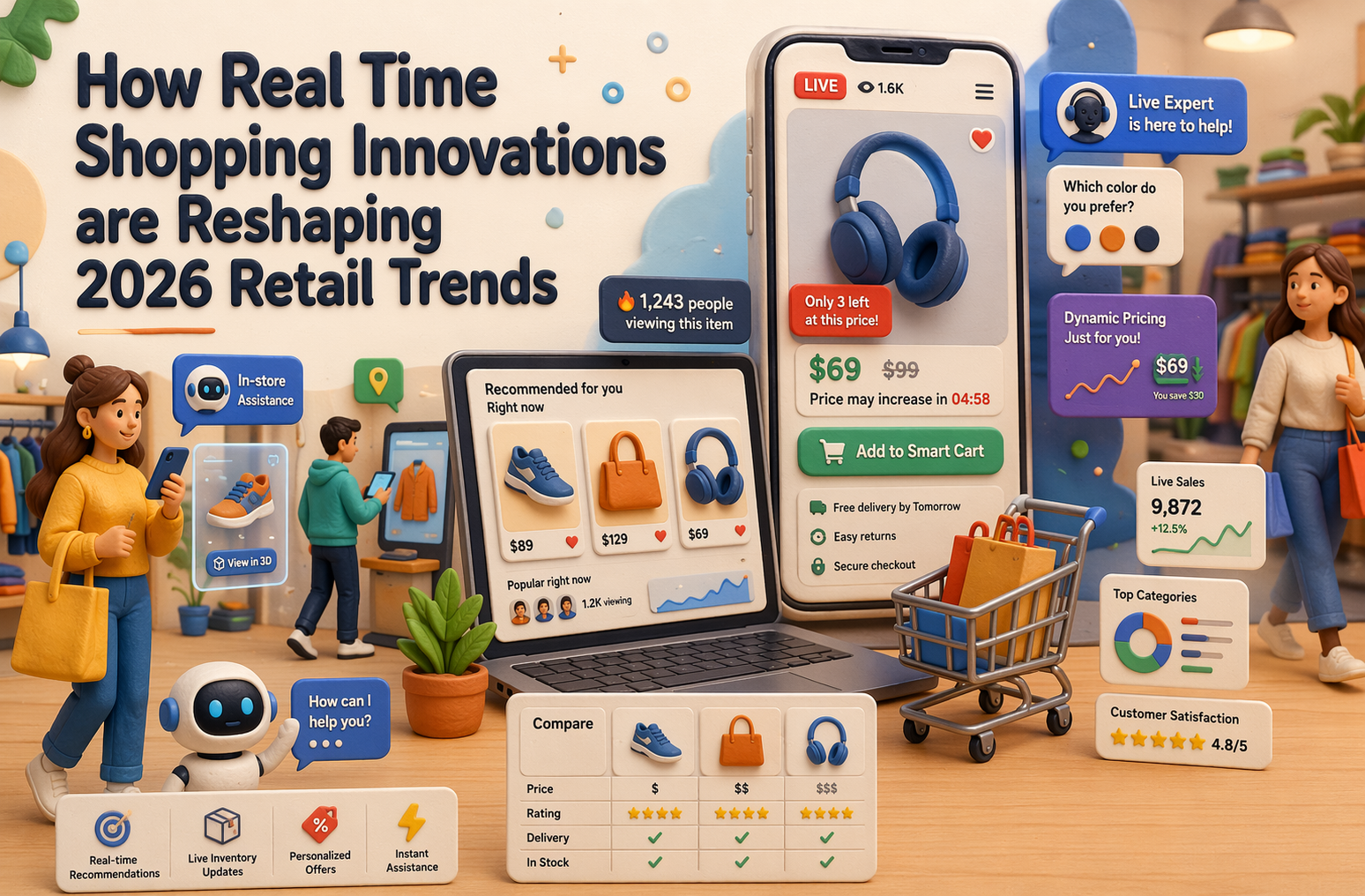
June 2026 made the case fast. Adobe said AI-referred retail traffic jumped 138% year over year in May, while Shopify saw nearly 50% higher conversion than organic search. That puts Real Time Shopping at the center of Retail Tech Trends and Ecommerce Innovations. For D2C teams, static stores waste costly clicks. This piece covers Real Time Shopping through AI sales agents that answer in-session, lift product match, and turn intent into sales.
Why AI Sales Agents Are Becoming the New Front Line
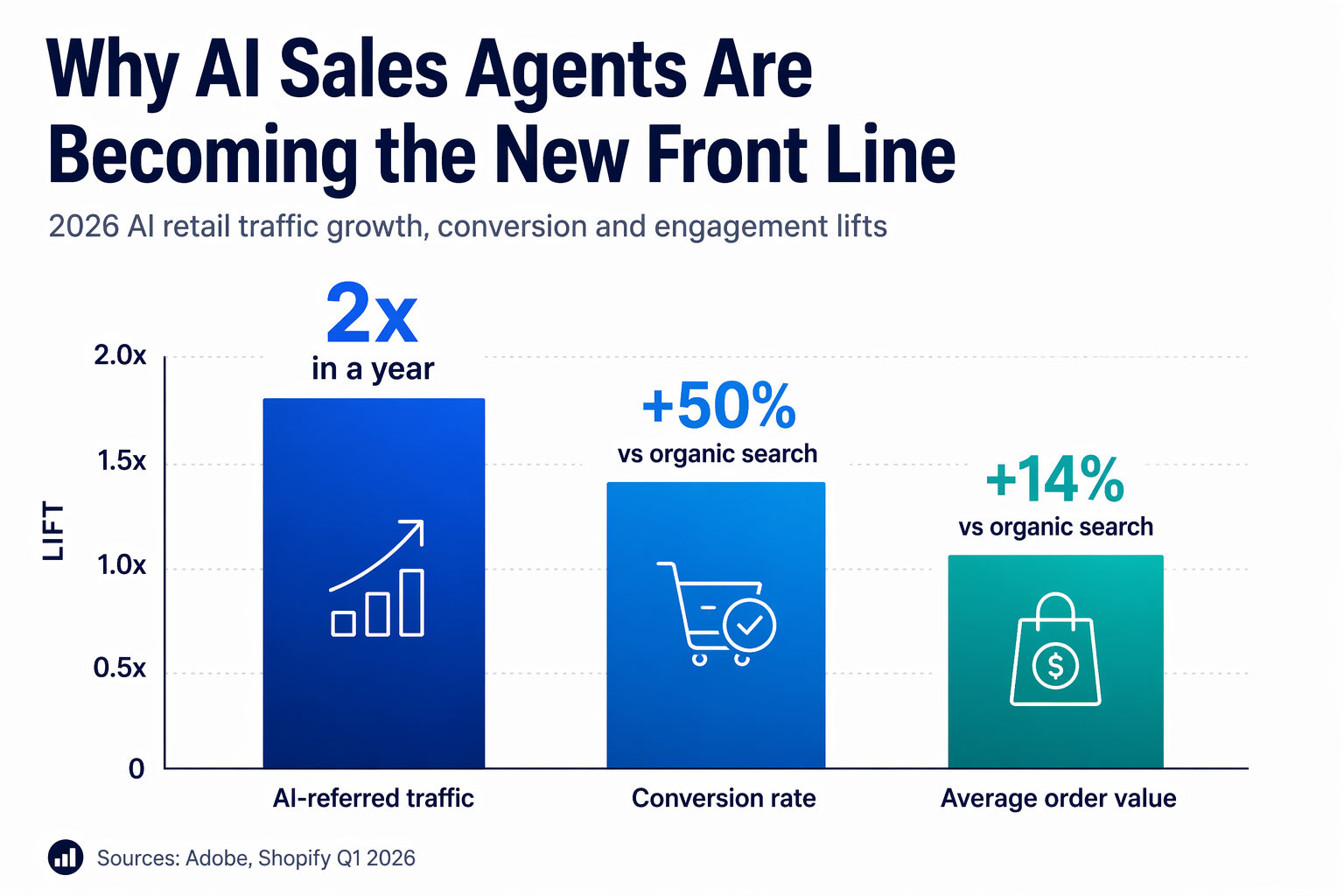
What the 2026 traffic data says: AI is no longer edge traffic. Adobe says AI-referred visits to U.S. retail sites grew 138% year over year in May 2026, and those visitors converted 54% better than non-AI traffic, with 15% higher engagement according to Adobe coverage. Shopify reports a similar pattern: AI-referred shoppers convert at nearly 50% higher rates and carry 14% higher AOV than organic search in Shopify's Q1 2026 data.
Why the agent, not the chatbot, is the story: A chatbot waits for questions. An AI sales agent guides the session, handles objections, compares products, and pushes shoppers toward the right SKU. That matters most for D2C brands with specs, bundles, shade matching, fit, or compatibility issues. The real shift is from passive support to active in-session selling. Tools like Kandid fit this new front line because they do the work a strong sales associate would do, but at site scale, 24/7.
Also Read: Real Time Shopping Setup: From Events to Live Offers
What Winning Brands Are Doing on Site
Winning brands treat every visit like a live sales chat, not a static browse. Adobe found AI-referred shoppers convert 42% better and spend 48% longer on retail sites, so the in-session job is simple: answer fast, remove doubt, and move people to the right SKU according to Adobe.
- The session behaviors that matter most: spec checks, product comparisons, fit or compatibility questions, shipping timing, and price-confidence moments.
- Where brands are placing the agent: product pages, collection pages, cart, and help surfaces. The best setups trigger on high-intent actions, not every scroll.
- What makes the experience feel real-time: instant answers, memory across pages, live catalog context, and clear handoffs to checkout. TechCrunch's coverage of Adobe data says AI-referred visitors show 12% higher engagement and browse more pages, which is why brands use agents to keep momentum instead of forcing a support ticket in this report.
Tip: If the agent cannot answer SKU-level questions in brand voice, it will feel like a widget, not a seller.
Also Read: Kandid vs Manifest vs Helium: Best Real Time Shopping Platform Reviewed
How Retail Teams Should Read the 2026 Signal
Where to test first
Start on pages where buyers hesitate most: PDPs, compare pages, and support content. Adobe data shows AI-referred retail visits now convert better and engage longer, so these pages can pay back fast TechCrunch reporting on Adobe.
What to measure before scaling
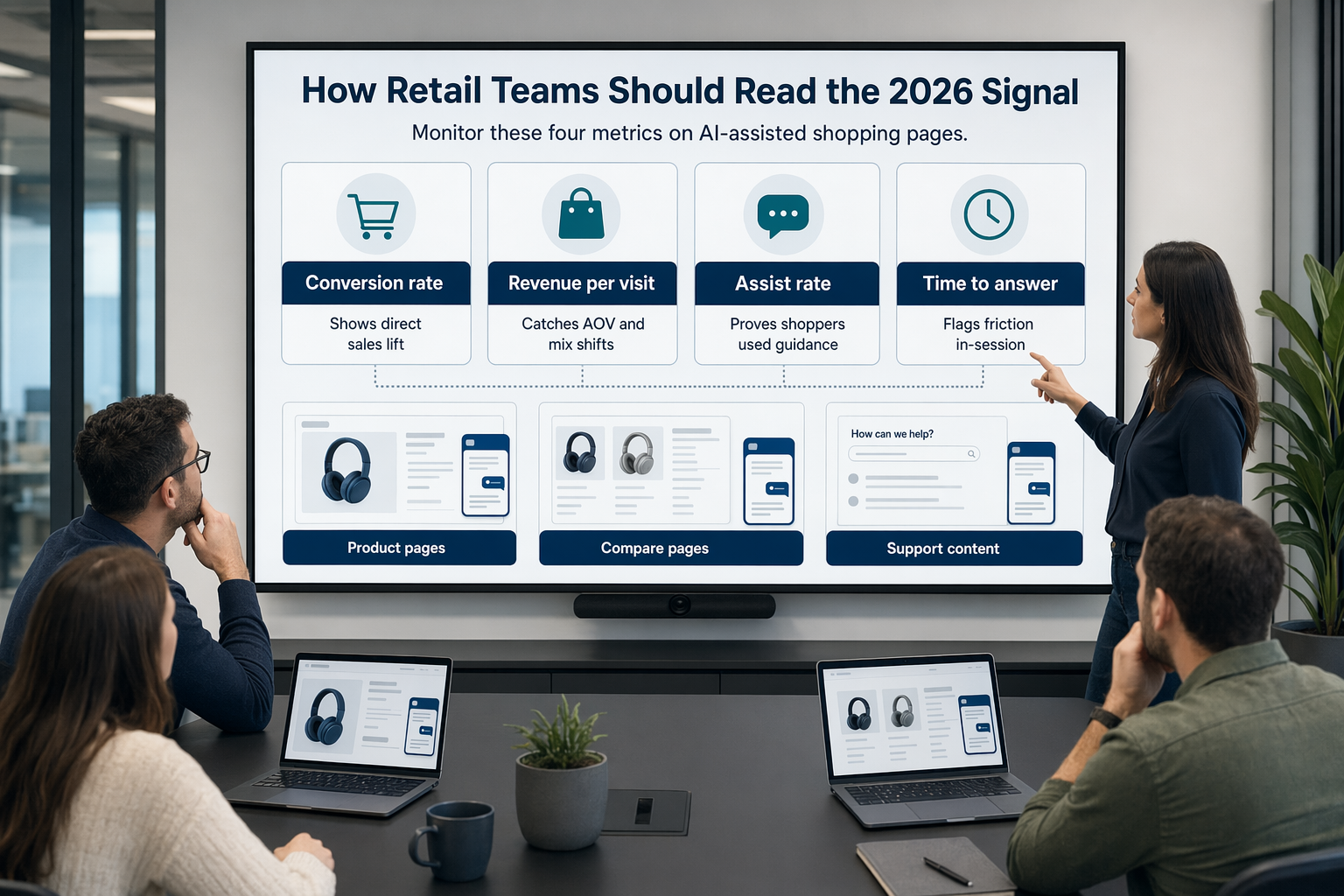
Track four things in one table: conversion rate, revenue per visit, assist rate, and time to answer. Compare AI-assisted sessions against matched non-AI sessions. Adobe's May 2026 retail data says AI traffic converted 54% better and drove 15% higher engagement.
| Metric | Why it matters |
|---|---|
| Conversion rate | Shows direct sales lift |
| Revenue per visit | Catches AOV and mix shifts |
| Assist rate | Proves shoppers used guidance |
| Time to answer | Flags friction in-session |
The new operating requirement
Treat machine-readable product content as core ops, not SEO cleanup. Your catalog, policies, and specs must be clear enough for AI agents and on-site assistants to read, compare, and recommend in real time.
Also Read: Kandid vs Manifest: Which Real-Time Shopping Assistant Is Better in 2026?
How We Got Here
Shoppers now move from research to purchase in one visit because AI does the early work before the click. Adobe found AI-referred retail traffic grew 138% year over year in May 2026, and those visitors converted 54% better than non-AI traffic, according to Digital Commerce 360's coverage of Adobe data. Shopify saw the same pattern: AI-referred shoppers converted nearly 50% higher than organic search and often landed straight on product pages, not homepages, per Shopify's 2026 analysis. That shift explains why real-time AI sales agents matter inside the session, not just before it.
Turn real-time shopping traffic into sales with Kandid, AI sales agents that answer live questions, guide buyers, and lift conversion fast.
Frequently Asked Questions
Q1: How are real-time AI sales agents transforming customer engagement in 2026 retail?
They answer live questions, compare products, handle objections, and keep shoppers moving. That cuts bounce, lifts time on site, and turns more high-intent visits into carts.
Q2: What role do hyper-personalization and predictive analytics play in 2026 retail trends?
They match products, timing, and messaging to each visitor. Brands use them to surface better offers, reduce choice overload, and raise conversion without pushing blanket discounts.
Q3: How does Kandid’s AI sales agent improve conversion rates and session engagement globally?
Kandid guides shoppers in real time, explains specs, checks fit, and recommends the right item fast. That helps D2C brands lift engagement, AOV, and conversion across markets.
Conclusion
Real-time shopping now means AI-led discovery, higher-intent visits, and stronger in-session conversion. Adobe data and PYMNTS research show the same shift: brands that make products easy for AI to read, compare, and act on will capture more demand.