Kandid Review: Is This the Best Real Time Shopping AI for Brands?
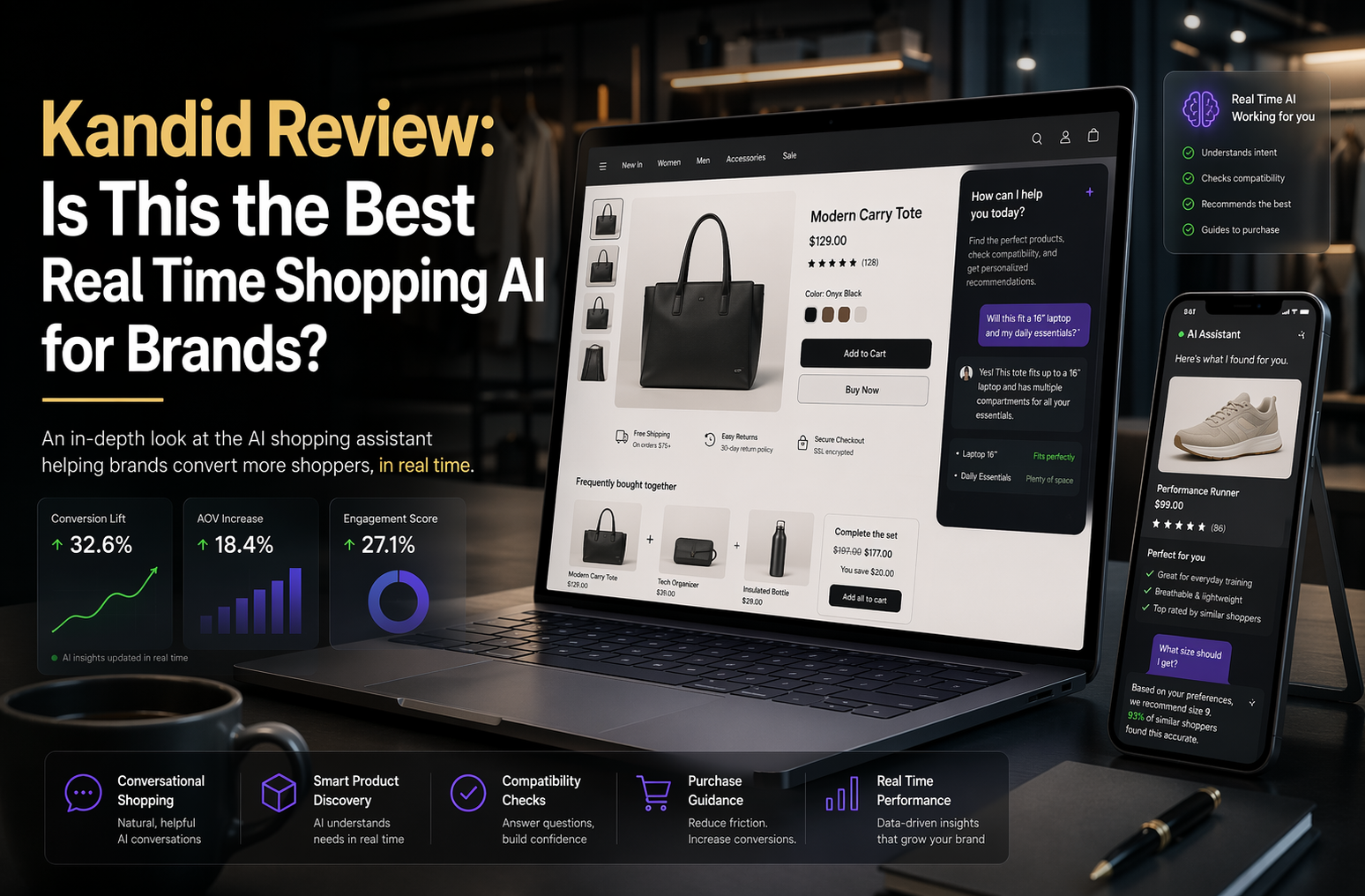
Your best traffic often leaves for one simple reason: nobody answers buying questions in the moment. Kandid puts an AI Shopping Assistant on site that acts like a live advisor, so shoppers get help before they bounce. In this Kandid Review, I look at where AI Sales Agents help, where they fall short, and what brands should expect. This review is based on a hands-on look at how AI Sales Agents fit real D2C buying journeys.
Real-Time Sales Engine: What Kandid Actually Does
Kandid is closer to a sales rep than a support bot. It trains on your catalog, answers live product questions, recommends the right item, and lets shoppers add to cart from chat, based on Kandid’s product page. That matters because AI shopping is moving fast - Shopify said AI-driven orders rose 11x in 2025, which makes better on-site AI Sales Agents more useful, not less, according to TechCrunch’s Shopify coverage.
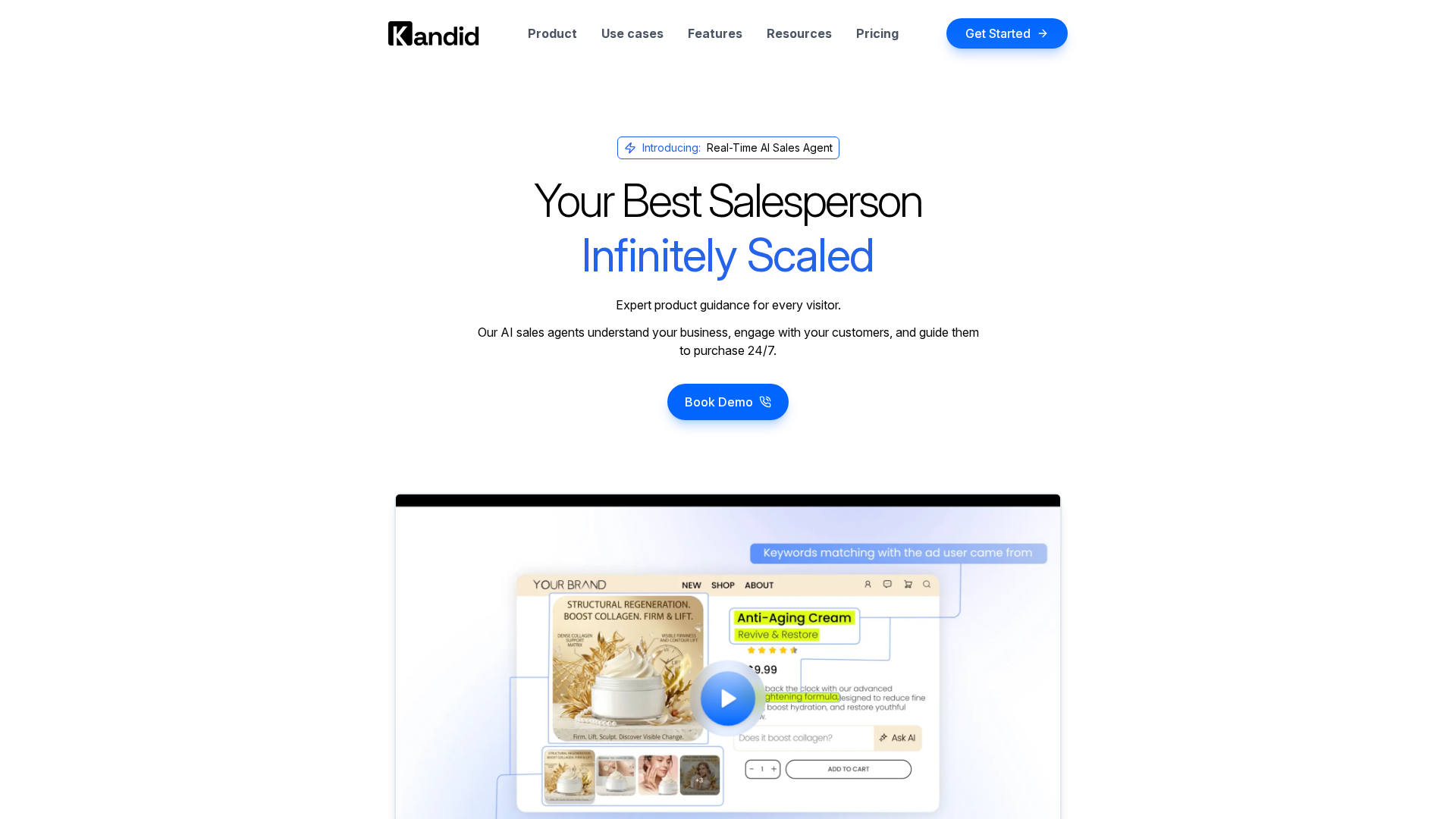
How It Compares to Standard Chatbots
Standard chatbots mostly handle FAQs. They answer shipping, return, or store-hour questions, then stop.
Kandid aims to do more:
- Guide product choice with specs, fit, use case, and compatibility
- Handle objections in real time
- Recommend and upsell based on shopper intent
- Push toward checkout instead of ending with a help article
That puts it in the newer AI Sales Agents category, not the old support widget bucket.
If your products need explanation, a basic chatbot saves support time. Kandid is built to win revenue.
This is the key gap between simple bots and sales-led AI Sales Agents.
Also Read: Kandid vs Manifest vs Helium: Best Real Time Shopping Platform Reviewed
Pricing and Deployment: How Fast Can You Launch?
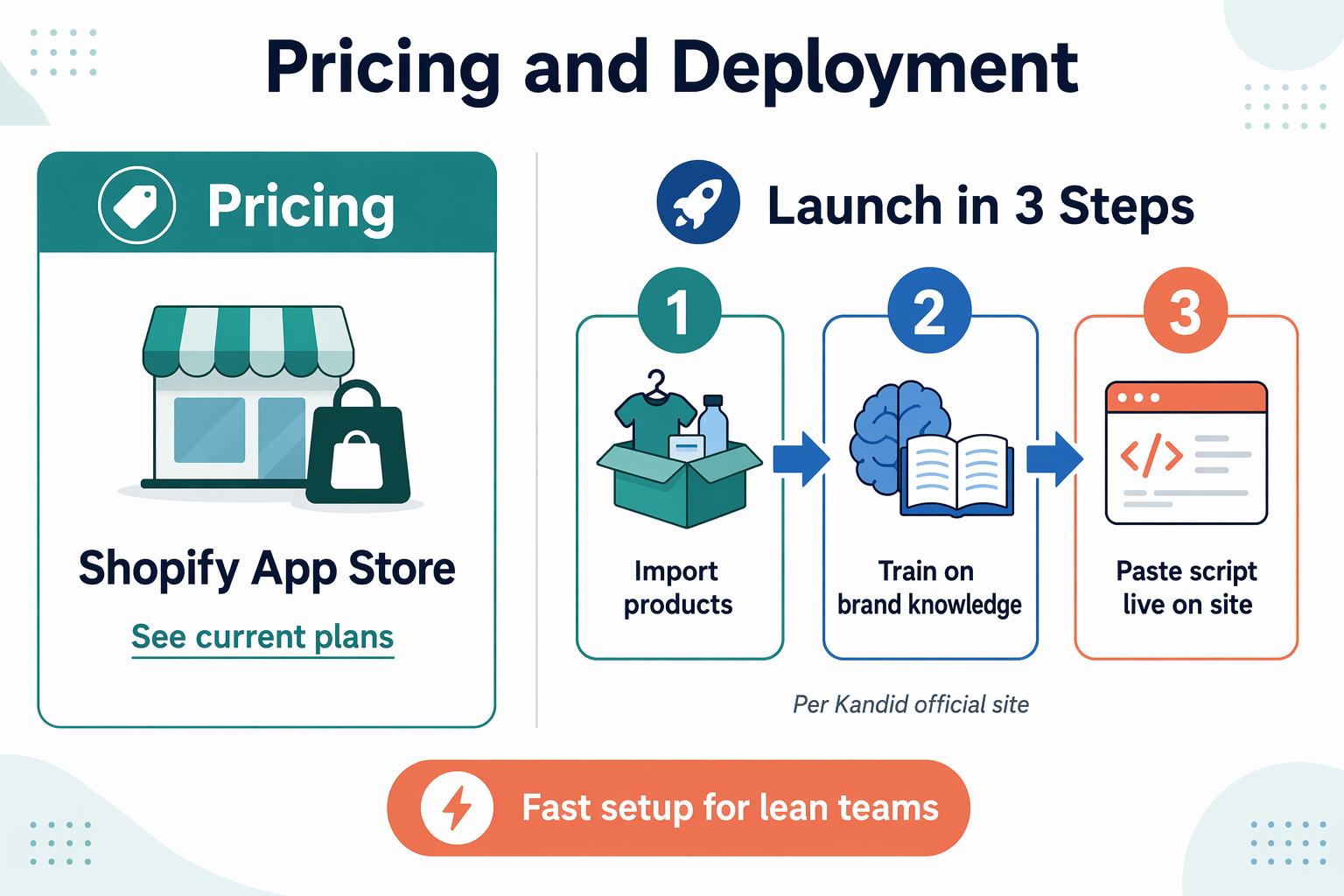
Kandid fits best if your traffic swings month to month and you do not want a big fixed software bill. The pricing is simple: free install, then paid tiers from $99 to $350 per month, plus $12 per extra 1,000 visitors, as listed on the Shopify App Store. Deployment also looks fast for lean teams. Kandid says setup is basically three steps: import products, train on brand knowledge, and paste a script to go live on your site, according to its official site.
Best fit: D2C brands with complex catalogs, high-intent traffic, and small CX or sales teams.
- Strong for Shopify-first brands
- Less ideal if traffic is tiny or product data is messy
Also Read: Kandid vs Manifest: Which Real-Time Shopping Assistant Is Better in 2026?
Omnichannel Reach and Real Results
Conversation Intelligence and Analytics
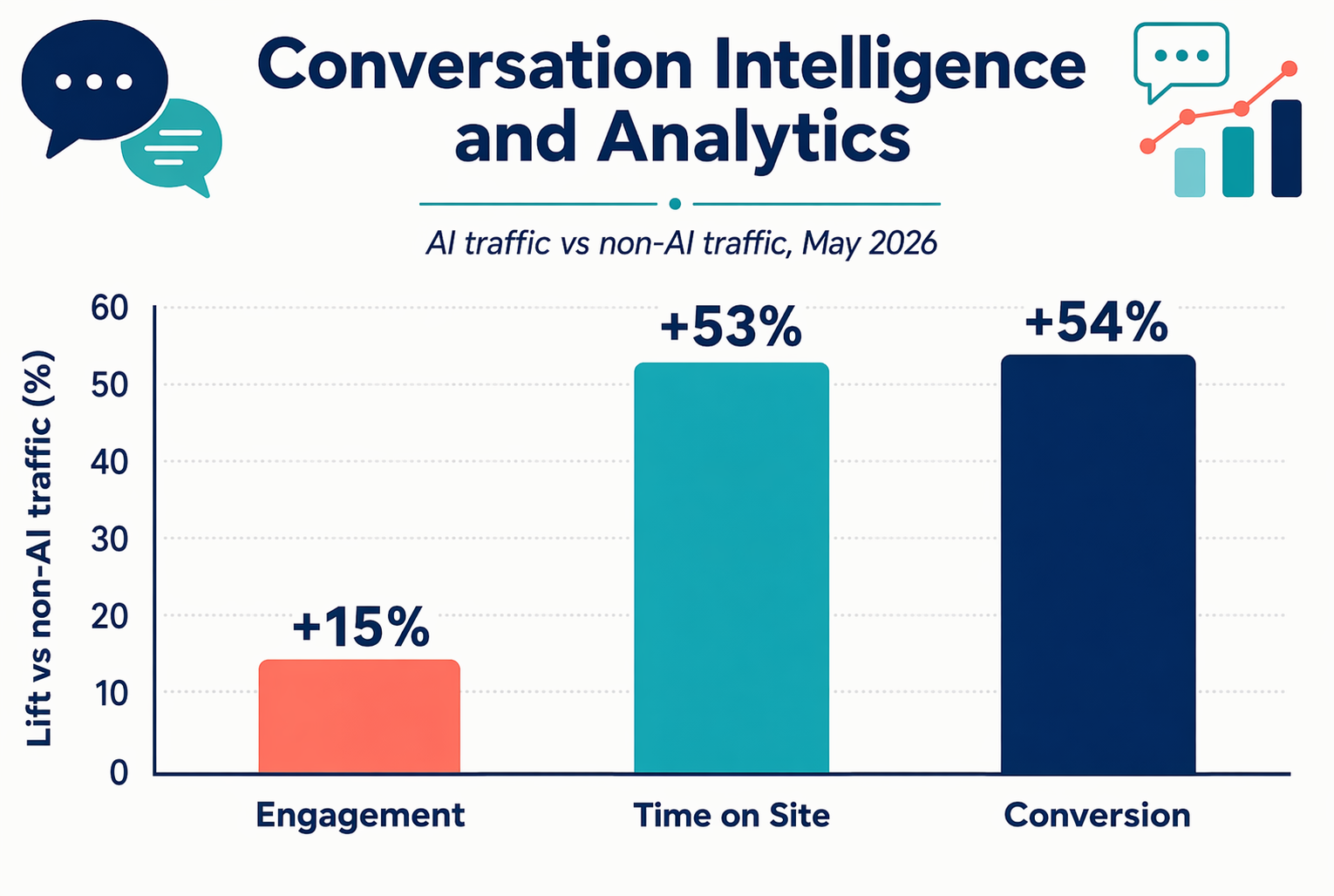
The value is not just chat volume. It is what the conversations show you about buyer intent, drop-off points, and product confusion. Adobe reported that AI-referred retail visitors showed 15% higher engagement, 53% more time on site, and 54% higher conversion in May 2026 versus non-AI traffic, which makes conversation data hard to ignore Adobe-backed retail findings.
For teams using Kandid, that means you can track patterns like:
- repeated compatibility questions
- high-exit product pages
- objections before checkout
Shopify also found AI-referred shoppers convert nearly 50% higher and post 14% higher AOV than organic search Shopify's Q1 2026 data.
Good analytics should tell you what shoppers asked, why they stalled, and what changed revenue.
Also Read: Real Time Shopping Setup: From Events to Live Offers
Is Kandid Worth It for Your D2C Brand?
Yes, if your store sells products that need explanation. Kandid makes more sense for catalogs with specs, fit, routine, or compatibility questions.
Shopify says AI-referred shoppers convert nearly 50% higher and spend 14% more than organic search visitors, which supports the case for on-site AI selling Shopify's Q1 2026 data. PYMNTS also found 47% of shoppers used AI in a recent purchase journey and 64% expect to use AI shopping agents within two years PYMNTS research.
Kandid looks worth testing if you want:
- Higher conversion from high-intent traffic
- Better AOV on guided purchases
- 24/7 product education without adding headcount
Skip it if your store has a tiny catalog, low traffic, or simple products shoppers can buy without help.
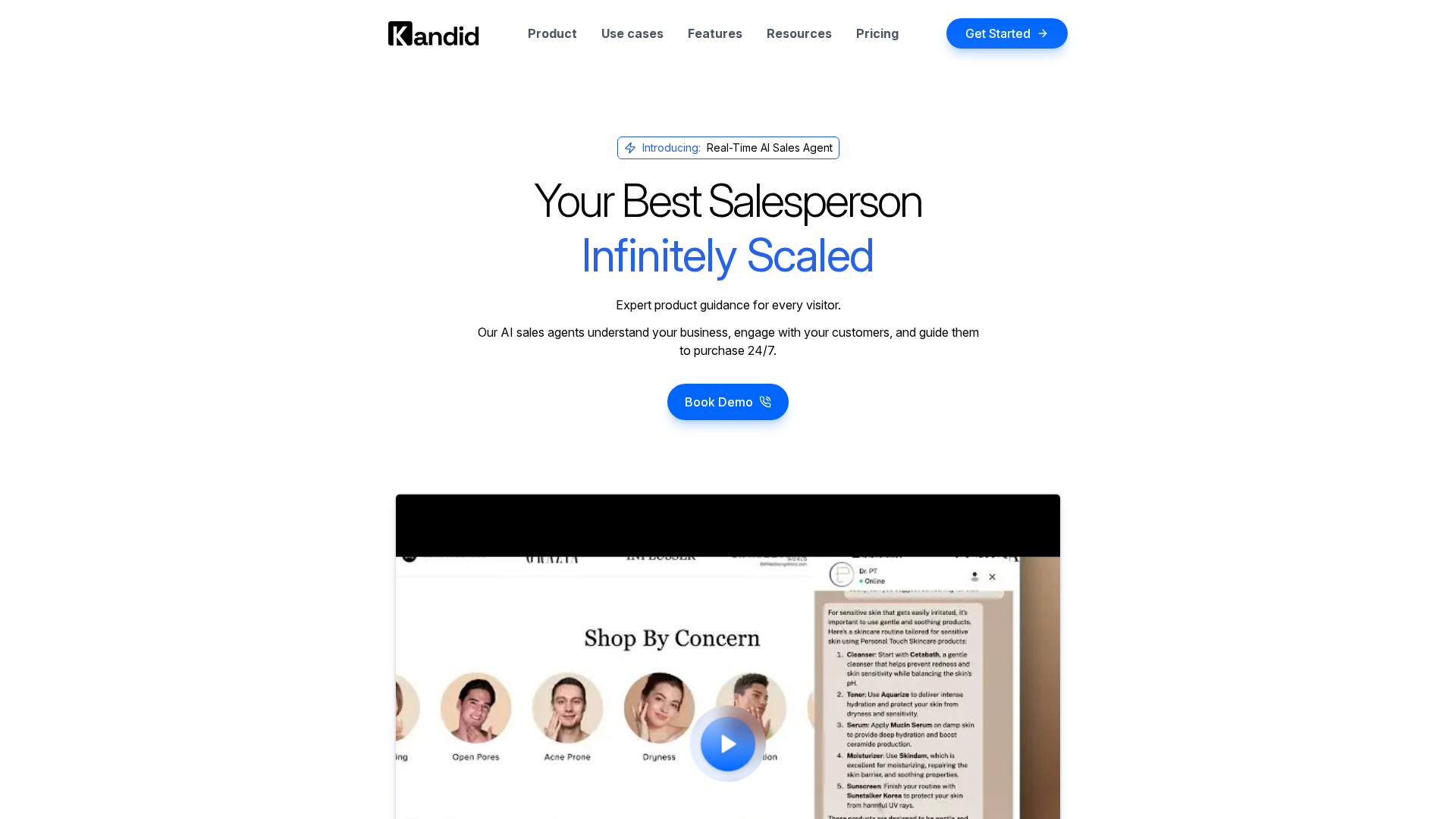
If you want a real-time shopping AI that helps shoppers choose faster and buy more, test Kandid. It gives D2C teams fast setup, live product guidance, and measurable sales lift without heavy dev work.
Frequently Asked Questions
Q1: How does Kandid's AI sales agent compare to other real-time shopping tools for D2C brands?
Kandid stands out on live product guidance, catalog understanding, and measurable sales lift. Compared with tools like Verifast AI or Sage Pilot, it feels more built for high-consideration buying, not just basic chat.
Q2: What features should I look for in a real-time AI shopping assistant for my ecommerce store?
Look for product matching, spec and compatibility support, brand voice control, analytics, easy onboarding, and clear pricing. If your catalog is complex, real-time answer quality matters more than flashy demos.
Q3: Can Kandid's AI agent improve conversion rates for D2C brands?
Yes, if your store gets intent-driven traffic and shoppers ask pre-purchase questions. Kandid fits brands that sell technical, premium, or comparison-heavy products where fast answers can reduce drop-off and raise average order value.
Conclusion
Kandid looks like a strong pick for brands that need real-time product guidance, not a basic chatbot. Its reported lift is compelling, and the wider market shows AI shopping can raise conversion and basket size, as seen in Google Cloud's THG announcement.