Real Time Shopping vs Static Browsing for Conversion
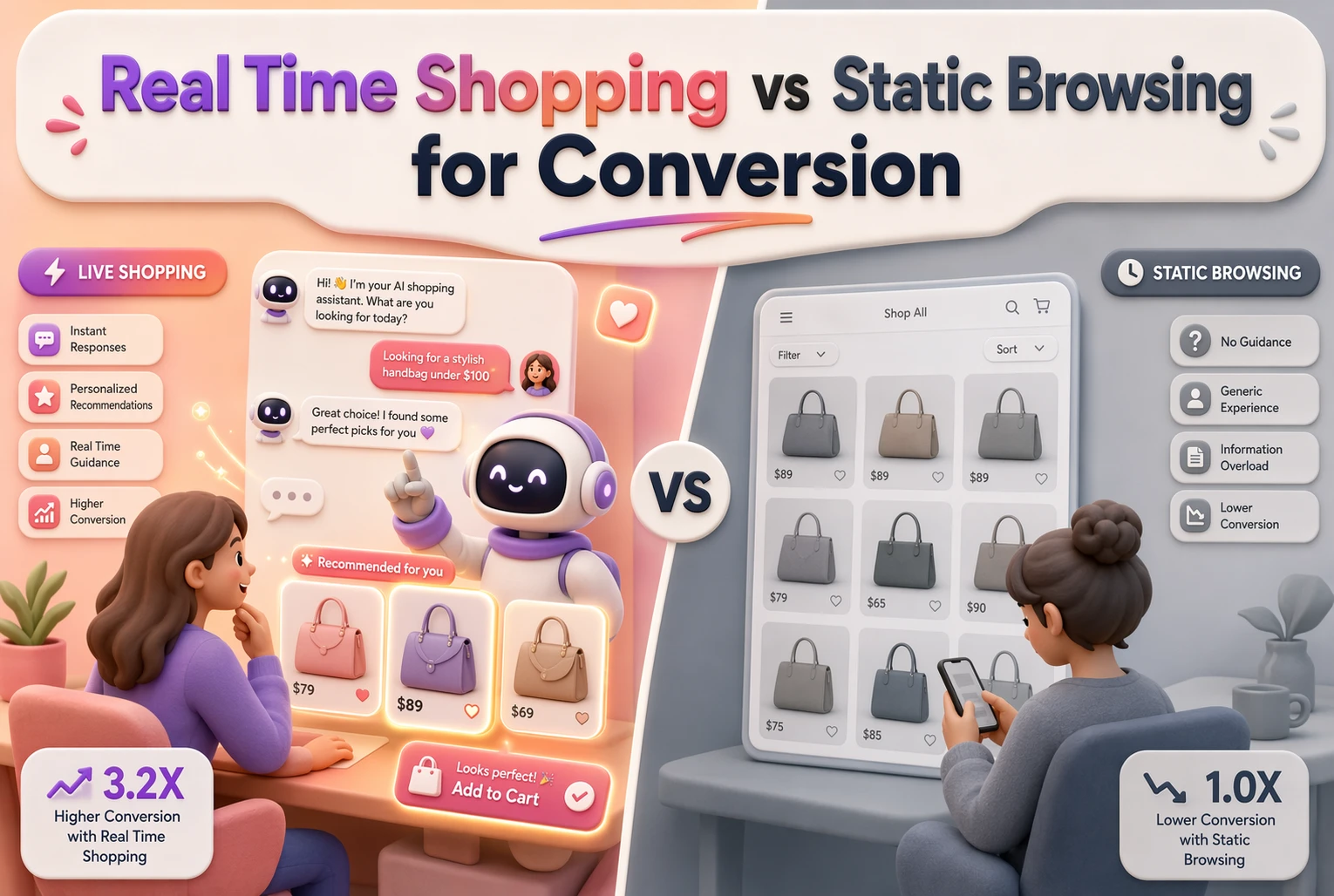
Quick Summary: Real-time shopping outperforms static browsing when buyers have high intent and face complex questions, helping reduce hesitation and increase conversions. Static browsing works well for simple, low-risk products but struggles with high-friction decisions. Combining both approaches in a hybrid setup allows brands to capture intent and address objections effectively, especially for high-value or complex items. Kandid is well-suited to support high-intent shoppers with real-time guidance and product comparisons.
Real-time shopping beats a Static Browsing Strategy when buyers need answers before they buy. A Static Browsing Strategy still works if the product is simple and waiting does not hurt the sale. Many D2C teams face flat growth, higher ad costs, and more mid-session questions. This comparison uses real CRO patterns, Shopping Conversion Tactics, and Ecommerce Engagement Techniques to show if your Static Browsing Strategy should stay, expand, or shift to a smart hybrid.
Real-Time Shopping vs Static Browsing at a Glance
| Real-time shopping | Static browsing | |
|---|---|---|
| Conversion behavior | Higher lift on high-intent sessions | Stable but limited for hesitant buyers |
| Shopper friction | Reduces hesitation in-session | Higher when questions arise |
| Best for | Complex, considered purchases | Simple, low-consideration catalogs |
| Implementation effort | Moderate to high | Low |
| Engagement depth | Interactive and guided | Passive and self-directed |
How Real-time shopping and Static browsing Compare
Real-time shopping
Real-time shopping adapts help, product guidance, and offers while the shopper is still deciding. It fits D2C brands with complex catalogs, higher price points, or compatibility questions, where hesitation kills conversion. Research on AI chat in online shopping links pre-purchase support to stronger purchase intent and acceptance when done well in this 2026 study.

Key strengths
- Higher lift on high-intent sessions
- Guided, interactive buying help
- Best for considered purchases
Static browsing
Static browsing is the standard storefront model where shoppers read pages, compare on their own, and decide without live help. It works best for simple products, repeat buys, and lean teams that need low setup effort. It stays stable, but harder decisions often stall because ecommerce conversion rates drop as purchase friction and complexity rise, as Shopify notes in its 2026 benchmark guide.
Why real-time shopping converts better when intent is high
Real-time shopping wins when the shopper is already close to buying but stuck on one question. That is common in complex D2C categories. Baymard’s cart research shows about 70.22% of carts still get abandoned, and many drop-offs happen because of fixable friction like slow delivery, trust issues, or a long checkout according to Baymard. If you answer the blocker inside the session, you keep the buying momentum alive.
| High-intent signal | What static browsing does | What real-time shopping does |
|---|---|---|
| Repeated spec checking | Forces self-service | Explains fit, features, and tradeoffs |
| Cart hesitation | Leaves doubt unresolved | Answers the exact objection live |
| Compatibility questions | Pushes shopper to FAQ or support | Gives a direct yes-or-no recommendation |
| High AOV consideration | Makes buyer do more research | Reduces risk with guided help |
A simple way to think about it:
- Intent is already there - the shopper searched, compared, and added to cart.
- Friction appears - sizing, compatibility, shipping, or trust.
- Real-time help removes friction before the tab closes.

This matters more for products with setup questions, bundles, or many variants. In those cases, static pages often bury the answer. Real-time shopping brings it forward.
If your product needs explanation before purchase, the fastest answer usually beats the best-designed product page.
For operators, the best use case is not all traffic. It is high-intent traffic:
- Cart viewers
- Returning product-page visitors
- Paid traffic on deep product pages
- Shoppers comparing similar SKUs
Kandid fits here well because it can decode specs, handle brand-specific questions, and guide buyers without making them wait for human support.
Also Read: Kandid Review: Is This the Best Real Time Shopping AI for Brands?

If static pages leave buyers stuck, add real-time guidance. Kandid helps D2C brands answer questions, compare products, and convert high-intent shoppers 24/7.
Frequently Asked Questions
Q1: How does real-time shopping impact conversion rates compared to static browsing in ecommerce?
Real-time shopping lifts conversion when buyers have questions that block purchase, like fit, specs, bundles, or compatibility. Static browsing works for simple, low-risk items. The gain is biggest on high-intent traffic and complex catalogs where fast answers reduce drop-off.
Q2: What are the key differences and benefits of real-time shopping versus static browsing for D2C brands?
Real-time shopping adapts to shopper intent, answers objections, and guides product choice in-session. Static browsing relies on page design and self-service content. D2C brands gain more qualified carts, better AOV, and fewer wrong-product purchases when products need explanation.
Q3: Which ecommerce triggers should be implemented in real time to maximize conversions worldwide?
Use triggers for exit intent, repeated spec views, size or compatibility hesitation, cart stalls, high-value product pages, and return visits. Fire them by behavior, not time alone. Keep language local, answers precise, and handoff smooth when the buyer is ready.
Conclusion
Real-time shopping wins when buyers need proof, answers, and a push to act. Static browsing wins when products are simple, repeat-buy, or need calm research. The best setup is often hybrid: let static pages capture intent, then use live moments for hard questions and high-friction SKUs. That fits current market movement, with EMARKETER reporting US livestream ecommerce sales growth in 2025.