Real Time Shopping Feed Optimization for Faster Product Updates
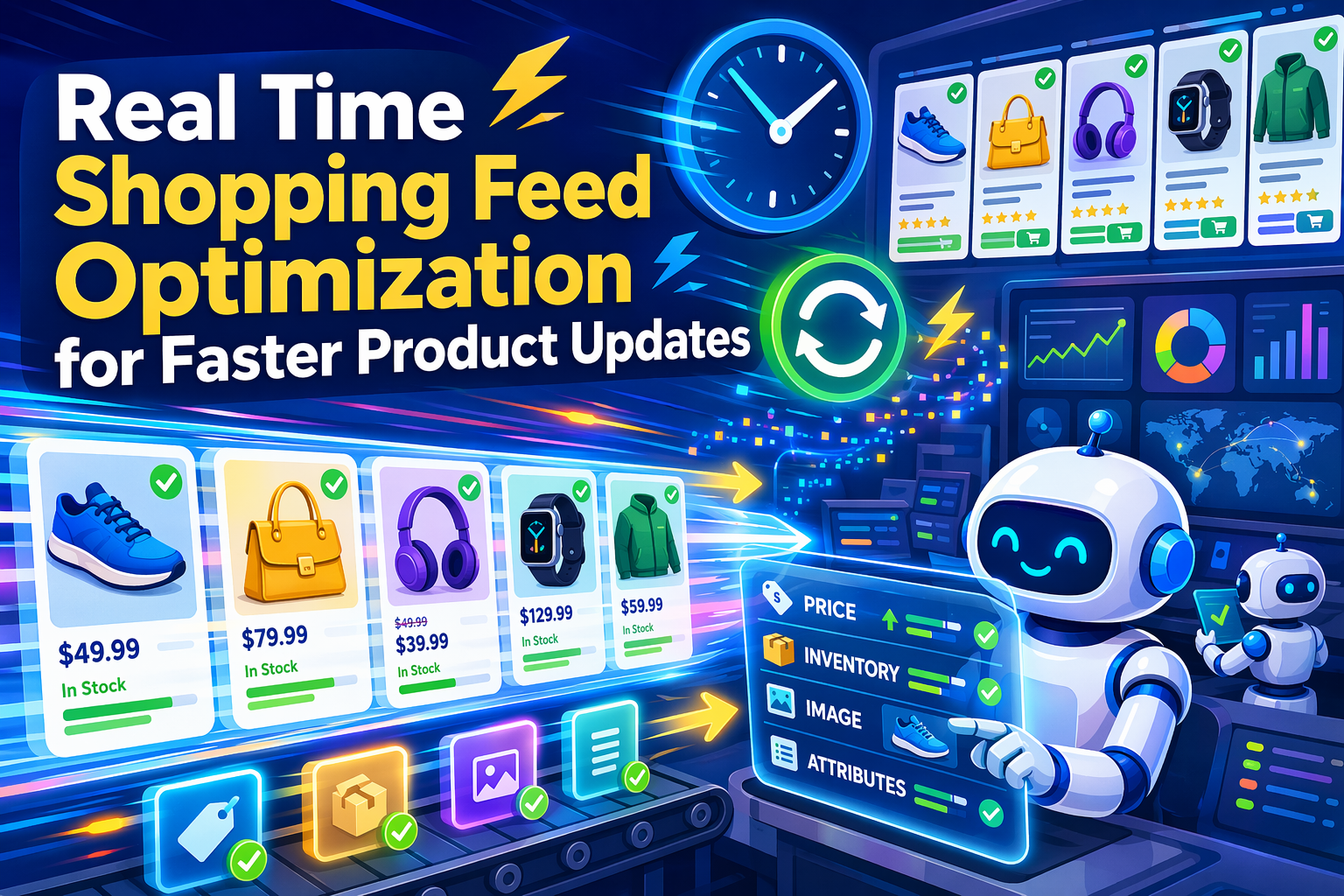
Quick Summary: Optimizing your product feeds for real-time updates reduces delays between store changes and what shoppers see, especially for price and stock info. Focus on updating key fields like availability, price, and shipping immediately, using feed rules and source precedence to push updates faster. Automate updates from your site only after your main feed is stable, and monitor feed health constantly to catch delays or errors early. This approach helps keep your listings accurate and improves shopping performance.
Your sale can go live at 9:00 and Google Shopping can still show old prices at 9:07. That gap is usually feed latency, not weak bids. This guide fixes that with Shopping Feed Optimization built for faster syncs, cleaner Product Data Feed rules, and smarter Feed Management Tools. We work from real ecommerce feed issues, not theory, so you can use Shopping Feed Optimization to cut delays, reduce price errors, and make Shopping Feed Optimization match live store changes faster.
Step 1: Identify which product fields must update in real time
Split your feed into fast-changing and static fields first. Fast fields usually include price, sale price, availability, and shipping signals. Google flags mismatches here fast, and says product data should stay current with your site, with updates for existing products often processed within minutes in Merchant Center guidance. Static fields include title, brand, GTIN, color, size, and long descriptions.

Use channel impact to rank what updates first. If a field can cause disapproval, bad ad clicks, or wrong shopper expectations, move it to real time. Start with:
- Availability
- Price and sale price
- Shipping cost or delivery promise
- Condition, if it changes
Google automatic updates only cover price, sale price, availability, and condition, not your full catalog, per Merchant Center automations.
Also Read: Kandid Review: Is This the Best Real Time Shopping AI for Brands?
Step 2: Use feed rules and source precedence to push updates faster
Set one clear winner for each key field. In Merchant Center, attribute rules can pull from primary or supplemental feeds, and rules run in a cascading order, so first decide which source is fastest and still trustworthy for each attribute, per Google's attribute rules guide.
For price and availability, use Take latest logic instead of hard-wiring one slow source. Google supports this for those two fields, which helps you surface the most recent value across sources. Pair that with site markup, since Merchant Center automations can also update price and availability from landing page data when mismatches happen, per Google's automation docs.
Fast updates fail when two systems fight each other. Pick source order once, then enforce it.
Keep the rule set small:
- one rule owner
- one fallback path
- one test before launch
If a junior ops lead cannot explain the logic in 30 seconds, simplify it.
Also Read: 15 Real Time Shopping Features Enhancing Customer Engagement
Step 3: Turn on automations where channel platforms can update directly from your site
Make sure structured data matches the feed. Google says your page markup must match what shoppers see, and automatic updates rely on price, priceCurrency, availability, and condition in structured data (Google Merchant Center guidance). If your page, feed, and schema disagree, fix that first.

Use automations for temporary mismatches, not as your only update system. Google is clear that automations can patch short-term price or stock gaps, but they are not a replacement for regular feed or API updates (Google’s automatic updates help).
Turn on automations after your main update path is stable, not before.
Validate the impact before scaling across accounts.
- Check disapprovals before and after.
- Review changed items weekly.
- Roll out by market or sub-account first.
Also Read: Latest Developments in Real Time Shopping Globally 2026
Step 4: Monitor latency and feed health so updates stay fast after launch
Track lag by attribute, not just by feed. Measure time from catalog change to channel update for price, stock, sale price, and title. Google says existing product info usually updates within minutes when timing is aligned, and API updates can happen almost immediately per Google Merchant Center guidance.
Set alerts for broken syncs, crawl failures, and disapprovals. Watch for spikes by channel, country, and product group. Google notes crawl issues can block listings, and fixed items may take up to 48 hours to reappear per Product crawl issues.
Alert on both delay and recovery time, not just failure count.

Need faster product updates and better shopper guidance? See how Kandid turns live catalog changes into 24-7 sales conversations that lift conversion, AOV, and ROAS.
Frequently Asked Questions
Q1: How does real-time feed optimization speed up product updates across multiple shopping channels?
It pushes price, stock, and product changes as they happen, not on slow batch schedules. That cuts mismatch risk, reduces disapprovals, and keeps Google, Meta, and marketplaces aligned with your store.
Q2: What are the key technical strategies for optimizing product data feeds for AI-driven platforms like Google Shopping?
Use event-based updates, clean attribute mapping, strong IDs, automatic error checks, and fast fallback rules. Prioritize price, availability, sale price, and shipping fields first, since those drive most feed issues and delays.
Q3: How can D2C brands leverage AI sales agents to enhance product feed quality and increase conversion rates globally?
AI sales agents can spot missing specs, unclear titles, and weak product details from shopper questions. Kandid helps turn that live intent into better feed data, clearer recommendations, and higher conversion across regions.
Conclusion
Fast feeds need three things: clean structured data, frequent primary updates, and Merchant Center automations. Google says automations help fix price, availability, and condition mismatches, but they do not replace regular feed updates Google Merchant Center guidance.