Latest Developments in Real Time Shopping Globally 2026

Quick Summary: Real-time shopping is now central to e-commerce, with AI-driven guidance improving conversion rates and customer experience. Brands embed live shopping into product pages and native surfaces, especially in categories like beauty and electronics, to catch buying intent closer to checkout. Data shows AI tools like Kandid boost sales by providing accurate, catalog-aware answers, making real-time shopping a key growth layer for D2C brands in 2026.
Real Time Shopping changed fast in 2026. Live commerce, AI Shopping Assistants, and native buying inside major platforms now meet in one flow. Moves from THG Ingenuity and Google Cloud, Amazon AWS, Meta, Disney Store, and DHL make that clear. For D2C teams, Real Time Shopping is now core infrastructure. If your data and stock are not machine-ready, shoppers may skip your store. This piece tracks the biggest Real Time Shopping shifts, Live Shopping Trends, and early conversion gains.
The Biggest 2026 Shift: Real-Time Shopping Is Becoming an AI-First Conversion Layer
Brands are shifting from search bars to live, two-way selling because shoppers ask messy questions, not clean keywords. They want fit, use case, timing, and product match in one step. A real-time AI layer handles that better than static filters. Frankfurt School found LLM traffic still small overall, but more useful for complex products where buyers need guidance new study on online shopping.
The win is not replacing search. It is catching buying intent that normal search misses.
Early data now points to real revenue impact for D2C teams. Shopify says AI-referred sessions convert at nearly 50% higher rates than organic search and drive 14% higher average order value Shopify's Q1 2026 data. For brands with broad catalogs or technical products, tools like Kandid fit this shift well because they answer product questions in-session instead of sending shoppers back to browse.
Also Read: 15 Real Time Shopping Features Enhancing Customer Engagement
Live Shopping Is Maturing Beyond Social Media and Into the Storefront
Where merchants are embedding live shopping in 2026
Merchants are no longer keeping live shopping inside social apps. They are placing it on homepages, product pages, collection pages, and post-click landing pages to catch buying intent closer to checkout. Meta’s June 2026 update also pushed live shopping deeper into paid media, with Instagram Live Video Ads and in-stream product browsing on Facebook, according to EMARKETER’s coverage.

The shift is simple: live shopping now acts like conversion infrastructure, not just campaign content.
Which categories are seeing the strongest response
The strongest response still shows up where demos remove doubt fast. Beauty, fashion, home goods, outdoor gear, and consumer electronics accessories lead because shoppers want fit, texture, scale, and side-by-side answers before they buy, as reported by Communicate Online citing BCG trends.
- Beauty wins on ingredient and routine questions
- Fashion wins on fit and styling
- Home goods wins on real-room context
- Electronics accessories win on compatibility concerns
Also Read: How Real Time Shopping Innovations are Reshaping 2026 Retail Trends
Why Platform-Native Shopping Surfaces Matter More Than Ever
How product data is becoming the new storefront
Platform-native shopping now wins earlier in the journey. Your PDP is no longer the first impression. Structured catalog data is. Shopify says its Catalog syndicates product details to ChatGPT, Copilot, Shop, and others by default, and AI searches powered by Shopify Catalog convert at 2x the rate of scraped data.

If titles, specs, variants, and compatibility data are weak, your brand becomes hard to recommend.
What global consumer readiness looks like in 2026
Shoppers already expect buying inside the surface they use. Google says people shop across Google more than a billion times a day, and its Universal Cart now spans Search, Gemini, YouTube, and Gmail. That shift makes native surfaces core conversion infrastructure, not a side channel.
- Discovery happens on-platform
- Comparison happens in-chat
- Checkout happens with fewer redirects
Also Read: Kandid Review: Is This the Best Real Time Shopping AI for Brands?
What D2C Teams Should Do Next
Where to start this quarter
Start with one high-intent flow, not a full site rollout. Adobe data reported by TechCrunch shows AI-driven retail visits are converting better and generating higher revenue per visit, so the fastest win is buyer guidance close to purchase.
- Pick 20 to 50 top SKUs with fit, bundle, or compatibility questions.
- Launch an AI sales agent on PDPs, cart, and key collection pages.
- Track CVR, AOV, assisted revenue, and deflection.
- Feed it your catalog, policy, and brand voice.
- Fix weak answers weekly.
If you want the wider market view, return to the parent pillar post on global real-time shopping in 2026.
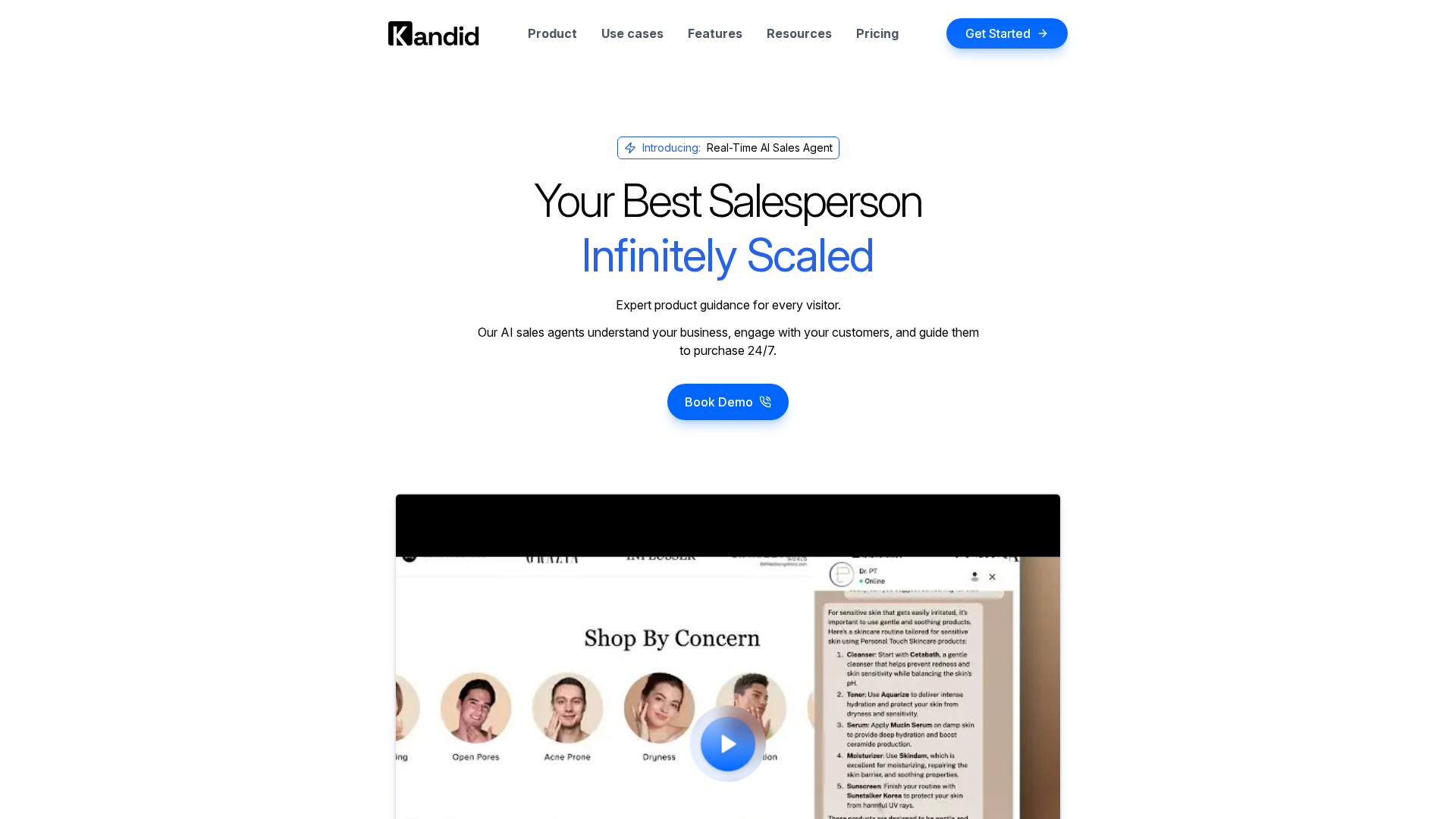
Ready to turn real-time shopping into revenue? Kandid helps D2C brands deploy AI sales agents fast and convert high-intent visitors 24/7.
Frequently Asked Questions
Q1: What are the key global developments in real-time shopping expected by 2026?
AI agents, faster on-site guidance, better product matching, and tighter links with checkout, inventory, and support. Brands now treat real-time shopping as core conversion infrastructure, not a test.
Q2: How is AI transforming real-time shopping and consumer engagement worldwide in 2026?
AI reads shopper intent live, answers product questions, compares options, and removes buying friction. That means stronger conversion, higher basket size, and more useful first-party data from each session.
Q3: What are the latest advancements in AI-driven sales agents for D2C brands globally?
The biggest shift is accuracy and action. Tools like Kandid now use catalog-aware answers, brand voice control, compatibility guidance, multilingual support, and handoff logic that helps teams scale without hurting customer experience.
Conclusion
Real-time shopping in 2026 is shifting from test channel to core growth layer. AI-driven traffic now converts better in key retail moments, according to Adobe data reported by CMSWire, while Frankfurt School research shows the strongest value in complex, guidance-heavy purchases.