Kandid vs Manifest: Which Real-Time Shopping Assistant Is Better in 2026?
Two names lead the 2026 race: Kandid and Manifest. Both promise more sales, but each AI Shopping Assistant works in a very different way. Kandid trains one deep agent on your catalog. Manifest spreads 500+ agents across your store for Real Time Shopping. For any D2C brand, the right AI Shopping Assistant depends on catalog depth, category, and sales motion. This comparison uses 2026 feature sets, Shopify data, reviews, and case studies to judge each AI Shopping Assistant and Real-Time Sales AI fit.
Kandid vs Manifest AI: Architectural Differences That Matter
The core difference is simple: Kandid is built like one consultative sales brain focused on live buying help, while Manifest is built like a broader commerce system with many task-specific agents. That choice changes setup, control, and where each tool performs best.
Kandid's Consultative Sales Agent Approach
Kandid centers on one real-time sales agent trained on store data, FAQs, blogs, and custom content, with Shopify-native deployment and a strong focus on product guidance and conversion tracking, based on its Shopify App listing. For brands selling technical, high-consideration products, this matters because shoppers get a more linear, sales-led conversation.
- Best fit for guided buying
- Stronger for spec decoding and comparisons
- Simpler operating model for lean teams
Manifest AI's Multi-Agent Commerce Suite
Manifest takes a wider architecture. Its site says brands can use 500+ eCommerce AI agents, and recent updates added image input inside chat and AI agent workflows. That gives teams more ways to support discovery, reviews, quizzes, and service flows across the journey.
- Better for broader use cases
- More flexible across teams
- Higher upside if you want many workflows
If your main job is helping shoppers choose the right product fast, Kandid’s tighter architecture is usually easier to manage.
Also Read: Real Time Shopping Setup: From Events to Live Offers
Real-Time Shopping Feature Showdown
Product Discovery: Consultative vs Quiz-Driven
Kandid fits brands that need a live sales rep feel. It handles open-ended questions, explains specs, and nudges buyers toward the right SKU inside the conversation. Manifest is strong too, but it leans more on guided flows, quizzes, and now image-led discovery through Image Input. If your catalog needs back-and-forth advice, Kandid feels more consultative. If your buyers like prompts and structured journeys, Manifest is easier to control.
Checkout & Conversion Features
This is where Kandid pulls ahead for revenue teams. Its Shopify listing highlights a native cart and a custom PDP widget, which matters because shoppers can move from question to cart with less friction on-page Shopify App Store listing. Manifest covers cart recovery, product recommendations, and compact PDP embeds well. But for brands that want AI to sit closer to the buy button, Kandid has the more direct conversion path.
Pick Kandid for high-consideration buying. Pick Manifest for guided discovery at scale.
Also Read: Real Time Shopping vs Delayed Personalization: Tradeoffs
Pricing, Platforms, and Scalability
Kandid fits brands that want clear usage-based scaling on Shopify. Its Shopify listing shows paid tiers from free to $350 per month, plus $12 per extra 1,000 visitors, which makes growth costs easier to predict on Shopify App Store.
Manifest is also strong on Shopify, with Gorgias and checkout integrations, and its site says it supports non-Shopify setups too on Manifest AI. For larger catalogs and heavier traffic, Kandid looks simpler to budget. Manifest looks broader if you want more agent types.
Also Read: Real Time Shopping: 9 Features That Keep Users Buying (translate to en)
Which Real-Time Shopping Assistant Should You Choose in 2026?
Choose Kandid if your team wants stronger on-site selling flows, especially for brands that need a native cart experience and PDP guidance. Kandid also shows a 5.0 Shopify rating on its app listing, while Manifest shows 4.6 on its main listing and 4.8 on its reviews page on Shopify App Store Kandid on Shopify and Manifest on Shopify.
Pick Manifest if you want a broader installed base and more public review volume. Pick Kandid if conversion-focused product guidance matters more than review count.
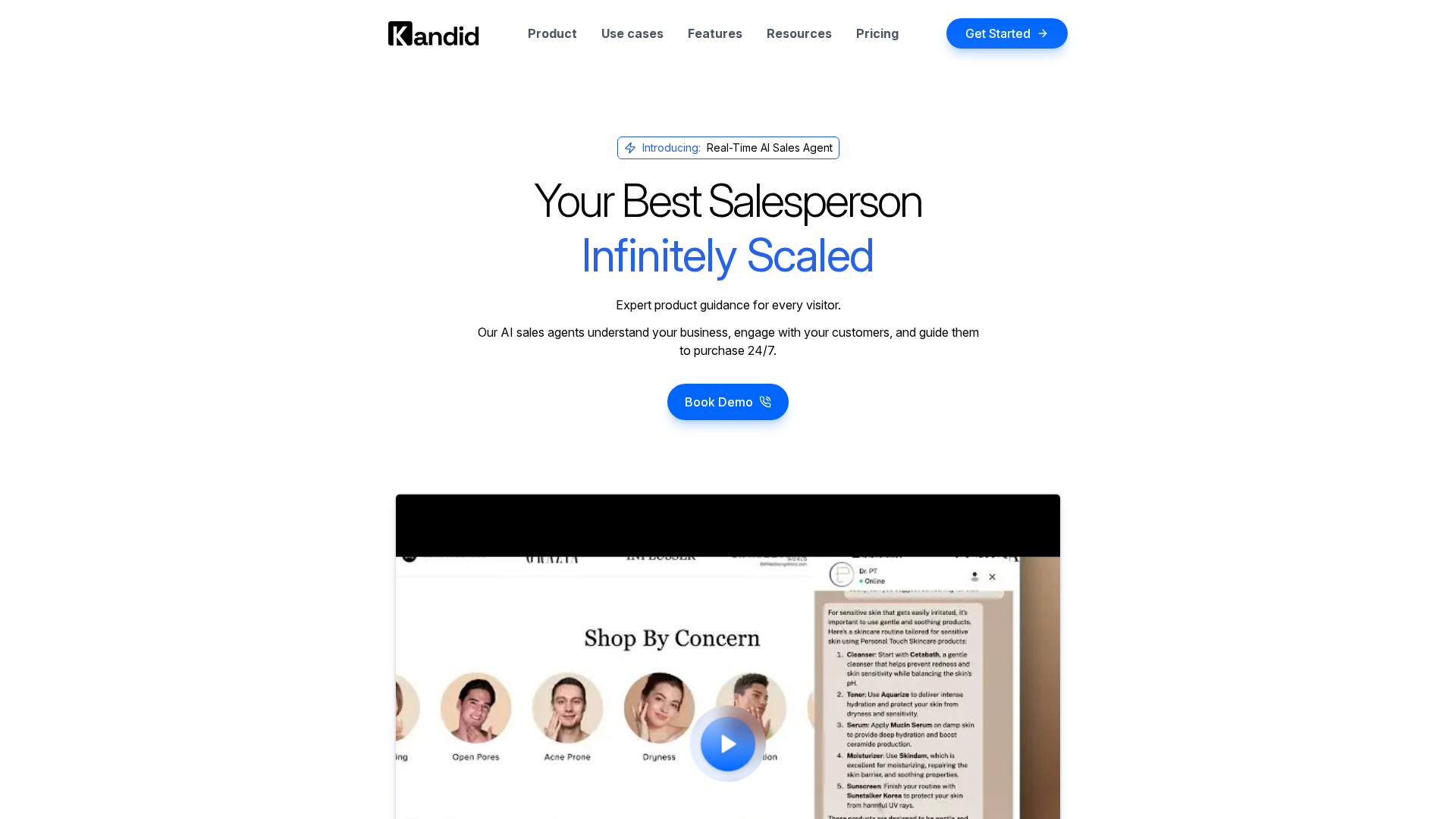
Pick the tool that fits your store. Try Kandid for real-time product guidance, then install Kandid from the Shopify App Store for a free 30-day trial, or start Manifest AI's 30-day trial.
Frequently Asked Questions
Q1: What are the key differences between Kandid and Manifest AI for real-time shopping?
Kandid focuses on native PDP and cart help, product fit, and buying intent. Manifest AI leans more on broad conversational shopping. Kandid usually fits brands that need sharper product guidance and faster path-to-cart.
Q2: Which real-time shopping assistant converts better in 2026: Kandid or Manifest AI?
For high-consideration catalogs, Kandid often wins because it answers product doubts closer to checkout. Manifest AI can work well for discovery-led stores. Conversion depends on placement, catalog depth, and how much pre-purchase education shoppers need.
Q3: How does Kandid's product-page Q&A compare to Manifest AI's conversational shopping?
Kandid is stronger when shoppers ask spec, compatibility, or comparison questions on PDPs. Manifest AI is better known for open-ended chat flows. If your store loses buyers on decision friction, Kandid usually has the clearer edge.
Conclusion
Kandid fits brands that need deep, consultative selling for complex products. Manifest fits stores that need broad coverage across discovery, search, and channels. Both can pay back fast - Manifest highlights Ace Blend's $54K+ in 30 days. Pick depth with Kandid or breadth with Manifest based on catalog complexity and buying journey.