Neuralens AI Dynamic Storefront: Tested for D2C Results
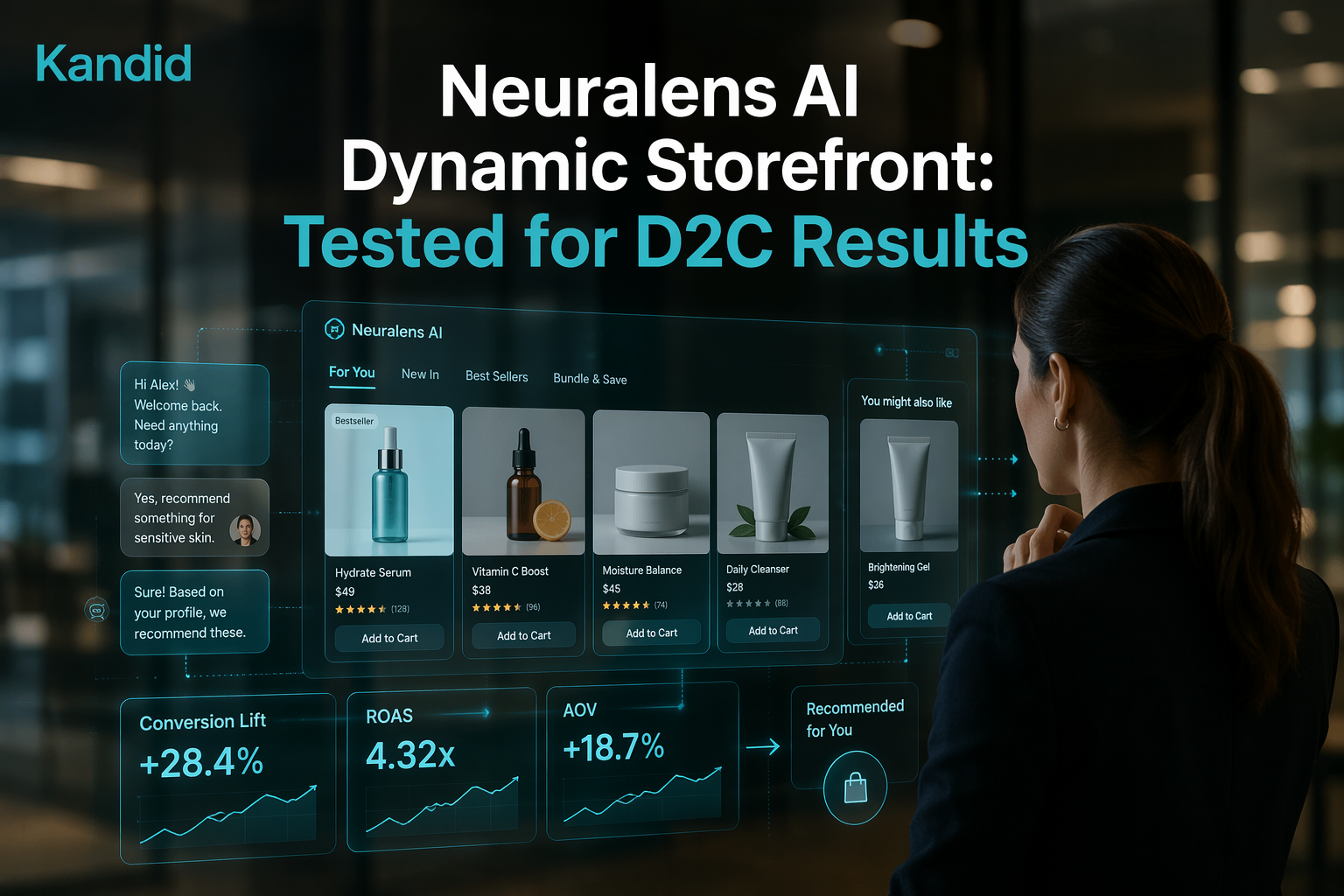
Most AI personalization articles promise relevance; this one asks a harder question: did Neuralens AI Dynamic Storefront actually improve D2C results?
You are under pressure to push conversion rate, ROAS, and AOV up without slowing buyers down. Yet most tools still get judged on shiny features, not hard revenue impact.
This review looks at where Neuralens fits in a D2C stack, what it actually changes on-site, and which metrics matter before you commit to a pilot. It is written for operators who care about measurable merchandising outcomes, not AI hype.
Quick Summary: The article evaluates Neuralens AI Dynamic Storefront by asking whether it actually improves D2C revenue outcomes, not just personalization “relevance.” It argues the biggest value comes from dynamic homepage, collection, PDP, and conversational surfaces that help shoppers discover the right product in complex, high-consideration categories like EV/tech, beauty, and apparel. The key metrics to watch in a pilot are conversion rate, revenue per session, AOV, ROAS, return rate, and support deflection, with evidence suggesting meaningful lifts are possible if the catalog and data are clean. The main caveat is that poor product data or weak targeting can undermine trust, so brands should run a controlled A/B test with clear success thresholds before rollout.
What Neuralens changes in a D2C storefront
Neuralens does not replace your Shopify theme. It changes what each shopper actually sees and how they move through it.
1. Personalization surfaces that matter most
Neuralens leans into the highest impact surfaces:
- Homepage hero and key tiles: Different value props and collections for first‑time vs repeat visitors, based on behavior signals like browsing depth and hesitation, similar to behavioral stacks described in alhena.ai.
- Collection and PDP blocks: Dynamic recommendation carousels, comparisons, and "complete the look" style bundles instead of generic bestsellers.
- On-site conversations: The AI sales agent layer from neuralens.ai guides the shopper with intent based Q&A, not just static widgets.
These are the surfaces that shift conversion and AOV, not just vanity personalization.
2. Why D2C brands care about product discovery
Most D2C sites do not have a traffic problem. They have a "what should I buy" problem.
Neuralens helps when:
- The catalog is deep (sizes, variants, shades, technical specs).
- Filters are there, but shoppers do not know how to use them.
- Support keeps answering the same pre purchase questions.
Think of it as moving from "browse and guess" to "tell us what you need and we match."
3. Best-fit use cases by category
Neuralens shines where intent is specific and the choice feels risky:
| Category type | What changes with Neuralens | Example impact |
|---|---|---|
| EV and tech | Explains specs, compares SKUs, handles compatibility | Fewer support tickets, higher add to cart |
| Personal care / beauty | Shade, routine, and skin type matching plus image Q&A | Higher first order conversion, lower returns |
| Apparel / lifestyle | Occasion, fit, and styling advice with visual search | Larger outfits per order, stronger AOV |
What the test suggests about D2C performance
1. Conversion rate and session engagement
If Neuralens lifts conversion even by low double digits, that is already meaningful. Benchmarks for AI agents show a 10-35% relative conversion uplift and 2-4x higher conversion in AI-assisted sessions compared to normal browsing, based on aggregated data from ecommerce deployments on salesmate.io.
For D2C, the signal is simple:
- If GA4 shows higher engaged sessions per user and longer average engagement time on the dynamic storefront variant, the experience is doing real work.
- If engagement is flat but conversion is up, the agent is removing friction, not just adding “time on site.”
Watch AI-assisted sessions. If those users convert 2-4x higher than baseline, you are in line with strong AI deployments.
2. Average order value and cross-sell potential
AI agents often drive 10-20% AOV lifts through contextual bundling and smart add-ons, as reported in broader ecommerce AI benchmarks on salesmate.io.
For Neuralens, look for:
- More items per order in Shopify analytics
- Higher AOV on dynamic sessions vs static
If AOV does not move, your cross-sell logic is weak or not visible enough.
3. ROAS and paid traffic efficiency
This is where it matters for your P&L. When conversion and AOV rise but CAC stays roughly stable, ROAS climbs. The Troopod AI CRO case showed ROAS jumping from 3.3x to 11.5x by fixing post-click experience, not ads, as detailed on blog.troopod.io.
Neuralens sits in that same zone: if your paid traffic hits a smarter, intent-matched storefront, you squeeze more revenue out of every paid visit without touching your media plan.
How to evaluate Neuralens before rollout
You do not want a science project. You want a clean yes/no on rollout.
1. Data and catalog readiness
Start by stress testing your catalog. Neuralens leans on clean product data and structure, just like the AI agent readiness work from digitalapplied.com highlights.
Check:
- Titles, specs, images, variants, pricing, stock freshness
- Key facets for filters and comparisons (size, range, compatibility)
- Policy docs, FAQs, and SOPs for support use cases
If your catalog is messy, fix that before you blame the agent.

2. Measurement plan for a pilot
Set up:
- Treatment: Neuralens on a subset of traffic or categories
- Control: Existing static PDP / support
Track via GA4, Shopify, and your A/B tool:
- Conversion rate and revenue per session
- AOV and return rate
- Support deflection and CSAT
Use a 60 to 90 day window, similar to the lift study discipline described on digitalapplied.com.
3. Decision criteria for D2C teams
Decide upfront:
- Minimum lift in CVR or RPS
- Acceptable change in returns and margin
- Max payback period on Neuralens fees
Then ship or skip. No endless “maybe” phase.
Bottom line for D2C brands
Treat a dynamic, AI powered storefront like a core sales channel, not a UX experiment. Your benchmark is simple: higher CVR, AOV, and LTV than your static store and generic chat widget. Run clean A/B tests in GA4 or Shopify, hold out traffic, and watch revenue per session. If Neuralens plus an AI sales agent like Kandid cannot beat your current numbers, do not keep it.
If you are evaluating AI dynamic storefront software for D2C growth, start with a structured pilot and compare Neuralens against your current merchandising flow. Then plug in Kandid as your always-on AI sales agent to turn that smarter storefront traffic into higher conversion, AOV, and ROAS.
Frequently Asked Questions
Q1: How is Neuralens different from an AI chat agent like Kandid?
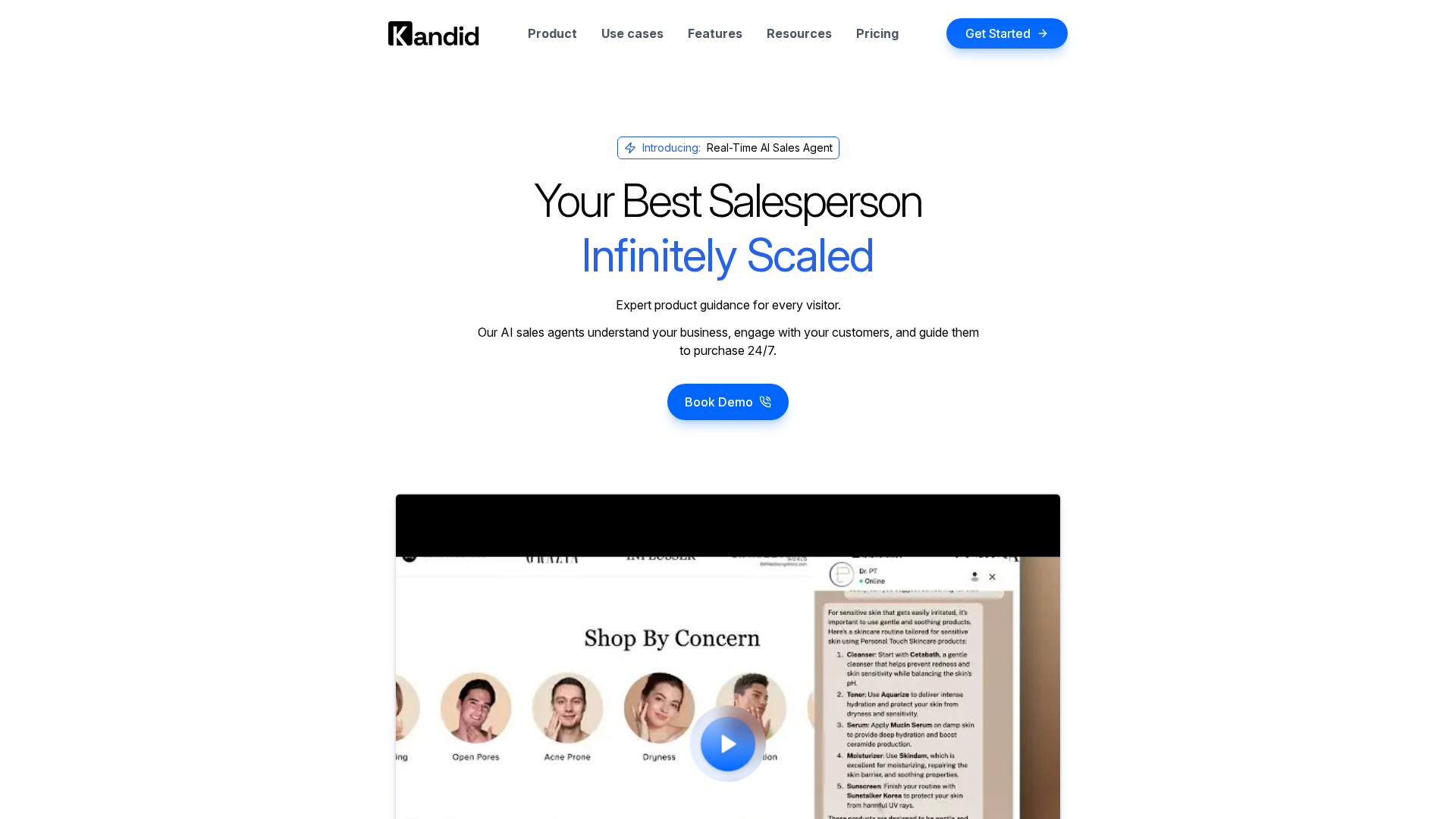
Neuralens changes the storefront layout itself, while Kandid answers questions and guides shoppers in conversation. Use Neuralens to personalize what people see by default, and Kandid to handle objections, comparisons, and specs in real time. Together they cover both passive browsing and active help.
Q2: How do I know if Neuralens is actually driving lift?
Run a clean A/B test. Keep one group on your static Shopify theme and the other on Neuralens. Track conversion rate, revenue per session, and AOV in GA4 or Shopify analytics. Let it run at least 2 to 4 weeks before judging the impact.
Q3: Which D2C brands benefit most from a dynamic storefront?
Brands with complex or high consideration catalogs see the biggest gains. Think EV gear, tech accessories, and skincare systems with routines or bundles. If shoppers often compare options or ask pre purchase questions, a dynamic storefront usually moves the needle.
Q4: What happens if Neuralens personalization is wrong?
Bad targeting can push irrelevant products and hurt trust. Set guardrails: cap how often layouts change, keep clear navigation, and always show a few bestsellers. Review GA4 and session replays weekly. If bounce or exit spikes, tighten your rules and audiences.
Conclusion
Neuralens AI Dynamic Storefront is not about shiny AI branding. It should be judged on hard storefront outcomes: discovery, relevance, and revenue lift, backed by the kind of personalization impact highlighted in mckinsey.com.
The strongest value shows up in smarter product discovery, more relevant surfaces, and cross-sell logic that feels natural, not forced. D2C teams need a tight pilot plan with clear GA4 and Shopify baselines to prove conversion, ROAS, and AOV impact, especially for complex catalogs and high-consideration categories where dynamic storefronts already outperform static layouts in studies like rewarx.com.