D2C Product Recommendations vs One-Size-Fits-All Bundles
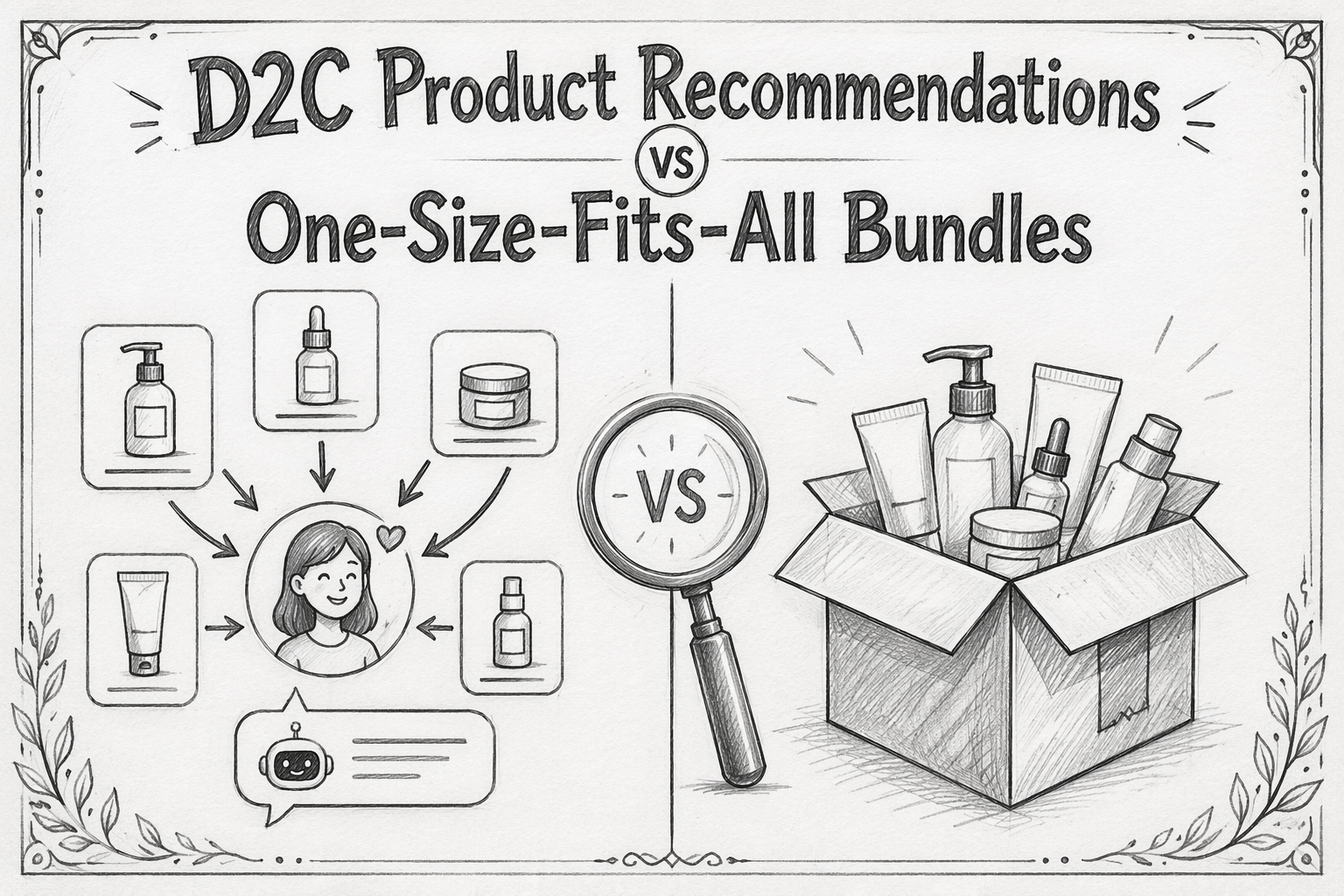
For most D2C brands, the real question is not whether to use bundles or recommendations, but which one actually drives more conversions when margins, cart abandonment, and repeat purchases matter.
One-size-fits-all bundles are simple to launch, but they often miss buyer intent. Personalized recommendations can feel more relevant, yet many teams struggle to prove when they outperform fixed bundles.
This article compares both approaches through the lens of D2C conversion, AOV, and customer relevance, then shows when personalized recommendations win and where bundles still have a place. It is built for operators managing ecommerce revenue, merchandising, and experimentation across D2C categories with different purchase behaviors.
Quick Summary: Personalized D2C product recommendations generally outperform fixed bundles because they respond to shopper intent in real time, improving relevance, add-to-cart rates, and often conversion and AOV. One-size-fits-all bundles still make sense for obvious starter kits, low-AOV or tight-margin products, and situations where reducing choice overload matters more than perfect personalization, but they can also create friction if one item feels unnecessary. The article argues there’s no universal winner: brands should choose based on intent, product complexity, and traffic/data volume, then validate with clean A/B tests and metrics like conversion rate, revenue per visitor, attachment rate, and return rate.
Why personalized recommendations usually convert better than fixed bundles
Fixed bundles try to guess what a "typical" shopper wants. Personalized recommendations react to what a real shopper actually says and does.
1. Relevance beats forced structure
Personalized recs respond to intent in real time. Someone asks, "I need a commuter e-bike under $1,500," and your AI sales agent can suggest 2 or 3 precise matches, plus a lock and helmet that fit that choice.
That feels like help, not a sales push.
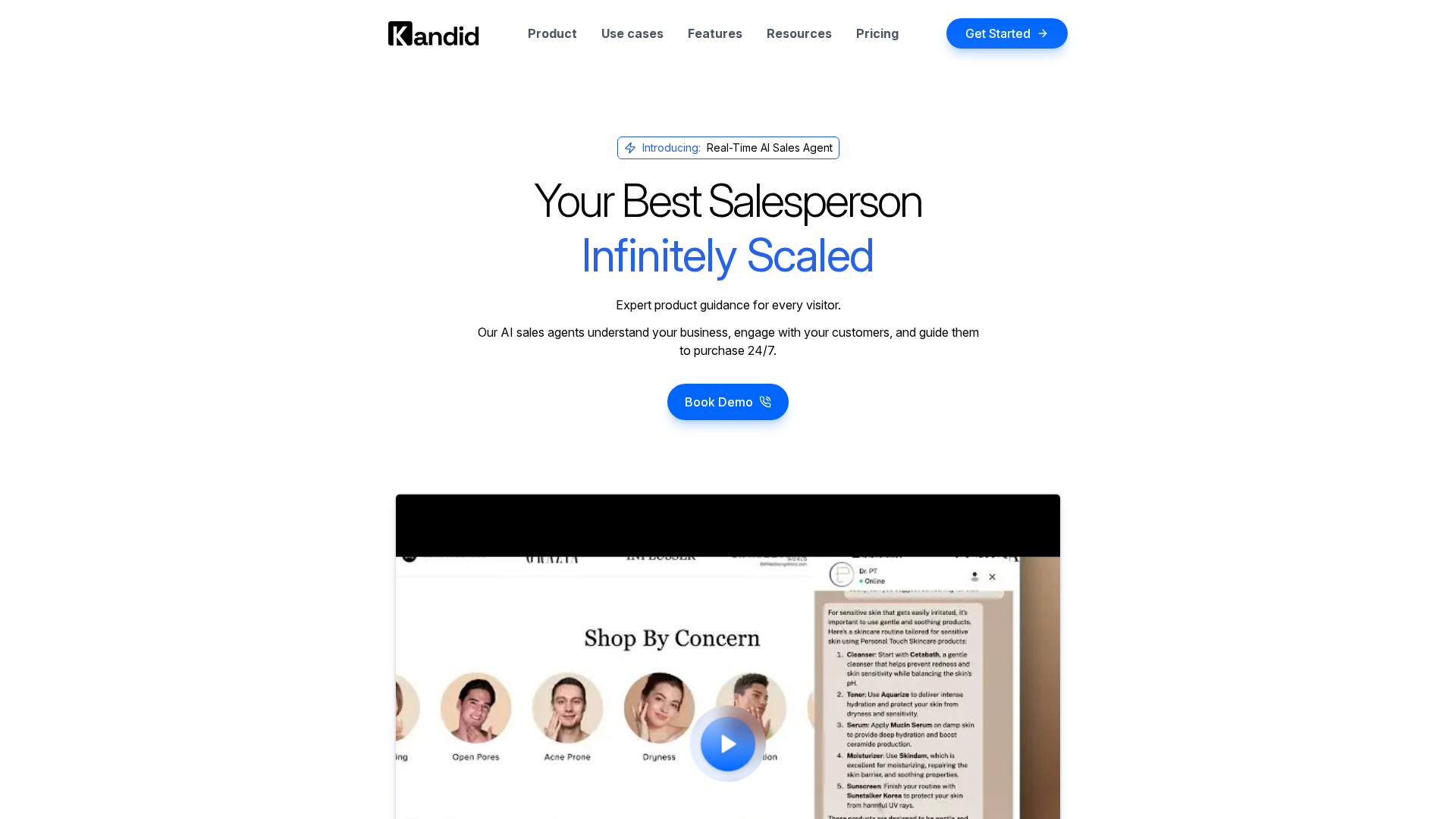
AI sales agents like Kandid use live context and catalog data to match needs, which lines up with what gorgias.com calls similar and complementary recommendations. That is exactly where relevance turns into higher click and add-to-cart rates.
2. Why bundles can increase friction
Bundles assume:
- Budget
- Use case
- Level of expertise
Most of the time, they guess wrong.
Common problems:
- Shoppers feel forced to overpay for things they do not need
- One irrelevant item makes the whole bundle feel "off"
- Choice paralysis: keep the bundle or build a cart from scratch?
That extra mental work is friction. Friction kills conversion.
3. Where personalization wins in the funnel
Personalized recommendations shine at three stages:
- Category entry: Help people choose the right product family fast.
- Product comparison: Decode specs, tradeoffs, and compatibility. Kandid leans hard into this for tech and EV brands as shown on kandid.ai.
- Basket building: Suggest smart add ons that fit what is already in cart.
Every step feels tailored, so more visitors move forward instead of bouncing.
When one-size-fits-all bundles still make sense
1. Best-fit scenarios for bundles
Use fixed bundles when:
- You sell clear starter kits or care systems. Example: basic EV cleaning pack, beginner skincare set.
- Your AOV is low and margins are tight. Bundles keep CAC payback sane.
- Shoppers feel overwhelmed by options. A simple "Good / Better / Best" pack cuts choice overload.
They work well on:
- New customer landing pages
- Seasonal offers
- Post-purchase upsells
2. The tradeoff: simplicity vs relevance
Bundles trade relevance for speed.
- Simple: Faster decisions, fewer clicks, easy to explain in ads.
- Less relevant: One item feels off, the whole bundle looks wrong. That is where AI agents like Kandid can step in and suggest add-ons or swaps in chat instead of rebuilding your whole catalog logic.
3. How to avoid bundle-driven cart abandonment
Reduce friction by:
- Letting shoppers edit or remove 1-2 items in the bundle.
- Showing clear savings vs buying items solo.
- Using a recommendation agent to catch hesitation. If a shopper deletes a bundle item, trigger guided help to suggest a better fit, not a blank page.
How to choose the right approach for your D2C brand
You do not need a religion here. You need rules.
1. Use personalization when intent is clear
Lean into recommendations when shoppers are giving off strong signals:
- They use search, filters, or chat to narrow down.
- They ask comparison or compatibility questions.
- They browse a niche category or high-ticket SKU.
Tools like Helium use real time personalization to reshape product grids and report big lifts in conversion and AOV for intentful sessions, especially in multi category stores like apparel plus electronics gethelium.co.
Kandid goes a step further with AI sales agents that decode specs, handle objections, and push the exact product or bundle that fits.

2. Use bundles when the offer is universal
Default to one size bundles when:
- The need is obvious and similar for everyone.
- The AOV target is clear, like starter kits.
- Choice would only slow them down.
Think: electric toothbrush + heads, phone + case + screen guard, EV charger + cable holder.
3. Decision checklist for revenue teams
Ask this before you choose:
- Is intent high and specific
- Yes: personalized recs.
- No: keep generic bundles.
- Is the product technical or layered
- Yes: AI agent + recs.
- No: simple bundle works.
- Do you have traffic volume and data
- Yes: invest in personalization.
- No: start with smart bundles, then layer an AI sales agent like Kandid.
What to measure before you scale either approach
1. Core metrics to track
Track the same spine of metrics for both setups:
- Visitor to add-to-cart rate
- Visitor to purchase rate
- Average order value
- Revenue per visitor
- Attachment rate for cross-sells and add-ons
- Refund / return rate by flow
- Time to first response and chat engagement rate if you use an AI agent
Tie this back to profit, not just clicks. As getperspective.ai notes for sales funnels, optimize on pipeline-style value, not vanity events.
2. How to test without overcomplicating the stack
Start with one clean A/B:
- Split PDP traffic 50/50 between personalized recs and bundles.
- Use a simple A/B tool plus your ecommerce analytics dashboard.
- Hold price, promos, and traffic mix constant for at least two weeks.
If you already run an AI sales agent like Kandid or Manifest, use its built-in analytics instead of adding yet another layer.
If you want to increase conversion with D2C product recommendations, benchmark your current bundle strategy against personalized offers and see where relevance creates measurable lift. Try Kandid to turn every visit into a guided, tailored product journey today.
Frequently Asked Questions
Q1: When should I use personalized product recommendations instead of bundles?
Use personalized recommendations when your catalog is wide, specs are complex, or buyers compare options. Think EV accessories, tech, or layered personal care routines. You win on relevance, higher AOV, and fewer returns, especially when you pair a recommendation engine with strong analytics and A/B testing.
Q2: When do one-size-fits-all bundles still make sense?
Use simple bundles when your product use case is obvious and similar for most buyers. Starter kits, gifting sets, or “all you need for first-time EV owners” can work well. Keep the number of bundles low, price them clearly, and test them against personalized flows.
Q3: How do I test recommendations vs bundles without huge dev work?
Start with a basic A/B test: control sees your current bundles, variant sees personalized recommendations on PDP, cart, and post-purchase. Use an A/B testing tool and your ecommerce analytics to track lift in conversion rate, AOV, and revenue per session.
Q4: What metrics decide the winner between the two approaches?
Watch three core metrics: conversion rate, AOV, and revenue per session. Then layer in return rate and attach rate for add-ons. If personalized recommendations win on revenue per session and do not hurt margins or increase returns, you have your answer.
Conclusion
Personalized recommendations usually beat one-size-fits-all bundles because they track intent and behavior, which wikipedia.org links to higher relevance and engagement. Bundles still shine when the use case is universal, the catalog is tight, or ops speed matters. The smart move: test both with clean KPIs and let conversion, AOV, and effort decide your winner.