AI Sales Agents vs Human-Only Support: Performance Reality
If your best visitors land on product, pricing, or checkout pages, the real question is simple: can AI sales agents close them faster and cheaper than your human-only support team. Many teams assume human-only support is safer, but that falls apart when slow replies, limited hours, and uneven answers block sales. This guide shows where AI sales agents and AI customer support beat humans, where humans win, and how ecommerce teams can prove ROI with a focused pilot.
Where AI sales agents outperform human-only support on high-intent traffic
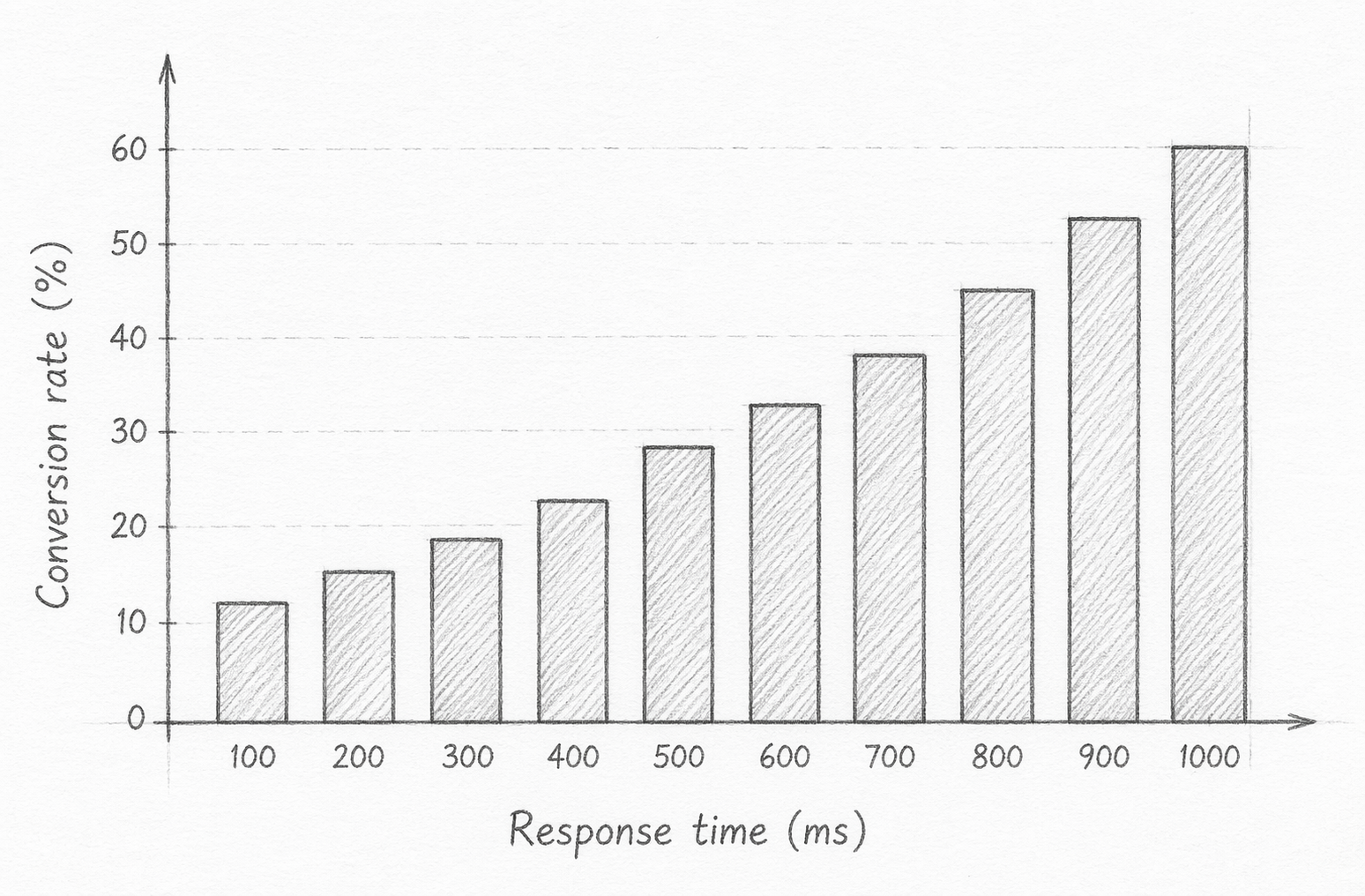
Conversion rate wins from instant response
High-intent visitors do not wait. Live chat benchmarks show that every 30 second delay in response can cut the chance of conversion by about 7 percent for pre-sales chats, and a 2 minute wait can reduce the purchase probability by roughly 28 percent compared with instant reply, according to Helpable’s 2026 live chat benchmarks.
AI sales agents answer in under a second, every time. That speed matters when a shopper is asking about fit, compatibility, or shipping before checkout. Tools like Kandid or Helium can respond with product level detail, remove doubt in the moment, and keep the shopper on the page instead of drifting to a competitor tab.
Coverage and consistency vs human-only availability
Even strong teams struggle with 24/7 coverage, breaks, sick days, and peak traffic spikes. High-intent traffic often lands outside your scheduled hours, especially for global EV or tech audiences.
AI sales agents do not have shifts. They give the same fast, on-brand answer at 2pm or 2am, on Monday or Black Friday. That means:
- No queue during drops or launches
- No missed pre-sale questions on weekends
- No quality drop on the fifth “Does this work with X?” in a row
For brands that run paid traffic, this coverage protects ROAS, because every paid click gets a real shot at conversion, not just clicks that arrive during agent hours.
Qualification quality on high-intent visitors
Sales leaders worry that bots rush or misread intent. The edge comes when AI agents ask smart follow-up questions and tag each visitor based on clear buying signals.
A well trained AI agent can:
- Detect high-intent phrases like “ready to order” or “bulk pricing”
- Confirm budget, timeline, and key specs in 3 to 4 short turns
- Push hot leads straight into a CRM, or route them to a closer
Human reps often skip structured notes, especially when busy. AI agents like Kandid keep a consistent playbook for every visitor, so your team sees clean qualification data instead of guesswork. This makes retargeting, email flows, and human follow up far sharper than with unstructured human-only chat logs.
When human-only support still wins, and why that matters
High-emotion, high-complexity conversations
When a customer feels burned, scared, or deeply frustrated, humans still win. Research on service failures shows people forgive brands more when a person, not a bot, handles emotional recovery and loss Is a Chatbot More Effective?.
Use AI to prevent issues, but route escalations with strong emotion or risk to trained humans.
Negotiation and bespoke deal handling
Big deals, B2B-style bundles, or one-off exceptions need human judgment. Shoppers still trust humans more for nuanced cases with flexible terms and higher stakes What Consumers Really Think.
- Keep AI for data gathering and first draft offers.
- Let humans decide discounts, custom bundles, and final terms.
The hybrid handoff threshold
You need clear rules for when AI steps back:
- Order value over a set dollar amount
- Second failed resolution attempt
- Keywords that signal risk: “lawyer”, “refund now”, “fraud”
Kandid and similar agents work best when they triage and prep, then hand off cleanly to humans for edge cases.
How to estimate ROI from switching to AI sales agents
Core ROI formula for ecommerce teams
Get to a simple model first:
- Extra profit from sales lift
- Plus support cost savings
- Minus AI fees
ROI % = ((extra profit + savings - AI cost) ÷ AI cost) x 100.
Use conservative lift inputs. Guides on AI ecommerce ROI suggest modeling a small conversion uptick and AOV bump rather than hype numbers Shopify AI ROI guide.
What to measure in a 2–4 week pilot
Track one high-intent page type only (for example PDP or pricing).
Key metrics:
- Conversion rate: AI vs control
- AOV and revenue per session
- Human tickets per 1,000 sessions
- Response time and coverage
Use an A/B testing platform and live chat analytics dashboard to keep the test clean AI chatbot ROI metrics.
Signals that AI is paying for itself
Look for:
- Higher conversion on AI-exposed traffic
- Higher AOV on AI-assisted orders
- Lower human ticket volume with stable CSAT
- Net profit lift after AI subscription
If extra monthly profit beats AI cost by at least 2x in your pilot, that is a strong green light to scale.
The practical verdict for ecommerce and D2C teams
Best-fit scenarios for AI-first support
AI-first works best on high-intent, product comparison, and spec-heavy journeys. Studies show AI can match or beat human help on functional, info-heavy products and routine queries according to this research on product-type differences.
- High SKU catalogs with repeat questions
- Simple returns, shipping, order status
- Pre-sale guidance where rules are clear
Best-fit scenarios for human-led support
Human-led support wins for emotionally loaded or complex cases. Many shoppers still prefer people for nuanced service and problem solving as recent CX research shows.
- Luxury, identity, or sensitive products
- High-ticket complaints and escalations
- Edge cases that fall outside clear policies
Recommended next step
Run a 4 to 6 week pilot on one traffic slice: high-intent PDPs or quiz flows. Use an A/B testing platform, live chat analytics, and an ROI calculator spreadsheet to judge if an AI sales agent like Kandid beats your current human-only baseline.
Review the parent AI sales agents pillar page, then run a focused pilot on your highest-intent traffic to see whether AI sales agents outperform human-only support in your funnel. Talk to Kandid to launch a real test, fast, with real sales impact.
Frequently Asked Questions
Q1: How do AI sales agents compare to human-only support on conversion rate?
AI sales agents typically lift on-site conversion 10-30% against human-only chat, mainly by answering instantly, handling more sessions, and running 24/7. Humans still win on complex, emotional cases, so the best setup routes those to live staff.
Q2: Which performs better for high-intent visitors: AI agents or human support?
For high-intent visitors, a hybrid model usually wins. AI qualifies and guides most shoppers fast, then pushes edge cases to humans. Brands see more closed carts because fewer people wait in queues or drop before getting answers.
Q3: What ROI can you expect when switching from human-only support to AI sales agents?
Teams often see 3-8x ROI in the first 60-90 days from higher conversion, higher AOV, and lower support cost. Start with one key page type, measure with an A/B testing platform, then roll out if the lift holds.
Conclusion
AI sales agents usually beat human-only support on high-intent traffic because they reply instantly, never log off, and qualify visitors in a consistent way, which matches findings from recent large scale service studies on AI vs humans in different task types Robot or human?.
Human teams still win when the buyer needs empathy, reassurance, or complex custom advice, which aligns with research that shows humans perform better for experience-heavy and trust-heavy purchase decisions Is Artificial Intelligence Better than Manpower?.
The only way to choose for sure is to run a tight pilot, track conversion lift, check AI-to-human handoff quality, and compare ROI against your current human-only setup.